This article is written by Toru Hoshino, a jazz bassist and instructor based in Japan who teaches online lessons to students worldwide. In this article, he answers a question he gets constantly: what’s the deal with “avoid notes”?
One question I get asked a lot in lessons is about avoid notes.
For example, in a C major scale, you can use:
C D E F G A B C
Of these, the note F is the avoid note.
Wait — isn’t an avoid note supposed to be a note you’re not allowed to use?
But if F is part of the C major scale in the first place, can you use it or not? That’s exactly the part that confuses people.
Strictly speaking, the right way to think about it is:
You’re not forbidden from using it — you just need to be a little careful about how you use it.
An avoid note, fundamentally, is a note that makes it harder for the listener to feel the chord’s harmony.
A C chord has its own distinct “C chord” sound — but if you emphasize the avoid note too much, that C-chord sound gets harder to convey.
That said, using F as a decorative tone or a passing tone is completely fine. Here are some concrete examples.
A Good Way to Use an Avoid Note in a Walking Bass Line
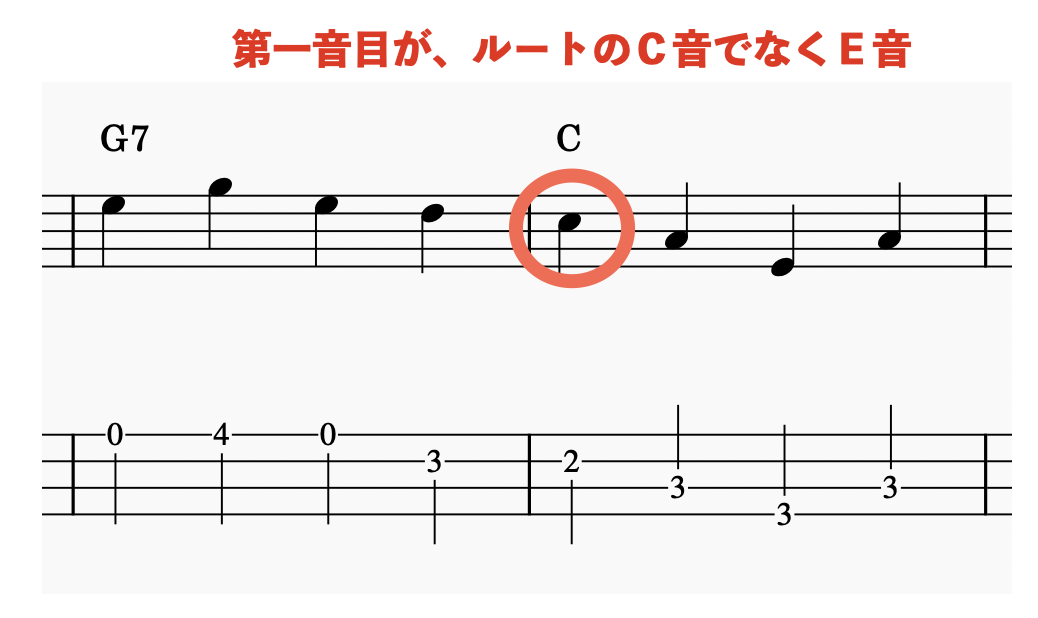
Say you’re over a C chord, playing four quarter notes in the bar:
C E F G
Used this way, as a passing tone, it works fine.
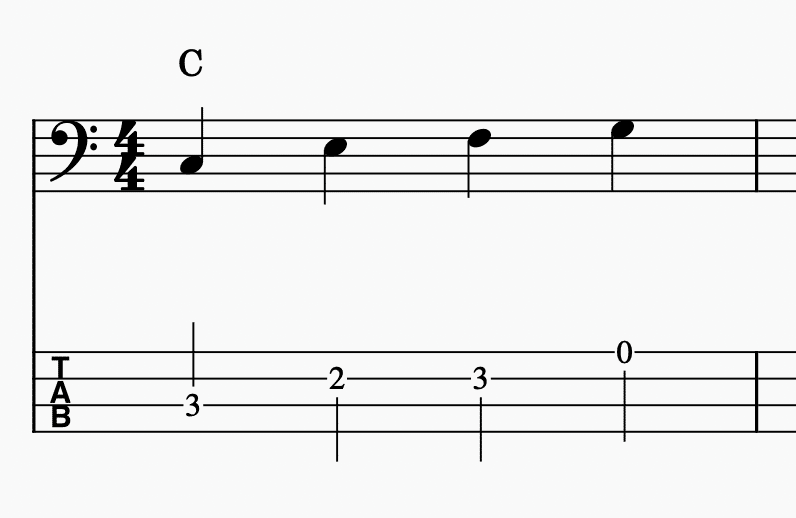
The F here isn’t being emphasized.
A Less Good Way to Use an Avoid Note in a Walking Bass Line
Now say you’re over the same C chord, playing four quarter notes:
C F F F
Like this — with almost no chord tones present and the F note emphasized heavily — the harmony becomes hard to read.
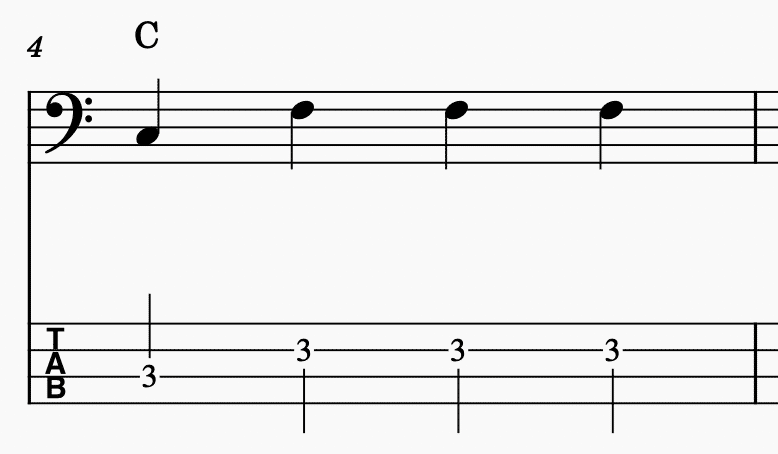
So this is exactly what people mean by “it’s not forbidden, it just needs careful handling.”
Understanding the theory behind avoid notes is one thing — actually hearing when you’re overusing one in your own lines is exactly the kind of thing a teacher catches immediately.
Want Personalized Feedback on Your Playing?
This is exactly the kind of thing that’s hard to fix alone — and where having a teacher makes all the difference.
At Line on Bass, I offer an online lesson service where you send me a video of your playing, and I give you specific, detailed feedback — every single day if you want.
Students from around the world are using this to fix exactly these kinds of issues and steadily improve their jazz bass skills.