Posted on Leave a comment

A Phrase You Can Play Using Only the Half Position: Great for Upright Bass Beginners

Hi, I’m Toru Hoshino, a bass teacher.

Today’s topic:

A phrase you can play using only the half position —
a great pick for upright bass beginners.

The upright bass isn’t the easiest instrument to handle — there’s a lot to keep in mind with your posture and form — but you still want to actually play songs on it, right?

So today I want to share one phrase from a real, well-known tune that’s actually played on upright bass — one that doesn’t require much position-shifting, so even beginners can manage it with a bit of effort.

A Phrase You Can Play Using Only the Half Position

Here’s the phrase. It’s the part from 0:00–1:00 in the track below.

It’s a phrase from the jazz standard “Autumn Leaves.”

Here’s the notation — this phrase repeats throughout the section.

The key point is that the phrase is built entirely within what’s called the “half position” — roughly equivalent to frets 1–3 on electric bass — so there isn’t much position-shifting involved.

Once your fundamentals are solid, give it a try playing along with the track.

I hope this gives you some ideas for your daily practice!

Want Personalized Feedback on Your Playing?

This is exactly the kind of thing that’s hard to fix alone — and where having a teacher makes all the difference.

At Line on Bass, I offer an online lesson service where you send me a video of your playing, and I give you specific, detailed feedback — every single day if you want.

Students from around the world are using this to fix exactly these kinds of issues and steadily improve their jazz bass skills.

Check Out the Lesson Service →

Posted on Leave a comment

Upright Bass Posture: Standing, Stance, and Form

This article is written by Toru Hoshino, an upright bass player and teacher based in Tokyo.

It’s aimed at:

· Those picking up an upright bass for the first time

· Those who are about to start learning upright bass

· Those who want to revisit and refine their playing posture

*Different schools and teachers approach upright bass technique differently, so please treat this article as one reference among others, rather than the only correct way.

Posture

How to Stand

Keep your back straight, but don’t lean back too far.

That said, a hunched back looks unnatural too.

Aim for a relaxed, natural standing position.

Front view:

Foot Width

Set your feet about shoulder-width apart.

Standing with your feet too close together makes it hard to play,

and standing with your feet too far apart looks unnatural as well.

Angle of the Strings

If the strings face too far inward, it’s hard to reach the E string (the thickest one).

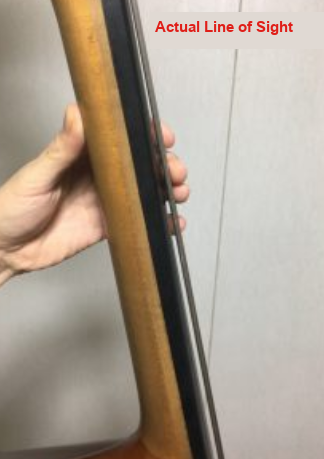
On the other hand, if the strings face too far outward, you won’t be able to see the fingerboard.

In practice, you want a line of sight where you can see the E string (the thickest one) but barely see the others.

Front view.

Neck Position

If the neck is too far away from you, fretting notes with your left hand becomes a struggle, so position the neck so it isn’t too far out.

Personally, I play with the neck positioned roughly like this relative to my body.

Find a Position Where the Bass Stays Balanced Even With Your Hands Off

Unlike an electric bass, the upright bass has no strap, so your body always has to support it.

Ideally, you want a position where the bass stays balanced for a moment even if you let go like this:

Skilled players can keep the bass balanced like this for extended periods without using their hands at all.

The Notch Near Your Side/Waist

This part of the bass —

— tends to sit more stably when nestled against the notch just below your right side/waist.

An Instrument Where Form Really Matters

The upright bass has high string tension and a large body, so it’s genuinely hard to get a solid sound out of it when you’re just starting — but plenty of smaller-framed players still play it well.

That said, if your form stays awkward, you won’t get a solid sound, so it’s worth making good form a habit early on.

Also, the advice you’ll get can vary depending on your height, hand size, the genre you play, and the teacher you study with — so if you’re just starting out, it’s a good idea to have a professional check your form periodically.

Want Personalized Feedback on Your Playing?

This is exactly the kind of thing that’s hard to fix alone — and where having a teacher makes all the difference.

At Line on Bass, I offer an online lesson service where you send me a video of your playing, and I give you specific, detailed feedback — every single day if you want.

Students from around the world are using this to fix exactly these kinds of issues and steadily improve their jazz bass skills.

Check Out the Lesson Service →

Posted on Leave a comment

Electric Bass vs. Upright Bass: Weighing the Pros and Cons

Among jazz bassists and walking bass players, you’ll find both electric bass players and upright bass players.

So which one is better? I get asked that sometimes.

The short answer is that neither one is better or worse — both instruments can cover a fair range of genres —

but as someone who plays both, I want to walk through the pros and cons of each from my own experience.

You currently play electric bass but want to try upright

or

You currently play upright bass but want to try electric

This article is for either of those readers.

The Pros and Cons of Electric Bass

Compared to upright bass, here’s how I’d sum up the pros and cons of electric bass.

◊ Pros of Electric Bass

· Easy to carry
· Pitch doesn’t drift
· You can play with a pick
· You’re not limited on where you can practice

◊ Cons of Electric Bass

· You always need an amp
· Some die-hard acoustic-jazz purists don’t love it

Let’s go through these in more detail.

Pros of Electric Bass

Easy to Carry

Compared to an upright bass, an electric bass is much easier to carry around.

With a backpack-style gig bag, you can even carry it on a bike.

Pitch Doesn’t Drift

On upright bass, there are no frets like this, which makes landing your pitch difficult. But on electric bass —

if you tune up properly and play with the frets as your guide, your pitch won’t drift.

You Can Play With a Pick

I’ve never seen anyone play upright bass with a pick.

Pick-style bass playing has that distinctive punchy attack that rock players in particular tend to love.

You’re Not Limited on Where You Can Practice

You can practice at home without booking a studio.

And if you use something like a headphone amp, you can play at full intensity without bothering your neighbors.

Cons of Electric Bass

You Always Need an Amp

You’ll never perform electric bass for an audience without running it through an amp.

The unplugged sound of an electric bass is far too quiet on its own, so an amp is a must.

Some Die-Hard Acoustic-Jazz Purists Don’t Love It

Among players of acoustic instruments that prioritize natural tone — grand piano being the classic example —

you’ll occasionally run into someone who insists the bass has to be upright! — partly for the sound, and partly for the look.

Instruments That Pair Well With Electric Bass

Keys: organ or electric piano rather than grand piano
Guitar: electric guitar rather than gut-string or electro-acoustic
Drums: thicker cymbals rather than thin ones

These combinations tend to pair especially well.

The Pros and Cons of Upright Bass

Compared to electric bass, here’s how I’d sum up the pros and cons of upright bass.

◊ Pros of Upright Bass

· Demand is high since fewer people play it
· No amp needed (in smaller venues)
· It tends to make a strong visual impression
· You can play arco (with a bow)

◊ Cons of Upright Bass

· Pitch is genuinely difficult
· You’re limited on where you can practice
· It’s a hassle to carry

Let’s go through these in more detail.

Pros of Upright Bass

Demand Is High Since Fewer People Play It

Compared to electric bass, far fewer people play upright.

Because of that, just being an upright player is sometimes enough to get bands calling you for gigs.

No Amp Needed (in Smaller Venues)

Its natural acoustic volume is large enough that in smaller rooms or venues, you can sometimes play completely unplugged.

It Tends to Make a Strong Visual Impression

“Wow, that’s huge,” “that looks so cool” — I hear that constantly.

It’s not even me they’re complimenting (laughs), but it still makes me happy.

You Can Play Arco

“Arco” means playing with a bow.

It’s a seriously difficult technique to develop, but being able to bow the instrument like a cello or violin is one of the defining features of the upright bass.

Cons of Upright Bass

Pitch Is Genuinely Difficult

The position layout is the same idea as on electric bass, but there are no frets to mark where each note sits.

Getting your pitch to land where you intend takes real time and real practice.

You’re Limited on Where You Can Practice

Its natural acoustic volume is loud enough that it’s easy to bother your neighbors.

These days I’m able to practice at home, but earlier on I used to practice in a public park, in summer and in winter alike.

It’s a Hassle to Carry

Getting caught in a packed rush-hour train with this thing is its own special kind of misery.

You’re constantly worried the bridge might get knocked loose. “You’re in the way,” “move it,” the occasional irritated sigh — I’ve heard it all more times than I can count.

It wears on you.

On long-distance trains you usually can’t get a seat either — on tour, I’ve spent entire rides standing in the area by the doors.

Instruments That Pair Well With Upright Bass

Keys: grand piano or upright piano rather than organ or electric piano
Guitar: gut-string or electro-acoustic rather than electric guitar
Drums: thinner cymbals, brushes, or even no drums at all

These combinations tend to pair especially well.

Electric vs. Upright — Which Should You Choose? Wrapping Up

Each instrument has its own appeal, and being able to play both is never a bad thing.

That said, things like

· what kind of music you want to get good at
· which players you admire
· what genres you want to play in
· what color you want your band to have

will all shape whether upright or electric makes more sense for you.

In the end, it comes down to which one you want to play — or whether you want to play both.

Some players narrow their focus to one style or genre — “rock is all I need, I’m only interested in slap, jazz bass is all I’ll ever need” — while others want to be all-around players who can handle pop, rock, funk, and jazz alike.

Personally, I love the sound of both upright and electric bass. That’s why I play both.

Doing both is more work. But it’s also more rewarding.

So, with that in mind:

If upright looks cool to you, go upright.

If electric feels right, go electric.

If you want both, go for both.

Give it a try. ^^

Want Personalized Feedback on Your Playing?

This is exactly the kind of thing that’s hard to fix alone — and where having a teacher makes all the difference.

At Line on Bass, I offer an online lesson service where you send me a video of your playing, and I give you specific, detailed feedback — every single day if you want.

Students from around the world are using this to fix exactly these kinds of issues and steadily improve their jazz bass skills.

Check Out the Lesson Service →

Posted on Leave a comment

Upright Bass Left-Hand Form: How to Press the Strings and Practice the Half Position

· Anyone picking up upright bass for the first time

· Anyone about to start learning upright bass

· Anyone who wants to rethink their upright bass posture

Note: teaching approaches for upright bass vary quite a bit depending on the school of thought or background of the teacher, so please treat what’s written here as one reference point among others.

The Shape of the Left Hand on Upright Bass

This is the basic shape of the left hand on upright bass.

On electric bass, it’s common to use “one fret, one finger” — pressing down each fret with a separate finger.

But on upright bass, the frets (or fret-equivalent spacing) are much wider.

They’re wide enough that it’s genuinely hard to stretch your fingers far enough to use one finger per fret.

That’s why we bring the middle and ring fingers together to act as a single finger — effectively giving you three fingers to work with. This makes it much easier to cover the distance between positions.

Here’s the hand relaxed and open:

How to Press the Strings With the Left Hand on Upright Bass

The zone that corresponds to the open string through the 3rd fret on electric bass —

— is called the “half position” on upright bass.

Just within this half position alone, there are already this many notes available. Once you can move freely around this position and know the note names, you’ll be able to handle a much wider range of tunes.

So the first goal is to get comfortable playing this half position, since it’s the foundation everything else builds on.

Let’s Practice the Half Position on Upright Bass

Now let’s actually practice playing the half position on upright bass.

Something like that…

The problem is, when you’re just starting out, you can’t tell by ear whether your pitch in the half position is actually correct.

So I made a reference track just for the half position. Playing along with an actual piano makes it much easier to tell whether you’re in tune.

This is the piano-only reference track. Use it to check your pitch while practicing.
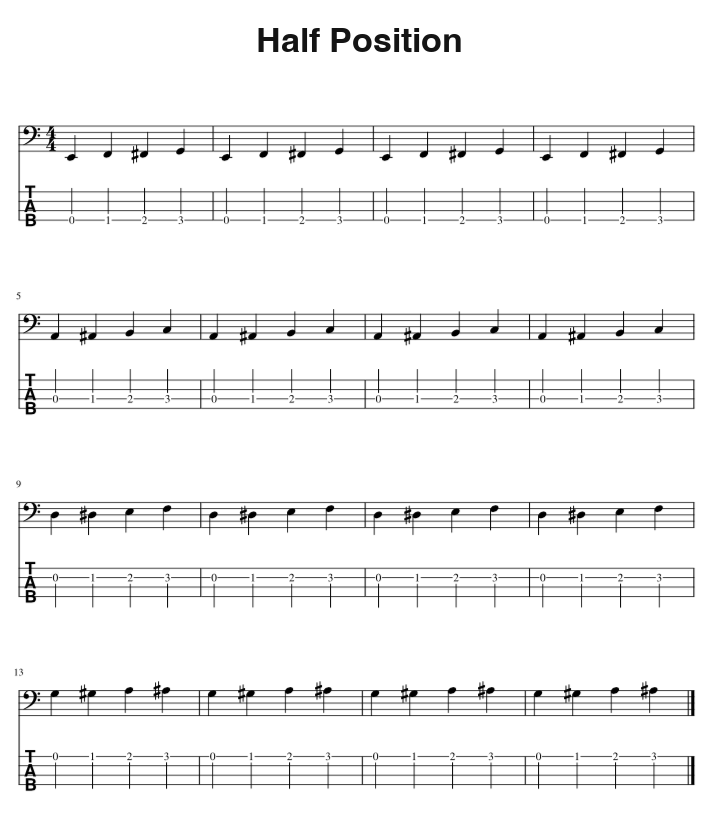
Open E string → frets 1, 2, 3, four times through
Open A string → frets 1, 2, 3, four times through
Open D string → frets 1, 2, 3, four times through
Open G string → frets 1, 2, 3, four times through

Half Position

The tempo is quarter note = 60, with one pick stroke per two notes.

How to Practice

If you don’t already have a practice habit in place, pair this with the picking exercise from the previous article, and

start with one lap a day. Once it feels comfortable, work up to two laps, then three — try to do it daily as much as you can.

Doing it every day will gradually open up your left hand, and along with your picking, you’ll get more comfortable on upright bass bit by bit.

Going from the E string to the G string at tempo 60 takes about two minutes. Even three laps is only about six minutes.

Doing a lot of reps matters, but

go slowly and carefully, checking whether your pitch is accurate and whether your hand shape is holding up.

Want Personalized Feedback on Your Playing?

This is exactly the kind of thing that’s hard to fix alone — and where having a teacher makes all the difference.

At Line on Bass, I offer an online lesson service where you send me a video of your playing, and I give you specific, detailed feedback — every single day if you want.

Students from around the world are using this to fix exactly these kinds of issues and steadily improve their jazz bass skills.

Check Out the Lesson Service →

Posted on Leave a comment

What Is an Upright Bass? A Beginner’s Guide to the Instrument

This article is written by Toru Hoshino, a jazz bassist and instructor based in Japan who teaches online lessons to students worldwide. In this article, he gives a beginner-friendly introduction to the upright bass — what it actually is and how it’s different from playing electric.

Not nearly as many people play upright bass as play electric bass or guitar, so a lot of people simply aren’t sure what the instrument actually is. Here’s a quick rundown.

What Is an Upright Bass, Exactly?

Upright bass
Double bass
Contrabass
Bass fiddle

There are a lot of different names for it, but they all refer to the same instrument:

An upright bass standing in a room

In classical circles, it’s usually called “double bass” or “contrabass.” In rock and rockabilly circles, “upright bass” is common. In jazz, people often just call it “the bass.”

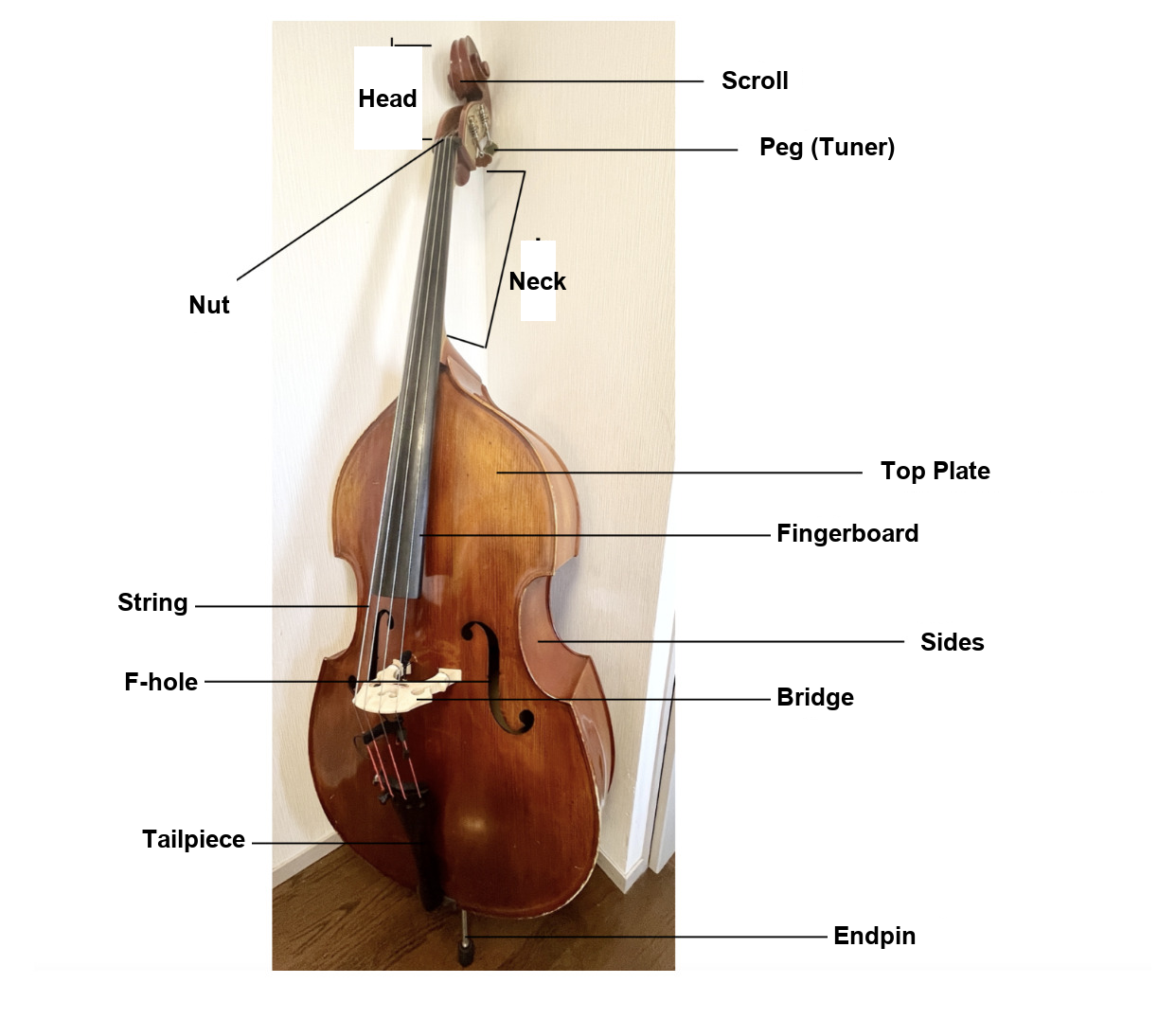
Parts of the Instrument

Here’s a diagram of the main parts:

Diagram labeling the parts of an upright bass

How Big Is an Upright Bass?

Measuring with a tape from the floor up to the top of the scroll, as shown in the photos, it comes out to roughly 190 cm (about 6 feet 3 inches).

Measuring the height of an upright bass with a tape measure

Measuring near the scroll of an upright bass

The strings are strung like this:

Strings on an upright bass

When you pluck a string, it vibrates the body. That vibration travels through the top plate, down through an internal rod called the sound post, and the whole body resonates to produce the sound.

Close-up of the upright bass body

Here’s a look inside the body and the sound post:

Inside view of an upright bass showing the sound post

And here’s what it sounds like. It might not come across fully on a phone recording, but the acoustic sound pressure is huge — hearing it live is genuinely powerful.

A Few Notable Parts

This is the bridge, which supports the tension of the strings.

Close-up of the bridge on an upright bass

This is the endpin at the bottom, which you adjust to match your height.

Endpin at the bottom of an upright bass

This is a pickup, sold separately. It’s basically a microphone that picks up the string vibrations, and I use it when I need to run through an amp in a larger venue.

A pickup attached to an upright bass

Tuning an Upright Bass

I tune mine using a standard clip-on tuner or a tuning fork.

Tuning an upright bass with a clip-on tuner

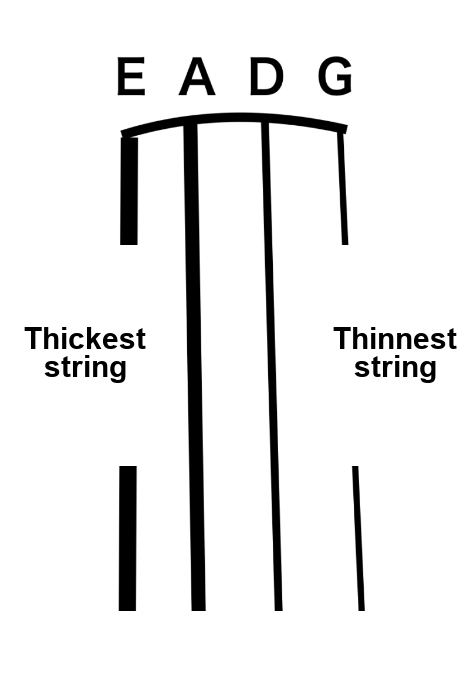
The tuning is the same as electric bass:

The open E string matches the open 4th string on electric bass.
The open A string matches the open 3rd string on electric bass.
The open D string matches the open 2nd string on electric bass.
The open G string matches the open 1st string on electric bass.

Diagram showing the E, A, D, and G strings from thickest to thinnest

Frequently Asked Questions

Q: How much does an upright bass cost?

Prices vary enormously — anywhere from around $700–800 on the low end up into five figures or beyond.

More expensive instruments are generally better quality, of course, but if you’re a beginner, it’s genuinely hard to judge what’s worth paying for. I’d recommend starting with something aimed at beginners.

Q: How do you transport an upright bass?

Whether I’m walking, taking a car, or using public transportation, I always move the bass in a case.

Personally, I use a case like this:

An upright bass in a padded case

…and I strap it onto a dedicated set of wheels often called a “bass buggy” to wheel it around.

A bass buggy used to transport an upright bass

Q: How do you practice?

I practice at home in my apartment, but only during the day out of consideration for my neighbors. I’m lucky to have an understanding landlord.

When I practice at night, I use an electric upright bass instead — it doesn’t put out much volume, so it’s convenient for practicing quietly.

Q: Why play such a huge instrument?

I actually started out on electric bass. Once I got into jazz, more and more of the people around me were upright players, and honestly, I kind of just got swept up in it.

These days, though, I genuinely love it for that deep low end — that’s what keeps me playing it.

So that’s a quick rundown of what an upright bass actually is.

Want Personalized Feedback on Your Playing?

Upright bass brings its own set of challenges — posture, hand position, intonation — that are genuinely hard to self-diagnose without someone watching you play.

This is exactly the kind of thing that’s hard to fix alone — and where having a teacher makes all the difference.

At Line on Bass, I offer an online lesson service where you send me a video of your playing, and I give you specific, detailed feedback — every single day if you want.

Students from around the world are using this to fix exactly these kinds of issues and steadily improve their jazz bass skills.

Check Out the Lesson Service →

Posted on Leave a comment

5 Reasons Teaching Yourself Upright Bass From Scratch Is Genuinely Hard

This article is written by Toru Hoshino, a jazz bassist and instructor based in Japan who teaches online lessons to students worldwide. In this article, he shares 5 reasons why teaching yourself upright bass from zero is genuinely difficult.

As the title says: picking up upright bass entirely from scratch on your own is genuinely tough. This isn’t really a pitch for my own lesson service — it’s a direct answer to a question I got recently: “I just bought an upright bass, and I don’t know how to start practicing. I managed to get it tuned since that part’s the same as electric bass, but what do I do from there?”

Honestly, taking lessons is the fastest route — but jumping straight into paid lessons can feel like a big step, so let’s first walk through exactly why self-teaching is so difficult in the first place.

5 Reasons Self-Teaching Upright Bass Isn’t Recommended

1. It’s huge
2. It’s hard to judge the right distance between your body and the instrument
3. It’s hard to know where to place your left and right hands
4. The strings are thick and long
5. There are no frets

1. It’s Huge

It’s simply a massive instrument, so how to actually produce sound, how to hold it, even how to carry it around — it’s a mystery on every front. You genuinely have no reference point for how to even handle the thing.

2. It’s Hard to Judge the Right Distance Between Your Body and the Instrument

With upright bass, you stand the instrument up and lean it against your body — but figuring out exactly where that “right” position even is takes real trial and error. Finding the sweet spot where your left hand can fret properly and your right hand can produce a good sound is genuinely difficult.

3. It’s Hard to Know Where to Place Your Left and Right Hands

You hold your left hand up around face height and your right hand down around hip height — it’s a strange, unintuitive stance. Figuring out the right spot to produce a good sound in that somewhat awkward position is hard enough, and on top of that, the height of your left elbow and the motion of your right hand are complex enough that it takes a while before any of it feels intuitive.

4. The Strings Are Thick and Long

The strings are thicker and longer than on a guitar or electric bass. That’s part of what gives the instrument such a satisfying acoustic tone, but it also means there’s real weight and resistance — pressing firmly enough to get a clean, non-buzzing note takes real effort.

5. There Are No Frets

Without frets like a guitar or electric bass has, it’s genuinely hard to tell where one pitch ends and the next begins. That means you need dedicated practice just to train your intonation — and figuring out how to actually structure that practice is its own challenge on top of everything else.

I taught myself guitar and electric bass from scratch, eventually to the point of playing live shows — but upright bass was a different story entirely; I couldn’t pull it off the same way.

So, as I mentioned up top: if you’re serious about learning it, taking lessons really is the faster path.

Sorting out your posture, hand position, intonation, and reading all at once is a lot to figure out alone — having a teacher watch and correct each of these in real time is exactly where the self-taught route runs out of road.

Want Personalized Feedback on Your Playing?

This is exactly the kind of thing that’s hard to fix alone — and where having a teacher makes all the difference.

At Line on Bass, I offer an online lesson service where you send me a video of your playing, and I give you specific, detailed feedback — every single day if you want.

Students from around the world are using this to fix exactly these kinds of issues and steadily improve their jazz bass skills.

Check Out the Lesson Service →

Posted on Leave a comment

One Thing to Watch For When Using Position Markers on Upright Bass

This article is written by Toru Hoshino, a jazz bassist and instructor based in Japan who teaches online lessons to students worldwide. In this article, he shares one important thing to watch for when using position markers (fingerboard tape) on upright bass.

Upright bass has no frets like an electric bass does, so the boundaries between pitches are hard to feel, and intonation is genuinely difficult to nail down when you’re just starting out.

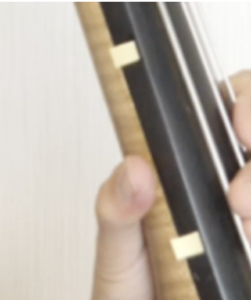
Position marker tape applied to the upright bass fingerboard

Because of that, I often get asked: “Is it okay to put stickers or tape on the fingerboard as position markers?”

Opinions vary on this, but personally, I think it’s fine. In fact, I used position markers myself for my first few years.

That said, here’s the thing to watch out for: don’t stare directly at the markers.

If you get into the habit of staring straight at the position marker, you end up having to turn your head every single time you play —

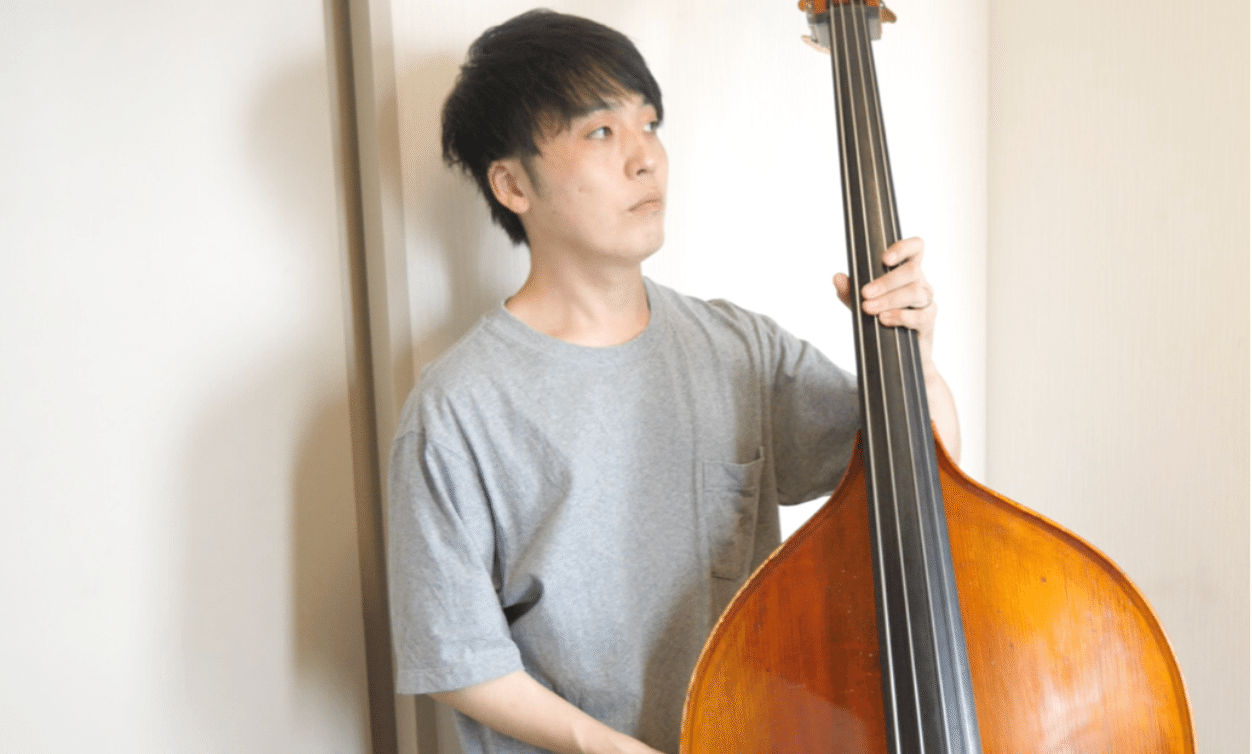
Look left at the position marker

Looking left to check the position marker

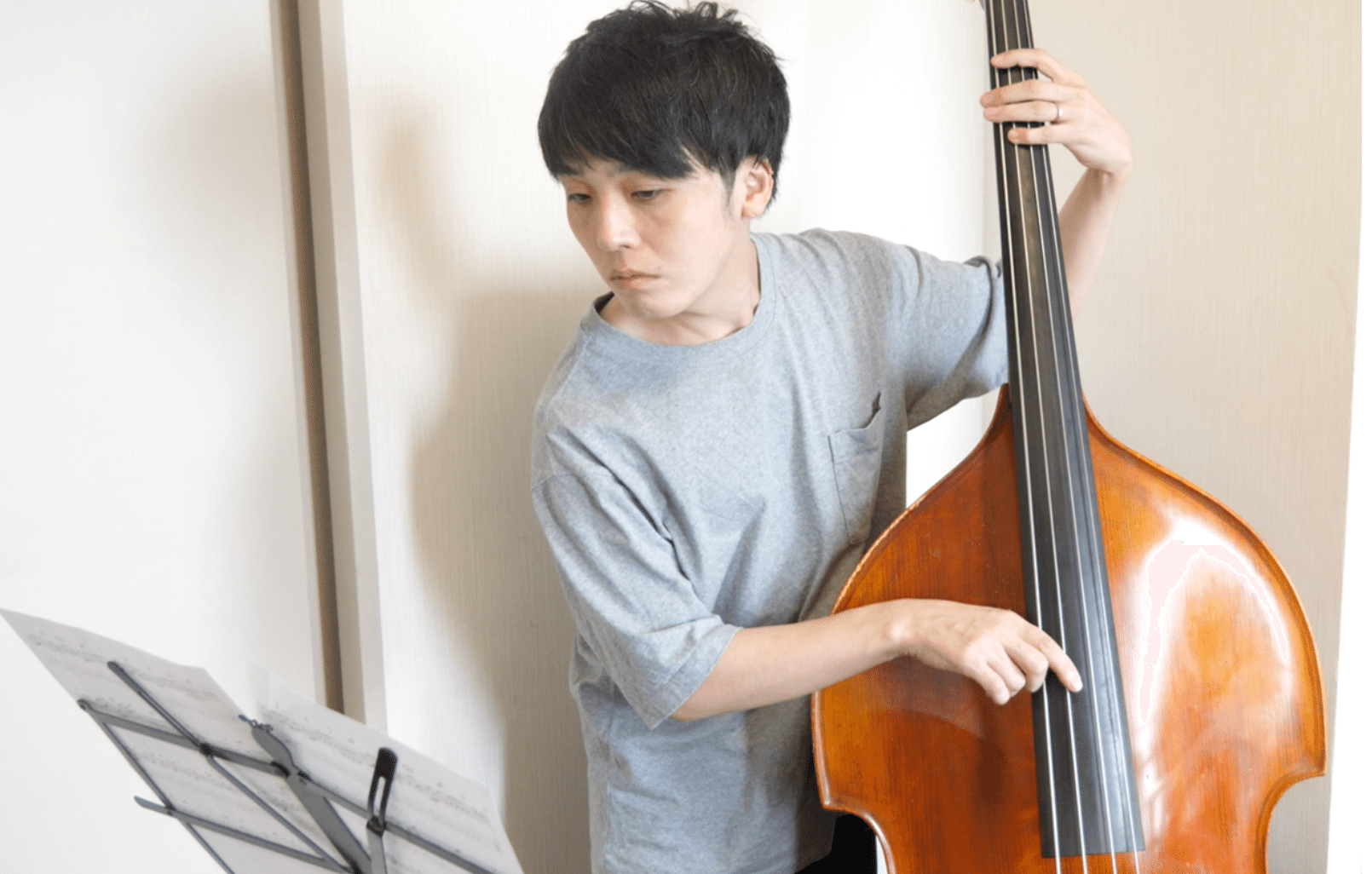
Look forward at the sheet music

Looking forward at the sheet music

Look left at the position marker, look forward at the sheet music, look left at the position marker, look forward at the sheet music…

…which means turning your head left, forward, left, forward, over and over throughout a performance — and I think that’s wasted motion.

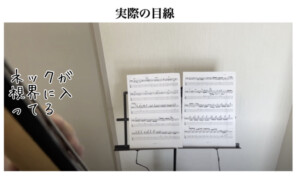
So instead, try to catch the position marker at the edge of your vision as much as possible.

Keeping your head as still as possible, with both the position marker and the sheet music sitting in your field of view at the same time, will make performing noticeably easier.

A point-of-view photo showing the bass neck caught at the edge of vision while reading sheet music
The neck stays at the edge of your field of view while the sheet music stays in front.

Hopefully this gives you a useful tip if you’re using position markers.

Training your eyes to catch the fingerboard at the edge of your vision instead of staring at it is a subtle habit — a teacher watching you play can usually spot whether you’re doing it within seconds.

Want Personalized Feedback on Your Playing?

This is exactly the kind of thing that’s hard to fix alone — and where having a teacher makes all the difference.

At Line on Bass, I offer an online lesson service where you send me a video of your playing, and I give you specific, detailed feedback — every single day if you want.

Students from around the world are using this to fix exactly these kinds of issues and steadily improve their jazz bass skills.

Check Out the Lesson Service →

Posted on Leave a comment

How Playing Upright Bass Made Me a Better Electric Bass Player

This article is written by Toru Hoshino, a jazz bassist and instructor based in Japan who teaches online lessons to students worldwide. In this article, he shares one genuinely positive effect that upright bass had on his electric bass playing.

There are plenty of good side effects from playing upright bass that carry over to electric bass, but one of the biggest is this: I became able to actually think in note names.

Coming up as a band kid, I grew up entirely on tab notation, so I’d built a habit of memorizing pitches as numbers — “C is the 3 (3rd string, 3rd fret),” “F# is the 4 (2nd string, 4th fret),” and so on.

But upright bass has no frets, and method books for it don’t use tab at all. So instead of “C is the 3,” I had to relearn it as “C is the note you fret with your pinky in half position on the A string,” and “F# is the note you fret with your pinky in first position on the D string.”

Practicing upright bass

Getting comfortable reading bass clef, which I wasn’t used to at all, was genuinely tough. But the single biggest benefit of learning to think in note names instead of tab numbers was that my ability to handle chords on the fly improved enormously.

For example, if there’s a Dm chord and I want to build an improvised phrase on the spot, having the chord tones — D (root), F (3rd), A (5th) — come to mind instantly lets me build a phrase right then and there. And when they come up instantly like that, the resulting phrase naturally fits the harmony of the chord backing being played underneath.

If you’re stuck thinking only in tab the whole time, chord tones like these don’t come to mind quickly either.

In that sense, I’m glad picking up upright bass gave me this new perspective. It really does broaden your view as a musician — if you’re at all curious about upright or double bass, I’d genuinely encourage you to give it a try.

Switching to thinking in note names is the kind of internal shift that’s hard to confirm you’ve actually made on your own — having someone listen and quiz you on the spot is the fastest way to know it’s sticking.

Want Personalized Feedback on Your Playing?

This is exactly the kind of thing that’s hard to fix alone — and where having a teacher makes all the difference.

At Line on Bass, I offer an online lesson service where you send me a video of your playing, and I give you specific, detailed feedback — every single day if you want.

Students from around the world are using this to fix exactly these kinds of issues and steadily improve their jazz bass skills.

Check Out the Lesson Service →

Posted on Leave a comment

A Bass Line Breakdown: “A Night in Tunisia” on Upright Bass

This article is written by Toru Hoshino, a jazz bassist and instructor based in Japan who teaches online lessons to students worldwide. In this article, he breaks down a bass line for the jazz standard “A Night in Tunisia,” played on upright bass.

“A Night in Tunisia” on Upright Bass

Let’s start with the performance itself:

Taking On a Genuinely Difficult Tune

This one’s on the harder side for beginners to play, but it comes up often enough at jam sessions that it’s well worth having under your fingers.

The Intro Fingering Is the Key

The intro progression — E♭7 → Dm6 → E♭7 → Dm6 — is the part to really focus on. During the melody section, both the intro and the A section largely repeat this same phrase.

I chose to start the opening E♭ note on the A string.

Starting the opening E-flat note on the A string

It’s an awkward starting position right out of the gate, but:

An alternative starting position on the D string that requires more position shifts

↑ Starting on the D string’s 1st fret like this, instead, makes the position shifts that follow much more difficult — so I chose to start on the A string’s E♭, which keeps later position changes to a minimum.

How to Keep Your Fingers From Tangling in the Intro

The intro phrase uses alternating index-and-middle-finger picking across three strings — A, D, and G.

Moving across three strings in such a short span makes it really easy for your fingers to tangle up.

If you’re tangling frequently, it’s possible you’re using a different finger each time inconsistently — so first, firmly decide which finger you’re using where.

Here’s how I approached it this time:

Note: I personally have a tendency to favor my middle finger more when alternating, so this fingering reflects that. If it doesn’t feel natural for you, go with whatever fingering actually works for your own hand.

A consistent index-and-middle-finger alternating pattern across three strings

From there, check your fingering against a metronome at a slow tempo, and gradually speed up once you’ve got it locked in.

Listen to the Masters Play It Too

Art Blakey’s recording of “A Night in Tunisia” features this same bass phrase right from the start of the tune.

Listening to the actual recording will deepen your understanding even further.

Untangling fingering like this on your own takes a lot of trial and error — a teacher can usually spot the smoother path within seconds of watching you play it.

Want Personalized Feedback on Your Playing?

This is exactly the kind of thing that’s hard to fix alone — and where having a teacher makes all the difference.

At Line on Bass, I offer an online lesson service where you send me a video of your playing, and I give you specific, detailed feedback — every single day if you want.

Students from around the world are using this to fix exactly these kinds of issues and steadily improve their jazz bass skills.

Check Out the Lesson Service →

Posted on Leave a comment

Upright Bass vs. Electric Upright Bass: Differences, Pros, and Cons

This article is written by Toru Hoshino, a jazz bassist and instructor based in Japan who teaches online lessons to students worldwide. In this article, he breaks down the real differences between upright bass and electric upright bass.

This one’s for anyone thinking, “Should I get an upright bass, or an electric upright bass?”

I get asked “are upright bass and electric upright bass actually different?” constantly in lessons — and yes, they’re completely different instruments.

The short version: neither is “better” or “worse.” It comes down to this:

For authenticity: upright bass

For convenience: electric upright bass

What’s the Difference in Naming?

Let’s start by sorting out the terminology.

Upright Bass

An upright bass

In classical music, this is also called a “double bass” or “contrabass.”

Electric Upright Bass

An electric upright bass

Also called a “silent upright bass,” or abbreviated “EUB.”

What’s the Difference in Sound?

The sound is different.

Upright Bass

This is the instrument’s natural, acoustic sound.

Electric Upright Bass

This one is an electronically amplified sound.

Neither is better or worse. Which one you choose comes down entirely to personal taste — pick whichever matches the tone you’re going for right now. That said, there are real practical differences in portability, how it fits your situation, and visual presence, so let’s go through those.

Pros and Cons of Each

Upright Bass: Pros

Loud Natural Volume

An upright bass with its large hollow wooden body

Thanks to its large, hollow wooden body, an upright bass is genuinely loud acoustically. In a small enough venue, you can play unamplified and still be heard clearly by the audience, with the rest of the ensemble balancing around you.

Looks Great

A grand piano, upright bass, and drums on stage together

A grand piano, an upright bass, and a drum kit together — there’s something great about that visual. Personally, it’s one of the more beautiful sights in the world, in my opinion.

Upright Bass: Cons

Heavy

It’s heavy and a real hassle to transport. Stations without an elevator will make you want to complain out loud. I’ve actually written before about everything I keep in mind when carrying an upright bass on the train — it’s a big enough headache that it became its own blog post.

Hard to Find a Place to Practice

Because the natural volume is so loud, you have to be picky about where you practice. Thin-walled apartments will get you noise complaints fast.

Electric Upright Bass: Pros

Easy to Transport

It packs down dramatically smaller (for example, the Yamaha SLB200V).

A compact electric upright bass that breaks down for travel

Some models even break down to fit into a backpack-style case. The body is generally much more compact than an upright bass, making it far easier to transport.

Practice Anywhere

Because the natural acoustic volume is so quiet, you can practice at home without issue.

Electric Upright Bass: Cons

Can’t Be Played Unamplified

Since the natural volume is so quiet, you absolutely need an amp to perform with it.

Less “Authentic” Feel Than an Upright Bass

It just doesn’t carry the same sense of authenticity as a real upright bass. Some players are particular about the acoustic texture of a real upright’s natural sound, and some don’t like how the amplified electronic tone blends with an acoustic piano. A lot of people will tell you the real wood instrument is simply better.

So, once again:

For authenticity: upright bass

For convenience: electric upright bass

Weigh these factors against your own situation, and if you’re seriously considering a purchase, it’s well worth having a thorough conversation with a music shop before you commit.

Whichever instrument you choose, the thing that actually moves your playing forward is consistent feedback — which is exactly what a teacher provides.

Want Personalized Feedback on Your Playing?

This is exactly the kind of thing that’s hard to fix alone — and where having a teacher makes all the difference.

At Line on Bass, I offer an online lesson service where you send me a video of your playing, and I give you specific, detailed feedback — every single day if you want.

Students from around the world are using this to fix exactly these kinds of issues and steadily improve their jazz bass skills.

Check Out the Lesson Service →