Posted on Leave a comment

The Secret Behind a Solo That Makes the Crowd Go “Yeah!”

This article is written by Toru Hoshino, a jazz bassist and instructor based in Japan who teaches online lessons to students worldwide. In this article, he points out what actually makes a solo land with an audience — and it’s not what you’d expect.

The Moment a Solo Makes the Crowd Go “Yeah!”

While giving feedback on students’ improvised solos, I noticed something: the moments where I catch myself saying “oh, that’s nice” aren’t when someone’s packing every beat with eighth notes. They’re almost always moments where the silence lands at exactly the right time.

That clicked for me again today while listening to a recording — there’s a moment in a Christian McBride solo where you can hear someone in the audience (or maybe a bandmate) blurt out “yeah!” without thinking. It happens around 1:12 in this video.

The audience couldn’t have known a pause was coming right there — there’s no way to predict that in an improvised solo. And yet, someone reacted out loud, instantly. I think that’s what “good space” really means.

When you’re copying a phrase, paying attention to the actual notes obviously matters. But it might be worth paying just as much attention to where the greats leave space, or where a phrase really lands — looking at it that way can change what you start to notice.

I still want to aim for that same kind of space and timing in my own playing.

Man, what a great recording. I’ve loved this one for years — I guess this is what people mean by “swinging.” Give it a listen if you haven’t already.

Putting in the reps matters, but soaking in great music matters just as much. 🙂

Timing and space like this are notoriously hard to judge in your own playing — it’s exactly the kind of thing a second pair of ears catches instantly.

Want Personalized Feedback on Your Playing?

This is exactly the kind of thing that’s hard to fix alone — and where having a teacher makes all the difference.

At Line on Bass, I offer an online lesson service where you send me a video of your playing, and I give you specific, detailed feedback — every single day if you want.

Students from around the world are using this to fix exactly these kinds of issues and steadily improve their jazz bass skills.

Check Out the Lesson Service →

Posted on Leave a comment

What Is Improvisation, Really? (And Where to Start)

This article is written by Toru Hoshino, a jazz bassist and instructor based in Japan who teaches online lessons to students worldwide. In this article, he answers a question he gets often: what does “improvisation” actually mean, and where should you start?

What Is Improvisation, Really?

I recently got asked: “Is improvising about coming up with something completely new on the spot, something you never planned? Or is it really just using phrases and licks you’ve copied from other players?”

The honest answer is: both.

But if it were only the first one, total chaos would count as “improvisation” too. My son is about to turn two, and he loves banging on the piano just for fun — that’s technically improvised. But it’s not music.

And as the second part of the question suggests, using phrases and licks you’ve copied is genuinely important too. The catch is, if you copy them with zero underlying knowledge, your fingers might learn to move, but you won’t be able to apply what you learned anywhere else.

So the real goal is building up enough musical knowledge that the right phrase shows up naturally, at the right moment, when you need it.

If you’re just starting out with jazz improvisation, by far the best first step is:

Learning your chord tones.

If you see F7 and your fingers know F–A–C–E♭, or you see Dm7 and your fingers know D–F–A–C — being able to play the chord tones the moment you see the chord symbol is a smooth first step into improvising.

If you want to join sessions, want to try improvising, or just don’t know where to start — start with chord tones.

Where Do I Start With Chord Tones?

That said, “where do I actually start” is a fair question, so I made a video for it. Getting chord tones to come to mind instantly when you see a chord takes repetition and practice.

So here’s a no-instrument-required brain-training video you can do anywhere. A chord shows up on screen, and a few seconds later, the chord tones appear. There are 30 questions in total — repeat it regularly if you want to build up your ability to react to chords on the fly.

Subscribe to my YouTube channel here for more videos like this.

Things like chord-tone recall are easy to drill on your own, but hard to know if you’re actually applying correctly — that’s exactly where having someone check your playing helps.

Want Personalized Feedback on Your Playing?

This is exactly the kind of thing that’s hard to fix alone — and where having a teacher makes all the difference.

At Line on Bass, I offer an online lesson service where you send me a video of your playing, and I give you specific, detailed feedback — every single day if you want.

Students from around the world are using this to fix exactly these kinds of issues and steadily improve their jazz bass skills.

Check Out the Lesson Service →

Posted on Leave a comment

What to Play When Test-Driving a Bass at the Store (One Easy Scale)

This article is written by Toru Hoshino, a jazz bassist and instructor based in Japan who teaches online lessons to students worldwide. In this article, he shares one simple scale you can fall back on whenever you’re test-playing a bass at a music store.

What to Play When Test-Driving a Bass at the Store

You want to try out a bass at the store, but you have no idea what to play… and then the person next to you starts ripping through some insane slap lines, and suddenly you lose your nerve. Sound familiar? I think most bassists have been there at least once.

Even if that’s you, playing just this one thing will make you sound like you know exactly what you’re doing. Check out this short video first — the first 10 seconds or so is enough.

https://www.instagram.com/reel/DX5H-7TKQgC/
Feel free to follow my Instagram too, if you’re up for it 🙂

Just go back and forth across the scale shown there, and it’ll sound pretty good almost right away.

About the Scale

Technically speaking, this is an F minor pentatonic scale with a flat 5th added.

It takes the notes F–A♭–B♭–B–C–E♭ and lays them out across an easy-to-finger area as B–C–E♭–F–A♭–B♭–C.

F minor pentatonic scale with a flat 5th, shown in tab notation

This scale also works for blues improvisation in F, so it’s worth keeping in your back pocket if you ever want to try soloing. Move your fingers through it and get a feel for that bluesy sound while you’re testing out the bass.

Little tricks like this are great for sounding confident in the moment — but building real soloing vocabulary on top of them is where a teacher’s eye makes the biggest difference.

Want Personalized Feedback on Your Playing?

This is exactly the kind of thing that’s hard to fix alone — and where having a teacher makes all the difference.

At Line on Bass, I offer an online lesson service where you send me a video of your playing, and I give you specific, detailed feedback — every single day if you want.

Students from around the world are using this to fix exactly these kinds of issues and steadily improve their jazz bass skills.

Check Out the Lesson Service →

Posted on Leave a comment

A Jazz Bass Lick for 2-Bar Major Chords (Chromatic Approach Notes, George Mraz Style)

This article is written by Toru Hoshino, a jazz bassist and instructor based in Japan who teaches online lessons to students worldwide. In this article, he breaks down a slick-sounding lick you can use any time a major chord holds for two bars.

Who This Article Is For

  • You’re not sure how to build your own improvised solo phrases
  • You want to bring great bassists’ approaches into your own playing
  • You want to expand your vocabulary of solo lines
  • You want to understand how to build jazz phrases around chord tones

Work through the phrase in this article, and you’ll pick up one solid approach for soloing over a major chord that lasts two bars. It transposes easily, so you can apply it to all kinds of tunes — stick with this one to the end.

Where This Comes From

This is a phrase you can use in jazz chord progressions whenever a major chord — like CΔ7 or C7 — holds for two bars. Have a listen to 1:21–1:30 in the video below first.

Album: Manhattan Trinity
Bassist: George Mraz

How the Phrase Is Built

Here’s the approach over a CΔ7 chord:

Diagram showing chromatic approach notes around chord tones over CMaj7

  • ① Play the 3rd (E), drop a half step, then come back to the 3rd (E) — red line
  • ② Play the root (C), drop a half step, then come back to the root (C) — blue line
  • ③ Play the 5th (G), drop a half step, then come back to the 5th (G) — green line
  • ④ Play the 3rd (E) an octave down, drop a half step, then come back to the 3rd (E) — red line

It’s basically weaving through the chord tones. Give it a try with your own hands if you can!

If you played all three of those target notes exactly the same way each time, it wouldn’t be wrong — but it would lose a lot of its style.

Diagram comparing a flatter version of the same phrase

Transposed and Applied

Here’s this same idea — weaving through chord tones using a half-step below each one — transposed and applied elsewhere. This is the chord progression for the jazz standard “Just Friends.”

The same chromatic approach-note idea applied to the chord progression of Just Friends

This works over plenty of tunes, so give it a try in your own playing.

Phrases like this one are easy to get almost right but hard to really nail on your own — exactly the kind of detail a teacher can catch instantly.

Want Personalized Feedback on Your Playing?

This is exactly the kind of thing that’s hard to fix alone — and where having a teacher makes all the difference.

At Line on Bass, I offer an online lesson service where you send me a video of your playing, and I give you specific, detailed feedback — every single day if you want.

Students from around the world are using this to fix exactly these kinds of issues and steadily improve their jazz bass skills.

Check Out the Lesson Service →

Posted on Leave a comment

5 Jazz Standards Arranged as Solo Bass Pieces for Upright Bass (Free Sheet Music)

This article is written by Toru Hoshino, a jazz bassist and instructor based in Japan who teaches online lessons to students worldwide. In this article, he shares five jazz standards you can play as a complete solo on a single upright bass — sheet music included.

Who This Article Is For

  • You want to try solo bass but aren’t sure where to start
  • You play upright or double bass and want to play jazz on it
  • You want to be ready for the moment someone says “take a solo” at a session
  • You want to learn solo bass lines for well-known jazz standards

The video below covers five solo bass arrangements, each with full sheet music. Save it and use it in your practice.

The 5 Songs in This Video

  • Autumn Leaves
  • Fly Me To The Moon
  • Moon River
  • Summertime
  • Pink Panther

These are all jazz standards, and each one is arranged to stand on its own as a complete solo bass piece — so they work whether you play upright bass or electric bass.

Watch the Video

You can see the sheet music for each song right in the video.

You can also download the sheet music here — feel free to use it:

https://www.dropbox.com/scl/fo/1i4i3yhbxjr1eftsa91eh/ABRUmj94wV6Nkc9vqwhCTMw?rlkey=aa9xf0aieaz0p5t7ukfzb08ed&st=tv7wkjeg&dl=0

Subscribe to my YouTube channel here for more bass content like this.

Thanks for reading this far — working through arrangements like these is exactly the kind of practice that benefits from a second pair of ears checking your timing and phrasing.

Want Personalized Feedback on Your Playing?

This is exactly the kind of thing that’s hard to fix alone — and where having a teacher makes all the difference.

At Line on Bass, I offer an online lesson service where you send me a video of your playing, and I give you specific, detailed feedback — every single day if you want.

Students from around the world are using this to fix exactly these kinds of issues and steadily improve their jazz bass skills.
Check Out the Lesson Service →

Posted on Leave a comment

How to Reach With Your Pinky Finger on Bass (Even With Short Fingers)

This article is written by Toru Hoshino, a jazz bassist and instructor based in Japan who teaches online lessons to students worldwide. In this article, he shares why a small elbow adjustment can solve one of the most common pinky-finger struggles on bass.

“My pinky just won’t reach when I play bass.”

If that’s you, this article walks through a simple way to fix it.

The key is your elbow.

Push Your Elbow Forward

I posted about this on Twitter recently:

Just a Slight Forward Push of the Elbow

I have a student whose pinky finger is noticeably short, but who still uses it with total confidence. He’s just a regular high school student.

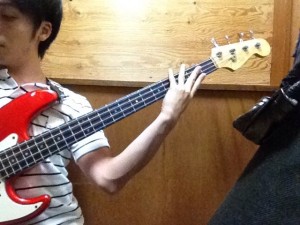
Student demonstrating bass hand position with a short pinky finger

I asked him, “How are you able to use your pinky so well?” — my own fingers happen to be long, so it’s never been something I had to work around.

He said, “When I use my pinky, I push my elbow in pretty hard.”

Here’s roughly what that looks like.

This is a typical playing position:

Standard bass left-hand position

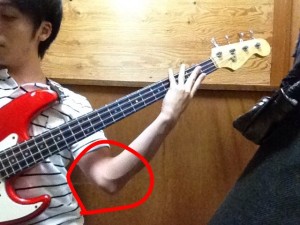
And here’s the student’s version:

Bass left-hand position with the elbow pushed forward

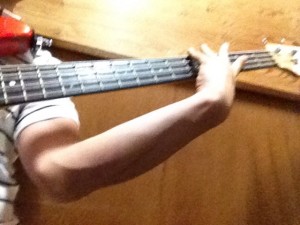
Close-up of elbow position for a better pinky reach

The idea is to push your elbow forward just a little — a gentle nudge, not a hard shove.

Do that, and your pinky lands on the string almost on its own.

If Your Pinky Is Short, Try Pushing Your Elbow Forward

There’s only so much you can do about the actual length of your pinky finger.

When that’s the issue, try pushing your left elbow forward a bit.

It won’t affect how your form looks, either.

Bass player demonstrating a forward elbow position

Wrapping Up: Bass Playing Form

Building a form that actually fits your body will speed up your progress.

[PLACEHOLDER — link to the English version of the “bass form” article (right hand, left hand, strap length, angle) once it’s translated]

Thanks so much for reading this far!

Small details like elbow position are exactly the kind of thing that’s hard to judge by watching yourself — but easy to spot with a second pair of eyes.

Want Personalized Feedback on Your Playing?

This is exactly the kind of thing that’s hard to fix alone — and where having a teacher makes all the difference.

At Line on Bass, I offer an online lesson service where you send me a video of your playing, and I give you specific, detailed feedback — every single day if you want.

Students from around the world are using this to fix exactly these kinds of issues and steadily improve their jazz bass skills.
Check Out the Lesson Service →

Posted on Leave a comment

A Bar in Taipei Where You Can Walk In and Join a Jazz Jam Session

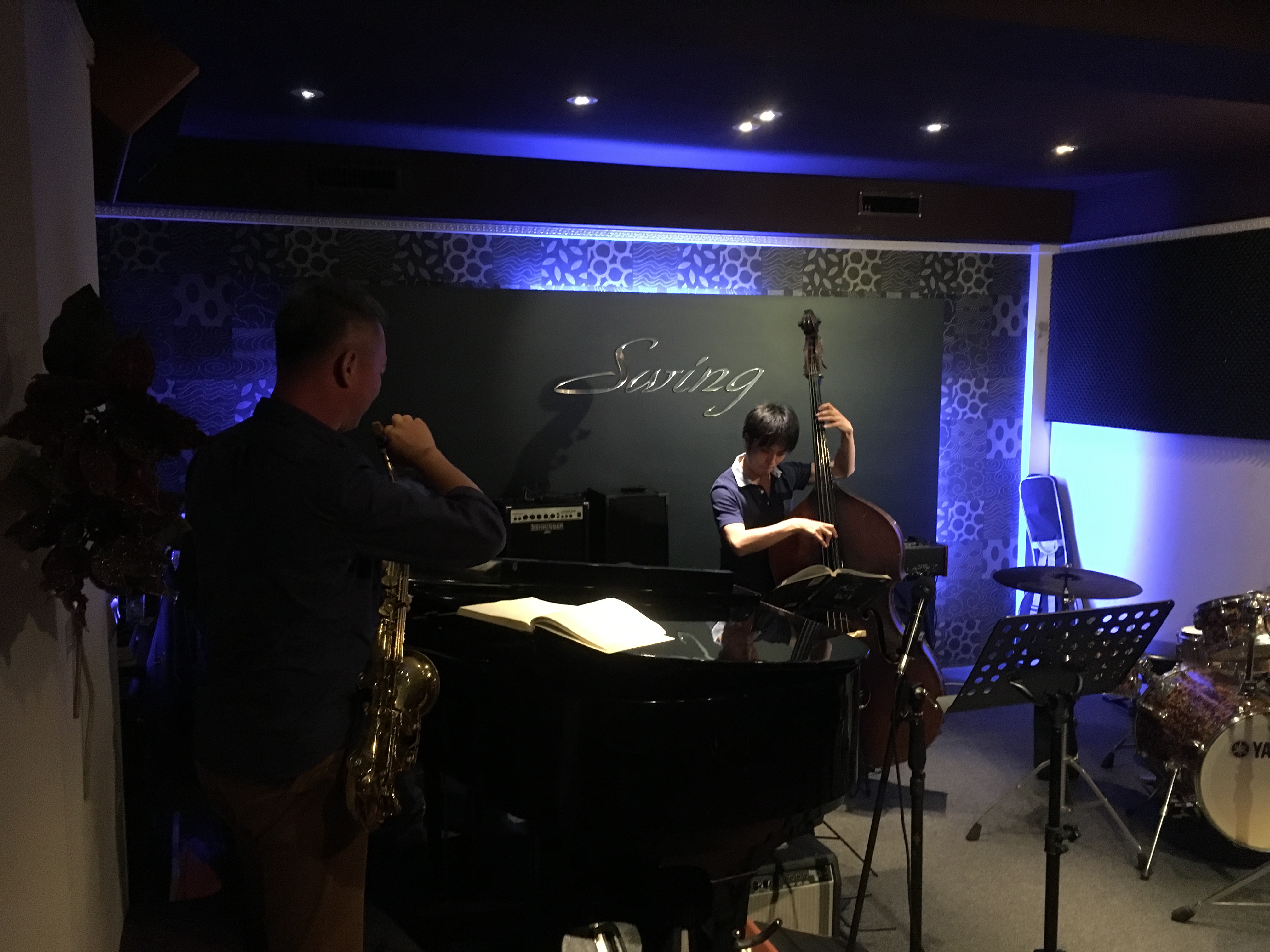
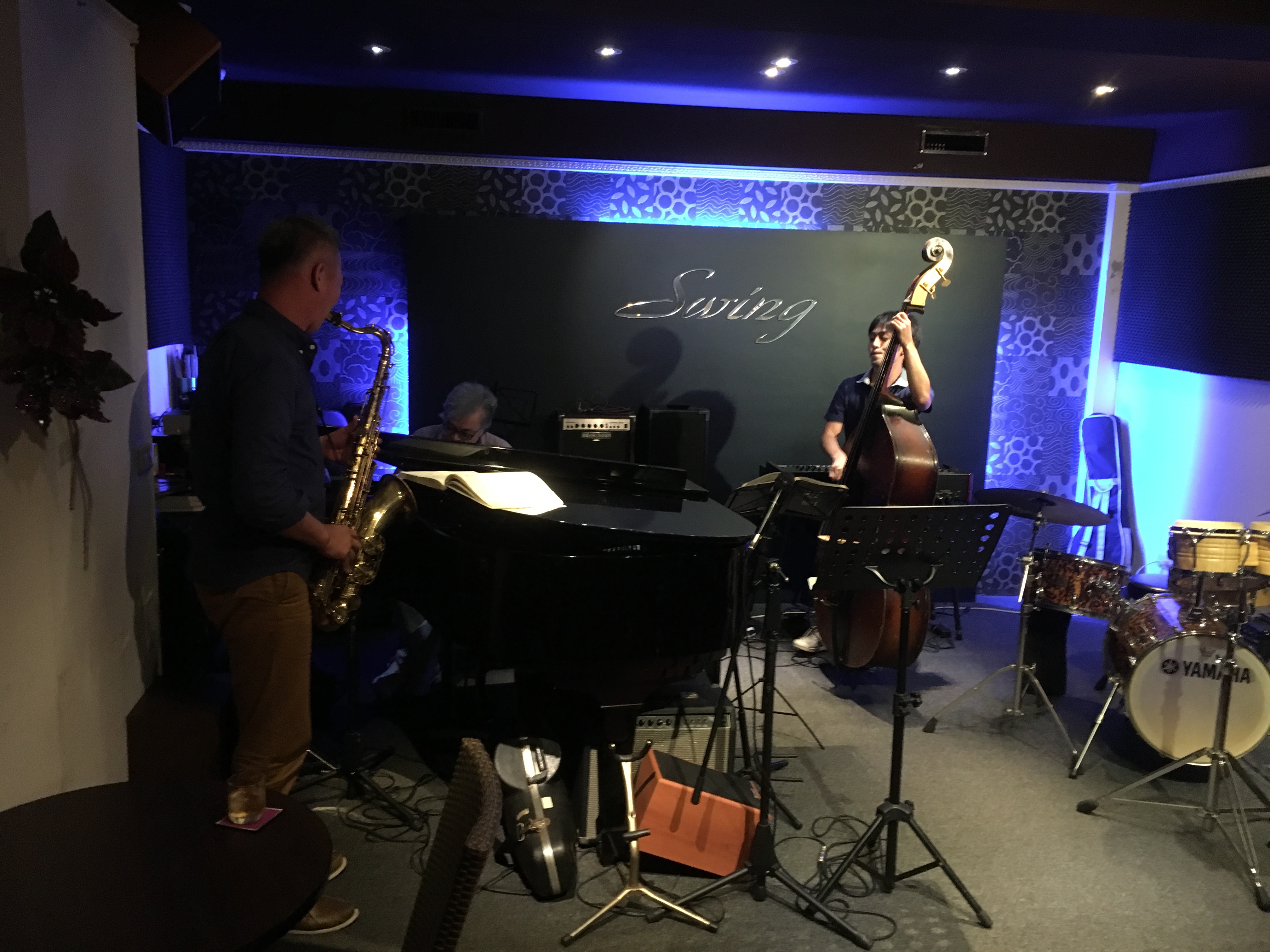
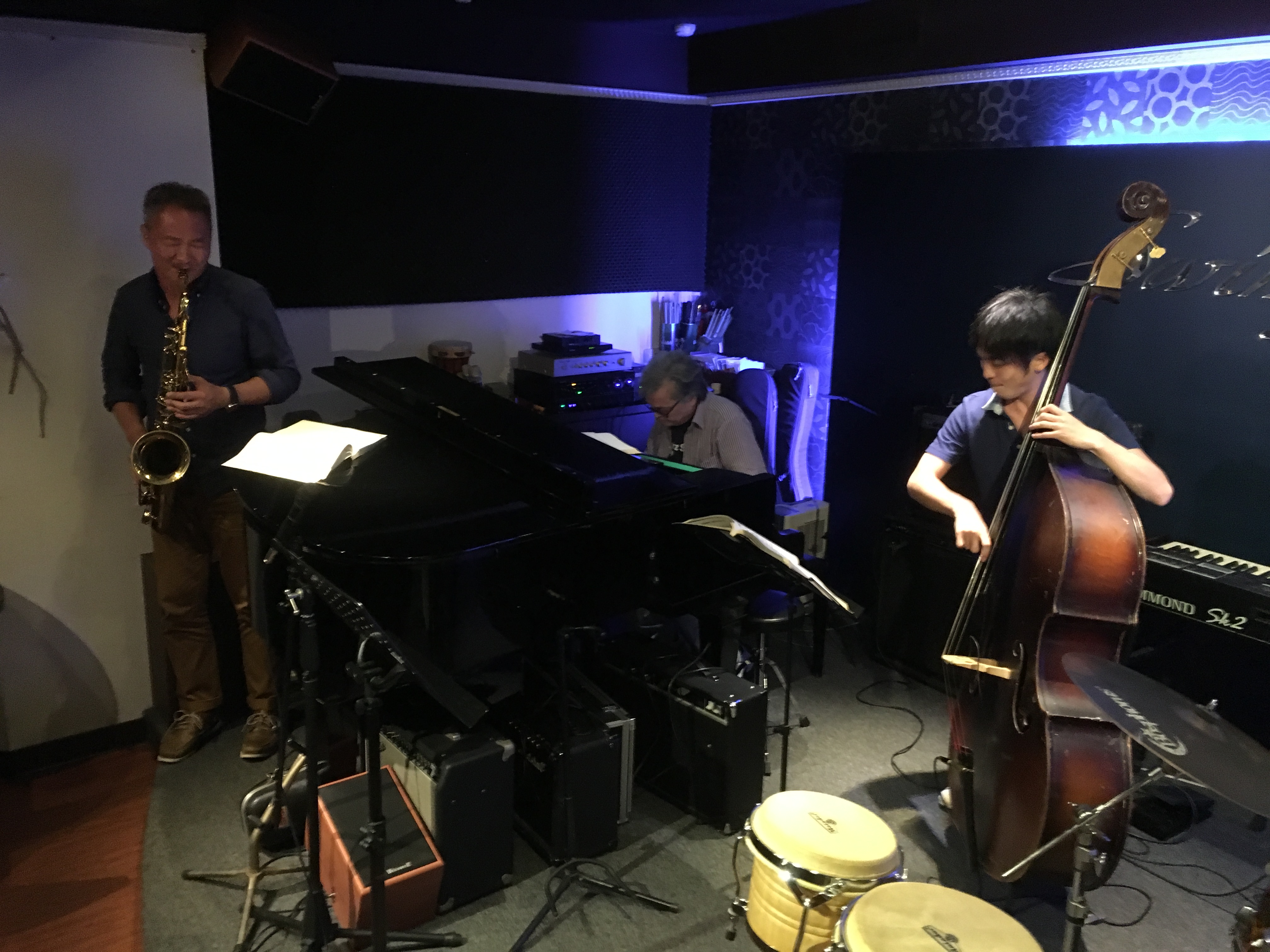
I found a bar in Taipei where you can actually join a jazz jam session.

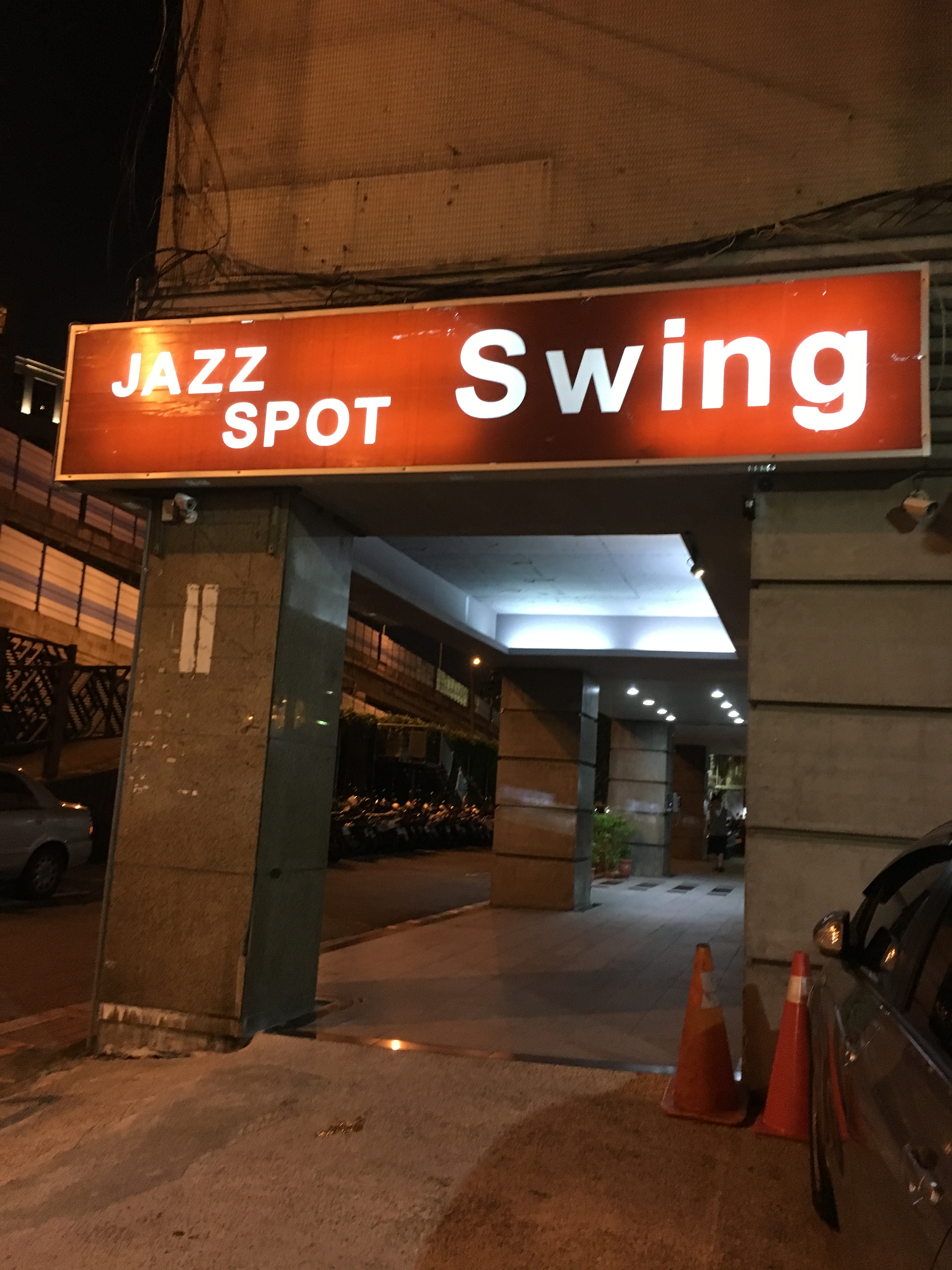
Jazz Spot “SWING”

It’s about a 10-minute walk from Zhongshan Station (full address below).

Entrance of Jazz Spot SWING in Taipei

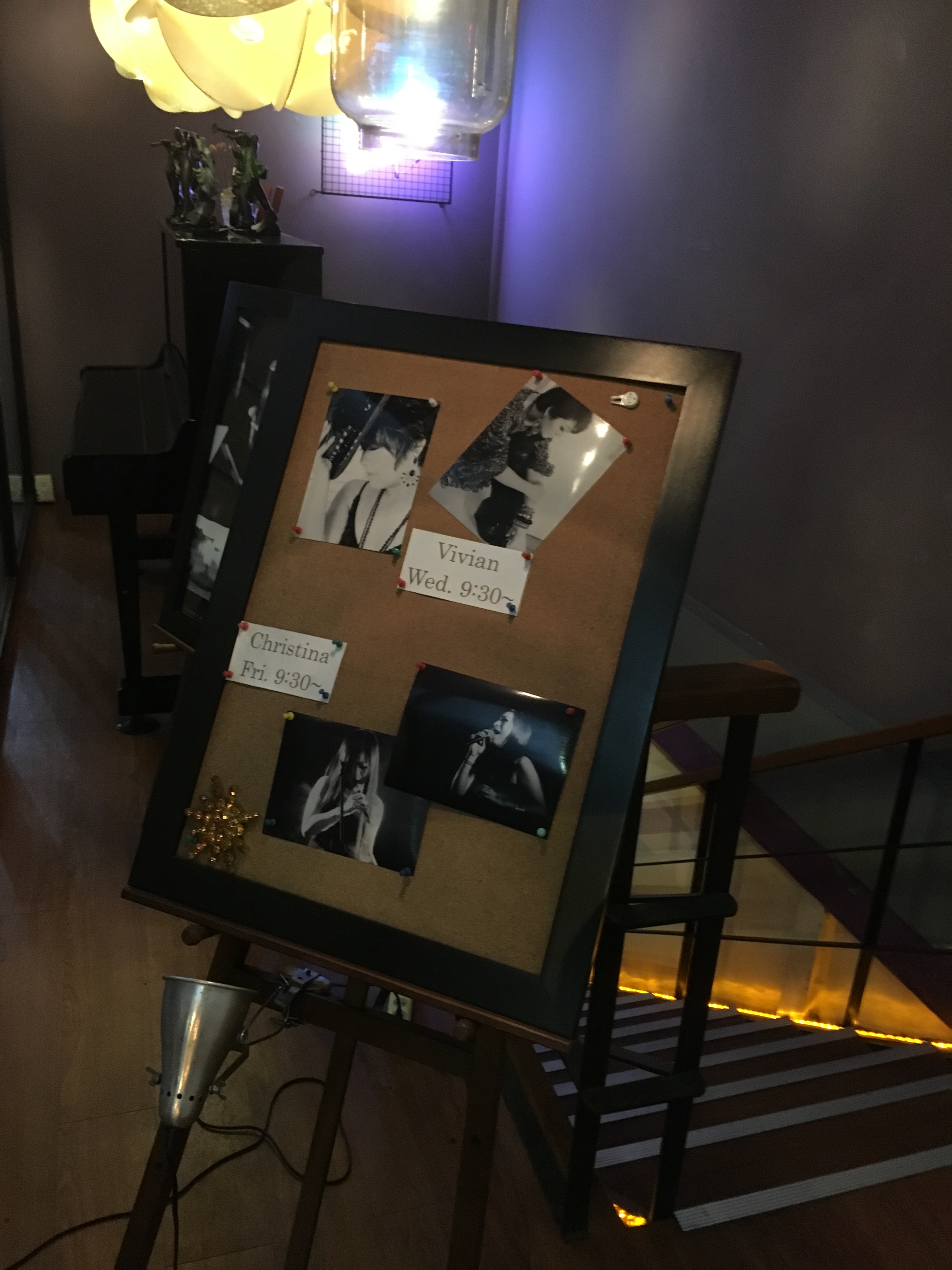
Street leading to Jazz Spot SWING

Here’s a look inside the venue.

Interior of Jazz Spot SWING

I was expecting to be spoken to in Mandarin, but instead the staff asked me in fluent Japanese, “Excuse me, do you play an instrument?”

I said, “Yes, I play bass” — and that was all it took.

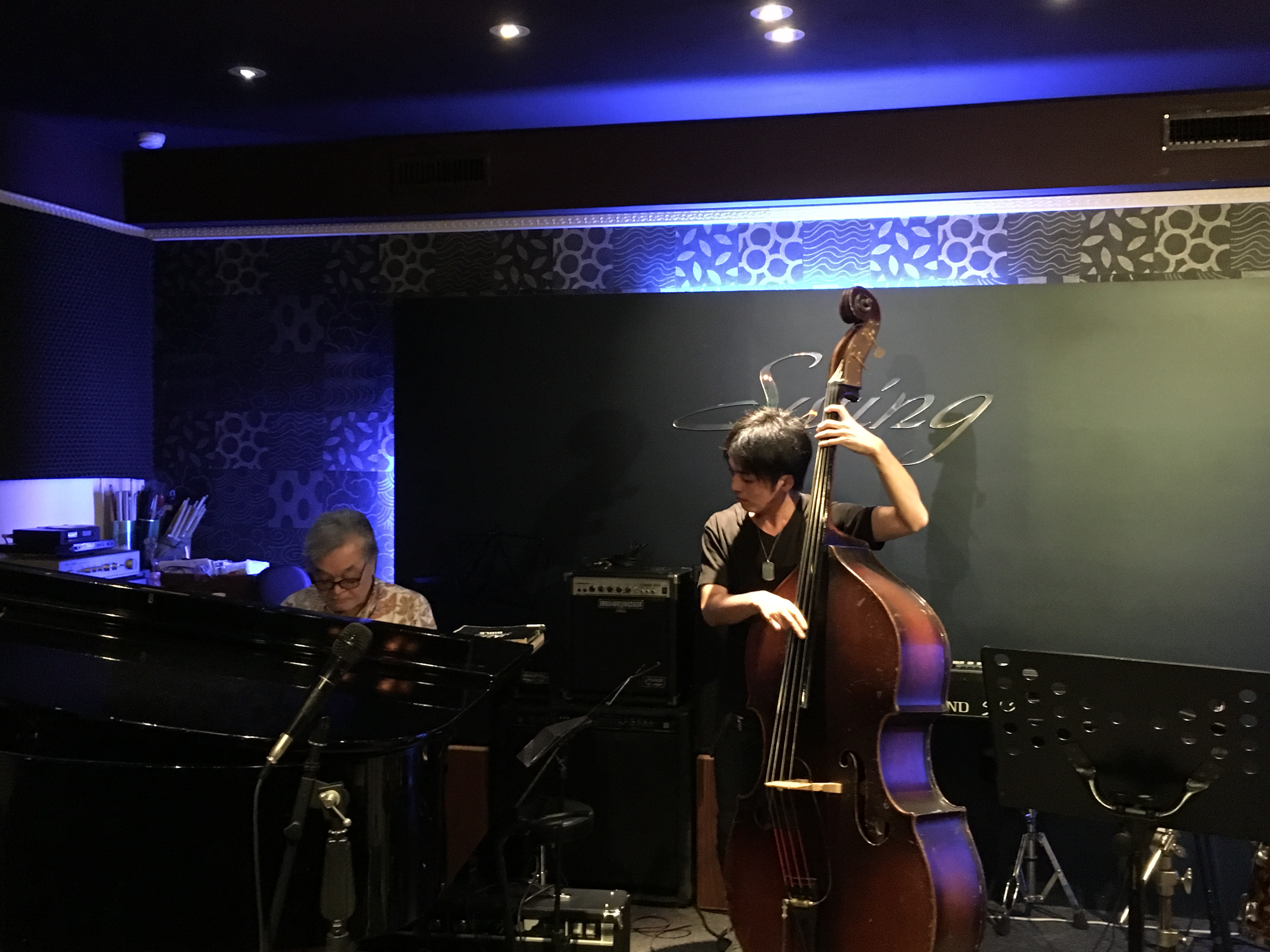
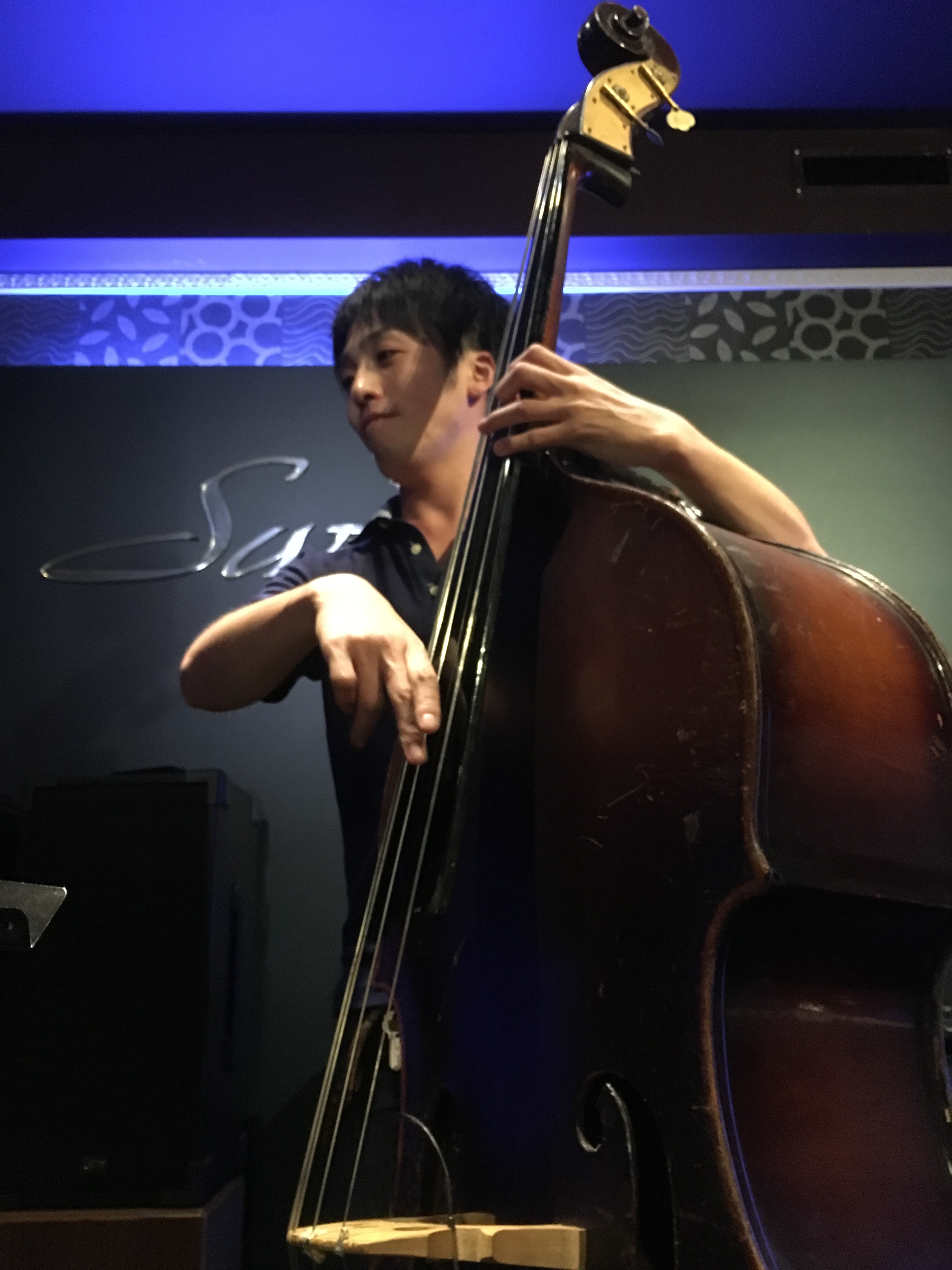
Playing double bass at the jam session

An impromptu jam session in Taiwan was underway.

Jazz musicians jamming together

Jam session in progress at the venue

Musicians performing jazz standards

A saxophone player jumped in partway through,

Saxophonist joining the jam session

and before I knew it, the lineup had grown to this.

Here’s what we played that night:


・F Blues
・You’d Be So Nice to Come Home To
・Take the A Train
・St. Thomas
・Softly as in a Morning Sunrise
・In a Sentimental Mood
・It Could Happen to You
・If I Were a Bell
・A Night in Tunisia
・Girl from Ipanema
・Autumn Leaves

That’s eleven tunes, and honestly, there may have been a few more.

The owner, Mr. Kuwahara, is a pianist himself and even had transposed charts ready to go. They also keep a copy of the “Black Book” (a well-known fake book of jazz standards) on hand, and vocalists are welcome to sit in too.

A Bar in Taipei Where You Can Join a Jazz Jam Session

Outside view of Jazz Spot SWING

If you search “Taipei jazz,” Jazz Spot “SWING” comes up near the top of the results. I’d read a fair number of reviews beforehand, but none of them mentioned that you could actually join a jam session — so I was glad I went and asked. I hadn’t played much in a while, and once I started, I honestly couldn’t stop.

There are a few other places in Taipei with live jazz, like “Brown Sugar” and “Blue Note,” but both the owner and a regular expat customer told me, “This is probably the only place around here that runs an open jam session.”

Even with tunes I play all the time, like blues or “Autumn Leaves,” playing them in a jam session overseas gave me a completely different kind of rush.

Everyone at the venue was cheerful and great fun to be around. In the photo below, the owner, Mr. Kuwahara, is on the right.

The owner of Jazz Spot SWING with a customer

There were plenty of listeners there too, and the place had a lively atmosphere all night. If you ever find yourself in Taiwan, definitely stop by Jazz Spot “SWING” and join in on a session.

Jazz Spot “SWING” — Details

Address: B1, No. 108, Section 1, Xinsheng N. Rd., Zhongshan Dist., Taipei City
Hours: 8:00 PM – 1:00 AM (until 2:00 AM on Fridays and Saturdays)
Closed: Sundays
Credit cards: Accepted
Japanese: Spoken (Japanese-speaking staff on site)
Directions: From MRT Zhongshan Station, take Exit 3 and go straight. When you reach the elevated road (Xinsheng N. Rd.), turn right and continue south along it; the bar is on the way (about a 15-minute walk).
From MRT Songjiang Nanjing Station, take Exit 1 and head west on Nanjing E. Rd. toward Xinsheng N. Rd. Turn left right after passing under the elevated road, and you’ll see it on your right.

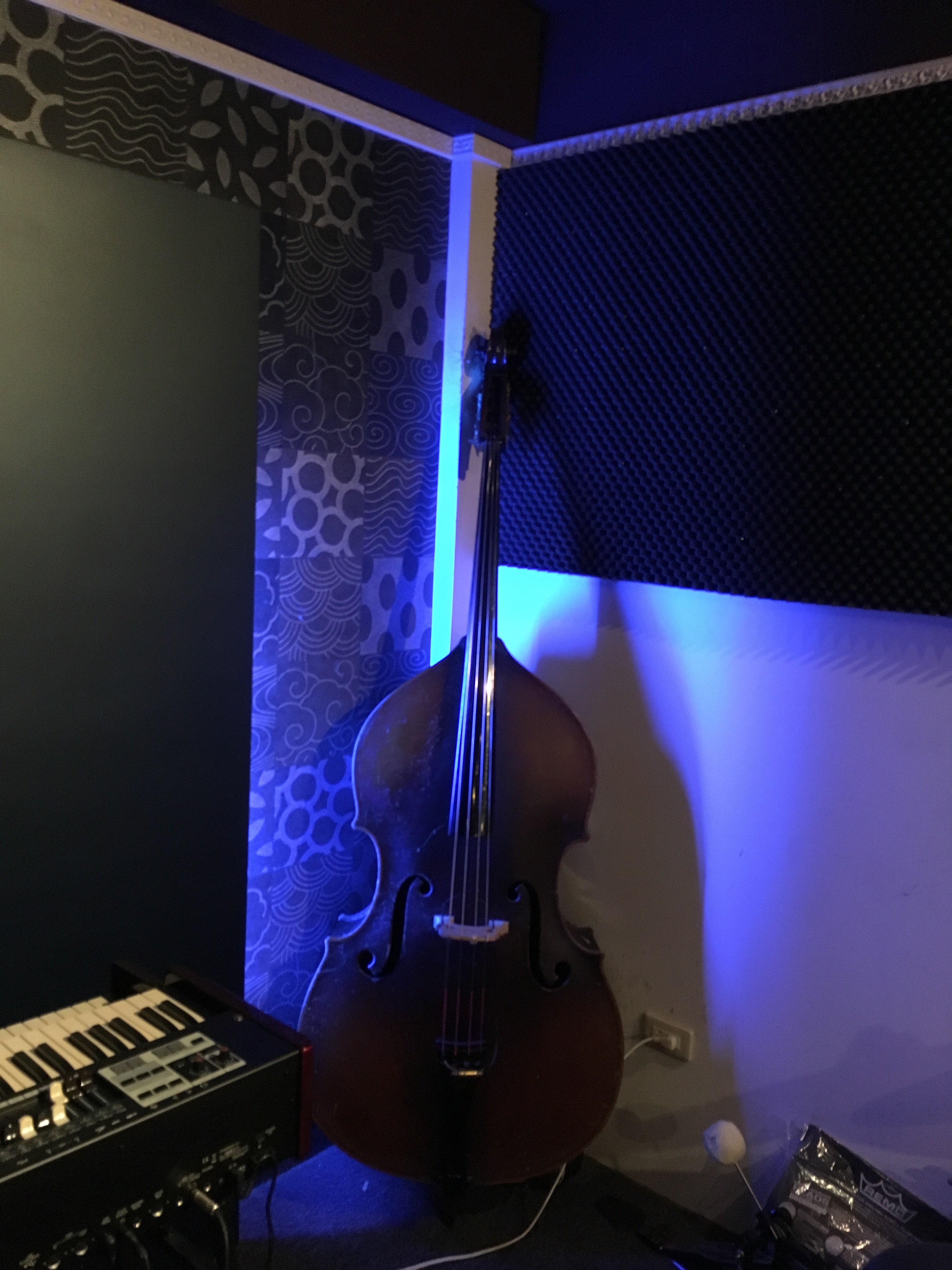
The venue is well equipped, with a grand piano, a full drum kit, and a double bass on hand.

Moments like that jam session are a good reminder of how much you grow just by playing with other musicians and getting their reactions in real time — and that’s really the same idea behind the lessons I offer online.

Want Personalized Feedback on Your Playing?

This is exactly the kind of thing that’s hard to fix alone — and where having a teacher makes all the difference.

At Line on Bass, I offer an online lesson service where you send me a video of your playing, and I give you specific, detailed feedback — every single day if you want.

Students from around the world are using this to fix exactly these kinds of issues and steadily improve their jazz bass skills.
Check Out the Lesson Service →

Posted on Leave a comment

These 3 Bass Technique Problems Are 90% About Awareness, Not Repetition

This article is written by Toru Hoshino, a jazz bassist and instructor based in Japan who teaches online lessons to students worldwide. In this article, he shares why awareness beats repetition for these 3 common bass technique struggles.

The Question I Hear All the Time in Lessons

There are a few questions I get asked constantly in lessons:

“My left hand keeps flying around — what’s a good way to practice this?”

“I can’t seem to get my muting right — any good exercises for that?”

Repetition is important, of course. But before jumping into more practice, I’ve found that identifying exactly where the problem is happening makes a much bigger difference.

For example, I might say:

“In your next practice, focus specifically on bars 9 — make sure you’re muting cleanly on beats 3 and 4.”

And more often than not, the player comes back noticeably improved.

Of course, how quickly someone improves depends on their experience level. But the core principle is simple:

Identify exactly what’s going wrong — then play with full awareness of fixing it.

That’s usually enough to make real progress.

These 3 Things Are 90% About Awareness, Not Repetition

In particular, these three common issues tend to respond far better to focused awareness than to blind repetition:

  • Left hand tension / unnecessary movement
  • Inconsistent note length
  • Muting control

The tricky part? When you’re practicing alone, it’s hard to notice these things yourself. A great solution is to record yourself playing and watch it back with fresh eyes. You’ll often spot things you never noticed while playing.

If there’s a spot in your bass lines or phrases that just isn’t coming together, try this approach before adding more repetitions. Awareness first — practice second.

Want Personalized Feedback on Your Playing?

This is exactly the kind of thing that’s hard to fix alone — and where having a teacher makes all the difference.

At Line on Bass, I offer an online lesson service where you send me a video of your playing, and I give you specific, detailed feedback — every single day if you want.

Students from around the world are using this to fix exactly these kinds of issues and steadily improve their jazz bass skills.
Check Out the Lesson Service →

Posted on Leave a comment

10 Jazz Standards You Must Know Before Going to a Jam Session


This article is written by Toru Hoshino, a jazz bassist and instructor based in Japan who teaches online lessons to students worldwide. In this article, he shares 10 Jazz Standards You Must Know Before Going to a Jam Session.

There is a book called “JAZZ STANDARD BIBLE” which contains over 200 songs commonly played at jazz jam sessions. However, not every song in the book gets played at every session. Some songs come up far more often than others.

In this article, I’ll share 10 songs that — in my personal experience — come up most frequently at sessions, along with a short comment on each. All of these are great tunes, so I encourage you to search them up and have a listen.

10 Jazz Standards You Must Know Before Going to a Jam Session

  • All The Things You Are — A song with many key changes. It has a well-known intro and is longer than most standards, so it takes a while to memorize at first.
  • But Not For Me — Known for its catchy, memorable melody.
  • The Days Of Wine And Roses — A classic standard. Often called “Sake Bara” (酒バラ) in Japan, meaning “Wine and Roses.”
  • I’ll Close My Eyes — A slightly melancholic melody. Someone almost always plays this at the beginning of a session.
  • It Could Happen To You — Features a distinctive chromatic chord progression right from the start.
  • Just Friends — Notable for the progression shifting from B♭ major to B♭ minor early in the tune.
  • On Green Dolphin Street — Unique in that the A section is played in a Latin feel, while the B section switches to swing.
  • Softly As In A Morning Sunrise — A tune where bassists are often asked to play the intro.
  • Stella By Starlight — A beautiful, emotional melody. The chord changes were confusing to me at first.
  • There Will Never Be Another You — Another tune that gets played early in sessions. The melody is easy to remember.

None of these songs are widely known among non-musicians, and honestly, I didn’t know any of them before I started going to jam sessions myself.

Once I started going regularly, though, I found these tunes being played at virtually every session I attended. They are truly the staples of the jazz session repertoire. If you’re looking to make your session debut, these are the songs to start with!

Related Video

Here is a video of 10 jazz standard bass lines played with sheet music. The songs are a bit different from the ones listed above, but if you want to learn how to play walking bass lines over jazz standards, check it out.

▶ Watch the video here

Want to Play Bass Lines Like These?

I offer an online bass lesson service available to students worldwide — with lessons every day. If you’re interested, feel free to check it out.

Check Out the Lesson Service →