This article is written by Toru Hoshino, a jazz bassist and instructor based in Japan who teaches online lessons to students worldwide. In this article, he breaks down three phrasing tricks borrowed from a classic saxophone solo.
The tune featured here is the jazz classic “Cool Strutin’.” The melody performance starts at 2:09 in the clip below:
You can find the original recording here — well worth checking out.
Studying phrases from other instruments — not just bass, but horns and everything else — is a great way to expand your sense of rhythm and phrasing. Here are the three things that make this particular line sound so good:
Contents
1. Starting Phrases on the Off-Beat
One of the biggest ingredients in sounding genuinely “jazz” is starting a phrase on the off-beat. You don’t always have to start there, but coming in off the beat creates a natural sense of swing and feel.
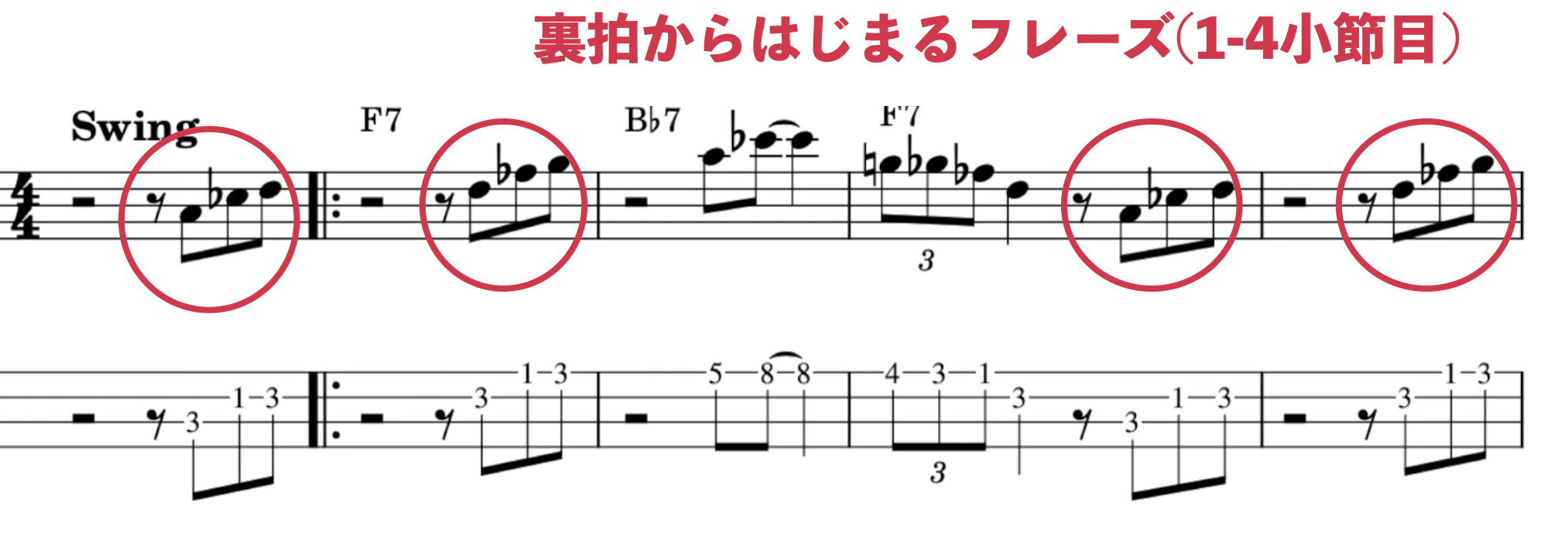
In fact, the original melody of this tune is full of phrases anchored on off-beats — that’s a big part of what gives it such a distinctive jazz feel.
2. Using Eighth-Note Triplets
An eighth-note triplet on a single beat gives a phrase tightness and bounce. Land it with good timing, and that fine-grained rhythmic detail tightens up the whole sound.
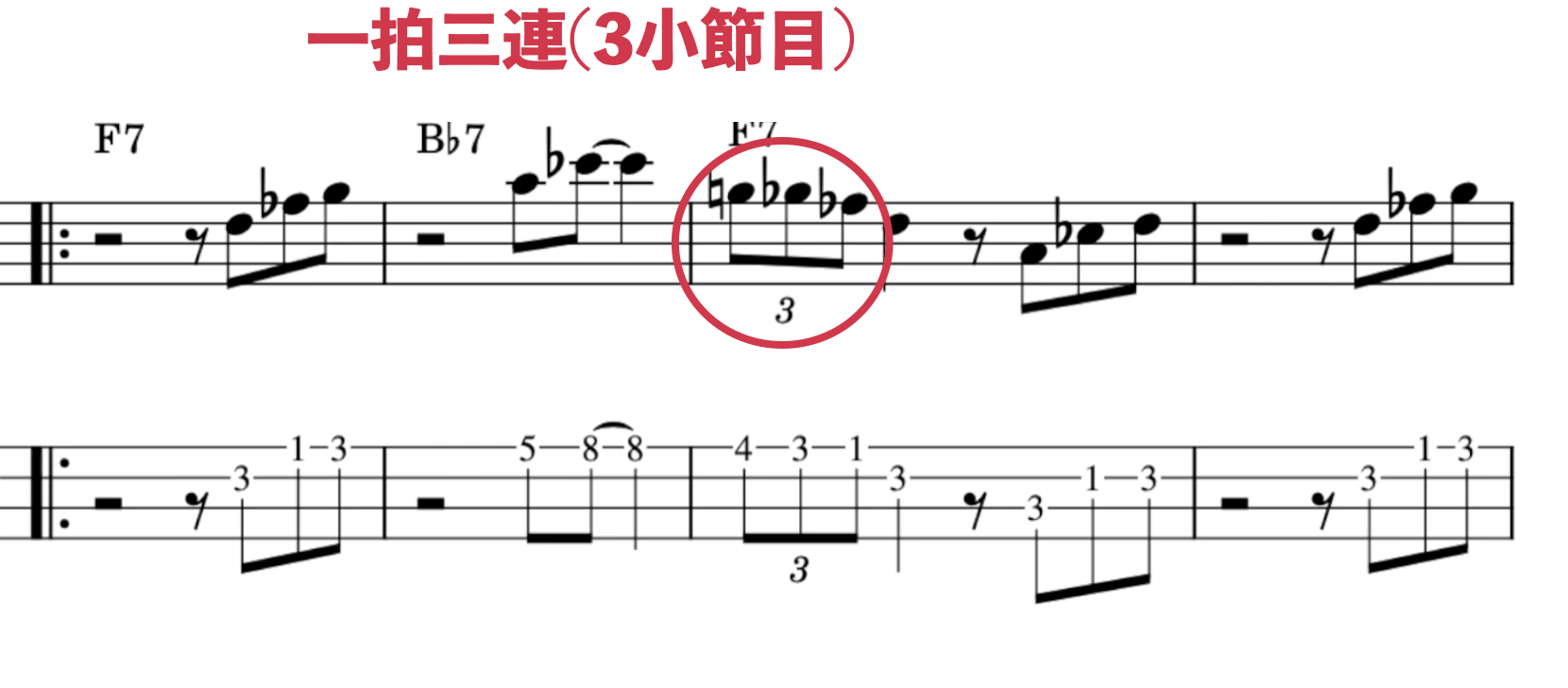
Working this in deliberately throughout a solo keeps things from sounding monotonous and pushes the line further into jazz-specific phrasing.
3. Working in a Blue Note
For a blues tune in F like this one, the most effective blue note to reach for is the note B.
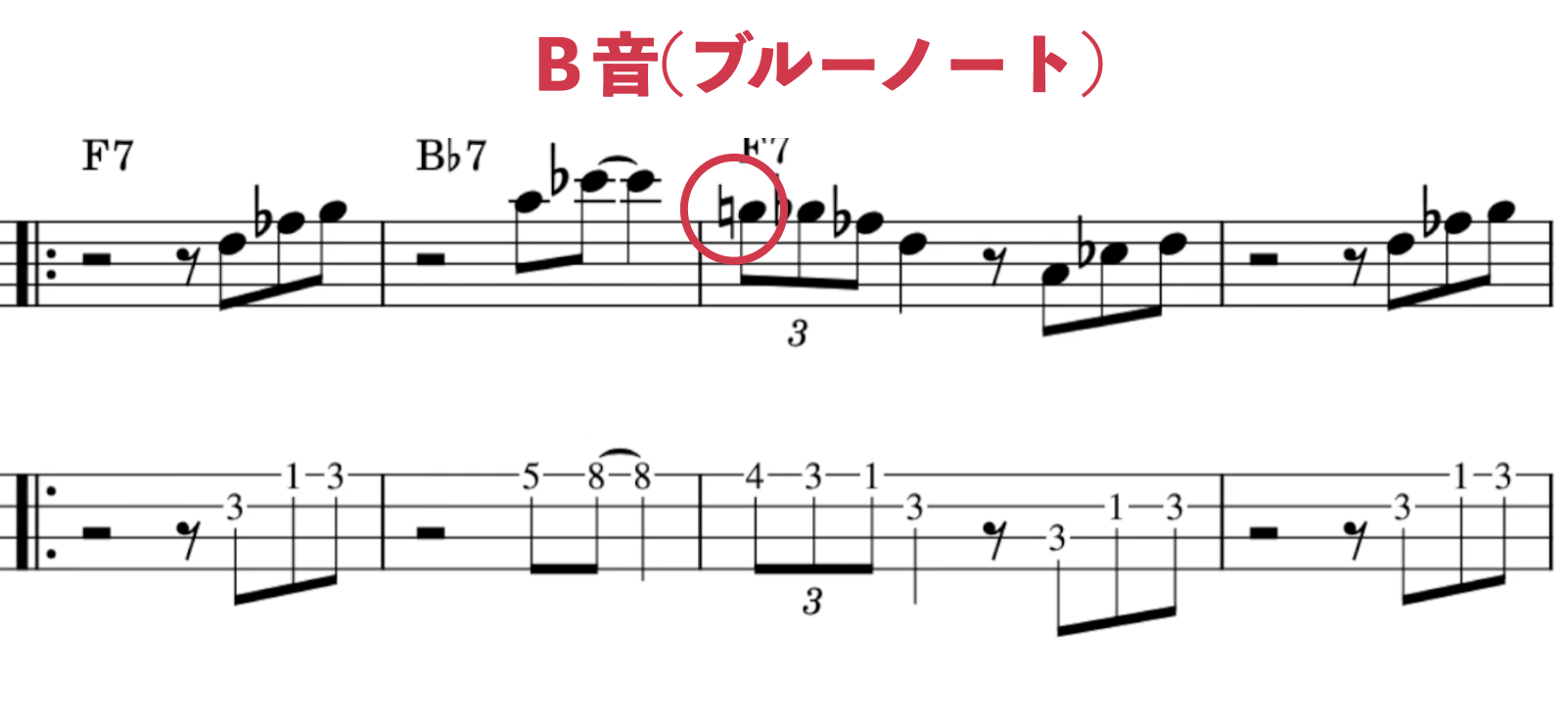
This tune’s melody is mostly built from the F minor pentatonic scale — F, A♭, B♭, C, E♭ — but adding that B note on top instantly gives it a much bluesier sound.
This “pentatonic plus blue note” feel is something you really have to play and feel for yourself rather than just understand intellectually — go try landing that B note and feel how bluesy it sounds.
Borrowing phrasing like this from another instrument is a great habit — but knowing exactly how to adapt it onto your own bass lines is exactly the kind of thing a teacher can speed up dramatically.
Want Personalized Feedback on Your Playing?
This is exactly the kind of thing that’s hard to fix alone — and where having a teacher makes all the difference.
At Line on Bass, I offer an online lesson service where you send me a video of your playing, and I give you specific, detailed feedback — every single day if you want.
Students from around the world are using this to fix exactly these kinds of issues and steadily improve their jazz bass skills.