This article is written by Toru Hoshino, a jazz bassist and instructor based in Japan who teaches online lessons to students worldwide. In this article, he shares five jazz standards he practiced constantly as a beginner, coming from a rock background himself.
These five tunes are relatively easy to build a walking bass line over, and they all have catchy, approachable melodies that make them a great entry point.
If you’re just getting started with jazz bass, I hope these are useful to you.
Contents
Jazz Standards I Practiced Constantly as a Beginner
Autumn Leaves
Even people who don’t know jazz tend to recognize this one.
It’s easy to build an efficient, comfortable walking bass line over, and the melody has a beautifully melancholy quality to it. It also comes up constantly at jam sessions, so it’s well worth mastering.
Fly Me to the Moon
This is an extremely catchy, singable tune, and it gets covered by vocalists constantly.
Bye Bye Blackbird
Another tune with a catchy melody that sticks in your ear, and one that comes up a lot at sessions.
That said, the first four bars all sit on the same F chord, and I remember being genuinely unsure how to approach that stretch when I was starting out.
The Girl from Ipanema
The defining tune of bossa nova — a genre with a distinctly different rhythmic feel from straight-ahead jazz.
The bass line here is mostly built around the root and the 5th.
I wrote up a full breakdown of the bass line for this tune, with video, in this article.
F Blues
“F Blues” isn’t the title of one specific song — it refers to any tune built on the 12-bar chord progression shown below. Tunes commonly played as F blues include:
Bags’ Groove
Now’s the Time
Billie’s Bounce
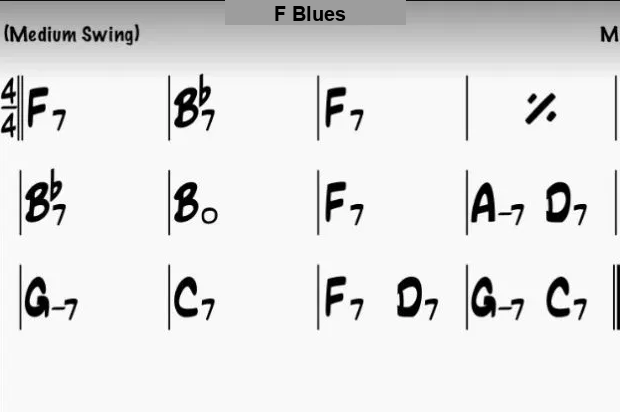
I put together a full practice method for improvising a walking bass line over an F blues, with video, in this article.
What Comes After This
I still have students work through these five tunes early on in lessons.
Once those are sounding solid, students move on to new tunes — and beyond these five, I also put together a list of 40 tunes I personally played constantly at sessions around Tokyo. You can check that out in this article.
Once you’re comfortable, it’s common to pick your next tune yourself from a list like that.
The more you listen — bebop, Coltrane-style playing, Bill Evans-style playing, Monk-style playing, bossa and Latin, bluesy stuff — the more your own sense of what kind of jazz you actually love starts to take shape.
There’s a lot to work through either way, so you might as well dive into whatever tunes genuinely grab you or sound cool to your ear.
Hopefully this gives you something useful for your daily practice.
Want Personalized Feedback on Your Playing?
Working through these standards builds a great foundation, but knowing whether your own walking lines over them are actually solid — rhythmically and harmonically — is much easier to judge with a second pair of ears.
This is exactly the kind of thing that’s hard to fix alone — and where having a teacher makes all the difference.
At Line on Bass, I offer an online lesson service where you send me a video of your playing, and I give you specific, detailed feedback — every single day if you want.
Students from around the world are using this to fix exactly these kinds of issues and steadily improve their jazz bass skills.