This article is written by Toru Hoshino, a jazz bassist and instructor based in Japan who teaches online lessons to students worldwide. In this article, he shares a free download of ready-to-use bass lines for ten jazz standards.
Here’s a collection of practical, usable bass lines built around well-known tunes that come up constantly at jam sessions and live gigs.
Every line here is simple enough for a beginner to use as-is, so put them to work in your walking bass practice or your next session prep.
Tunes Included
Blue Bossa
Blue Haze
Cantaloupe Island
Fly Me to the Moon
Isn’t She Lovely
Mack the Knife
Moon River
Over the Rainbow
Smile
Watermelon Man
Download
The bass lines for each tune are available as free PDFs. Download them from the link below:
Anyone wanting to try a jam session for the first time
Anyone who wants a solid grip on bass lines for common session tunes
Anyone getting started with improvisation or walking bass
Put these to good use in your daily practice.
Having a solid bass line memorized is a great start — getting feedback on how you’re actually playing it is the next step, and that’s exactly where a teacher comes in.
Want Personalized Feedback on Your Playing?
This is exactly the kind of thing that’s hard to fix alone — and where having a teacher makes all the difference.
At Line on Bass, I offer an online lesson service where you send me a video of your playing, and I give you specific, detailed feedback — every single day if you want.
Students from around the world are using this to fix exactly these kinds of issues and steadily improve their jazz bass skills.
This article is written by Toru Hoshino, a jazz bassist and instructor based in Japan who teaches online lessons to students worldwide. In this article, he explains how to use chromatic approach notes the right way in a walking bass line.
What Is a Chromatic Approach Note?
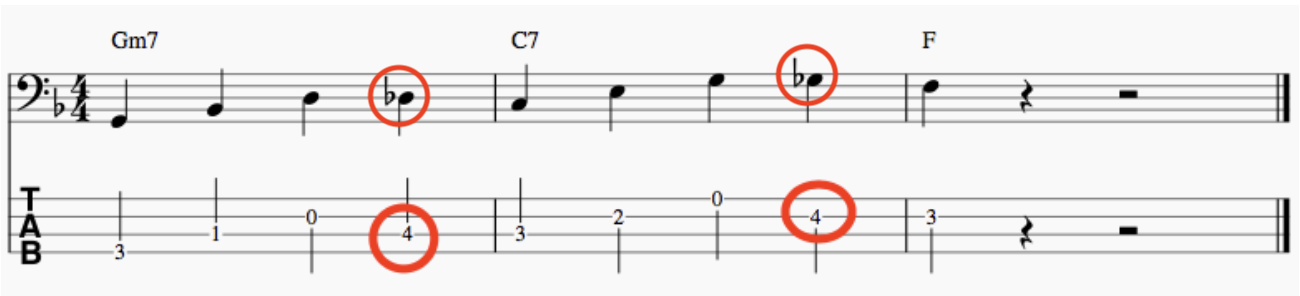
A chromatic approach note is a note that approaches the root of the next bar’s chord from a half step below or above, like this:
Used well, it gives your bass line a smooth, flowing sound. The “forward motion” and distinctly jazz-like quality that’s unique to walking bass changes a lot depending on how you handle this one device.
A Common Mistake
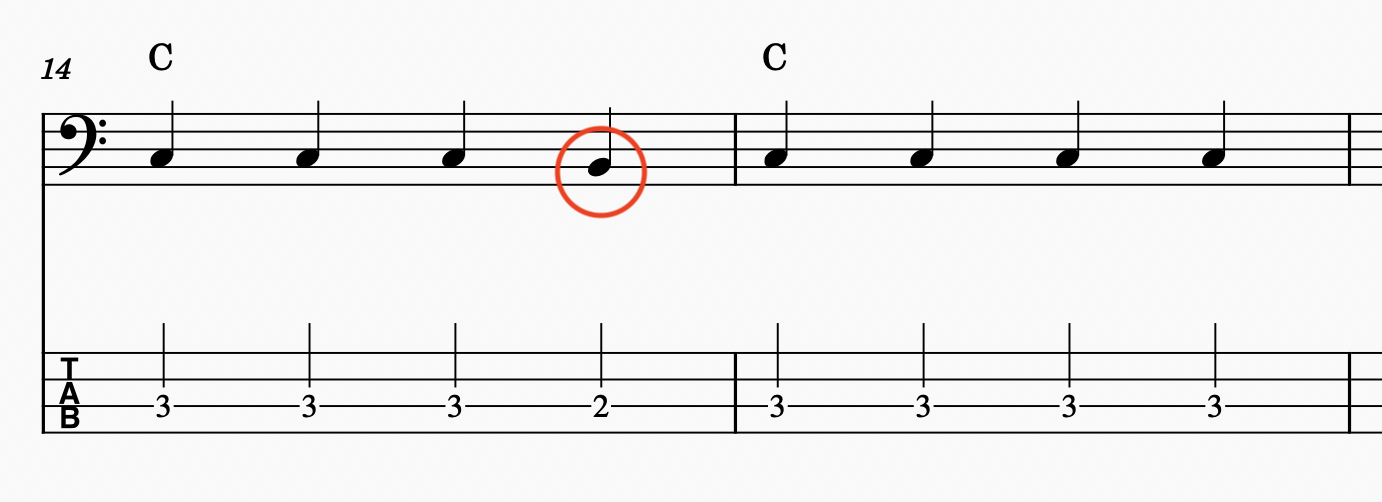
A common mistake is using a chromatic approach note even when the same chord continues for two bars in a row. For example, if a C chord lasts two bars, some players will play a “B” (a half step below) at the end of the first bar anyway.
At a glance this might look like “approaching the next bar by a half step,” but since the next chord is still the same C, there’s no real harmonic destination to approach. It just ends up sounding like a stray note a step down, and the line loses its sense of forward motion.
How to Use It Effectively
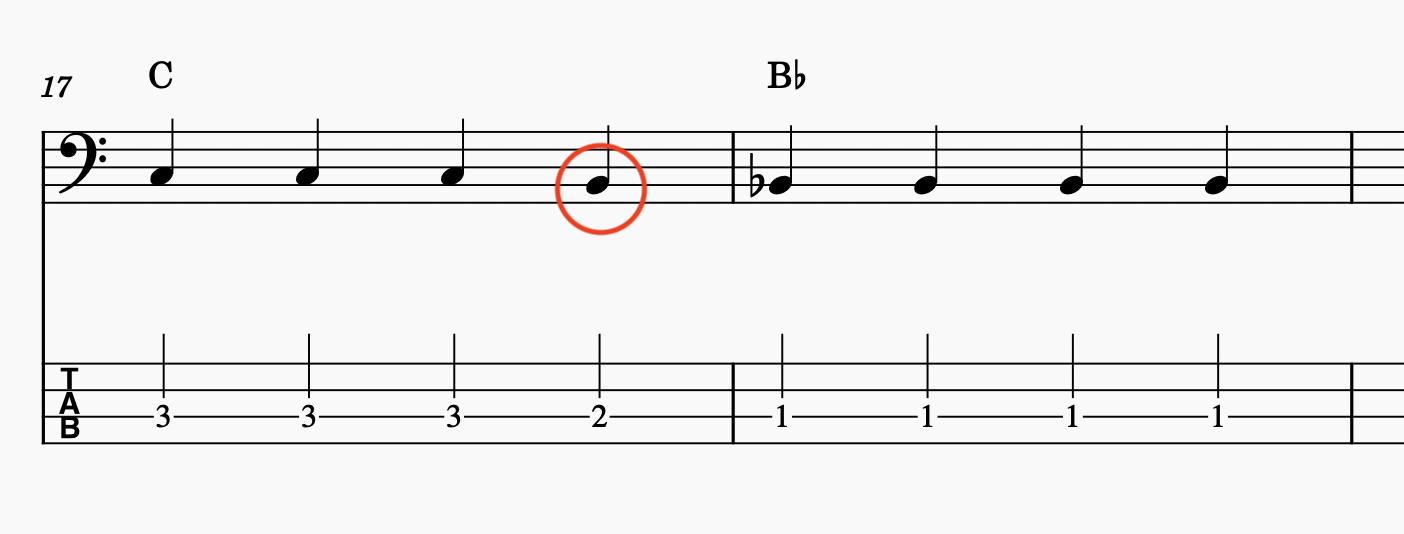
A chromatic approach note really shines specifically where the chord is actually changing. For example, with a progression like C → B♭, playing “C → B → B♭” creates a line that flows naturally into the next chord.
Using it with a clear sense of where you’re heading next makes the whole line smoother and more convincing.
Summary
Chromatic approach notes can completely change your sound, just by being conscious of where and why you’re using them. Don’t just drop one in out of habit — think about which chord you’re actually moving toward. If you want your walking bass to sound more natural and more distinctly like jazz, this is well worth paying attention to.
Hearing the difference between a meaningful approach note and an aimless one takes a trained ear — and that’s exactly the kind of detail a teacher can flag immediately.
Want Personalized Feedback on Your Playing?
This is exactly the kind of thing that’s hard to fix alone — and where having a teacher makes all the difference.
At Line on Bass, I offer an online lesson service where you send me a video of your playing, and I give you specific, detailed feedback — every single day if you want.
Students from around the world are using this to fix exactly these kinds of issues and steadily improve their jazz bass skills.
This article is written by Toru Hoshino, a jazz bassist and instructor based in Japan who teaches online lessons to students worldwide. In this article, he explains when it makes sense to skip the root on the first beat of a bar — and when it doesn’t.
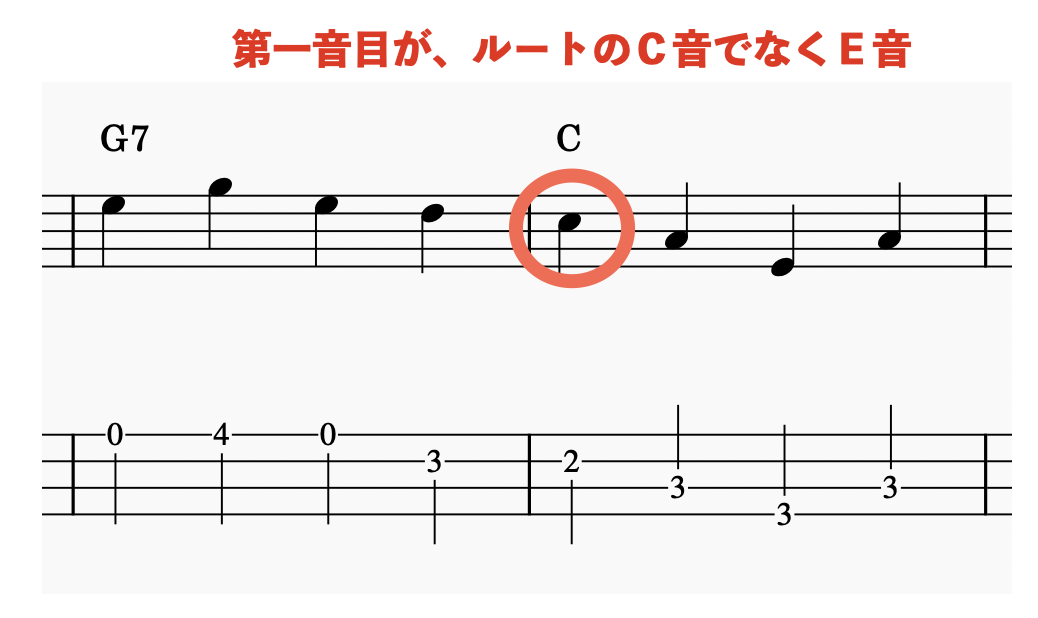
A lot of players want to try skipping the root on the first note of a walking bass bar — it’s a sound a lot of people are drawn to. Here’s an example: in bar 2 below, the chord is C, but the circled first note of that bar isn’t the root.
Generally speaking, the first note of a chord should be the root. With that as your baseline, being able to casually pull off a non-root first note can make your line sound stylish and more melodic, depending on how you build it. The 3rd in particular tends to blend in naturally with the backing harmony when you skip the root this way.
There’s one important caveat, though: when you’re playing the melody — the “theme” — keeping the root on beat 1 is usually the better call.
That’s because melodies are usually written with the chord’s root already in mind.
Melodies Are Usually Built Around the Chord’s Root
Take a look at this:
This is the chord progression for “Fly Me to the Moon.” In this tune, the melody’s 3rd often lands right on the first beat of the bar.
If you then think “let’s skip the root!” and also make the bass line’s first note the 3rd in those same spots, you can end up with two 3rds clashing against each other, which often doesn’t harmonize well and can sound off rather than cool.
Example 1: First Note of Every Bar Played as the 3rd
This is a bass line where every bar’s first note is the 3rd. It’s not exactly wrong, but if you’re going this route, the approach below tends to fit better.
Example 2: First Note of Every Bar Played as the Root
Here I simply played the root straight on the first note. Compared to Example 1, doesn’t this one feel like it fits more naturally?
Conclusion
Keep the root on beat 1 during the melody, and save root-skipping approaches for when you’re improvising, depending on how the music is flowing.
Of course, there are plenty of exceptions to this. But hopefully this gives you a useful way to think about root-skipping approaches on the first beat of a bar.
Knowing exactly when to bend a rule like this one is hard to judge entirely on your own — it’s the kind of nuance a teacher can flag immediately by listening to your playing.
Want Personalized Feedback on Your Playing?
This is exactly the kind of thing that’s hard to fix alone — and where having a teacher makes all the difference.
At Line on Bass, I offer an online lesson service where you send me a video of your playing, and I give you specific, detailed feedback — every single day if you want.
Students from around the world are using this to fix exactly these kinds of issues and steadily improve their jazz bass skills.
This article is written by Toru Hoshino, a jazz bassist and instructor based in Japan who teaches online lessons to students worldwide. In this article, he breaks down seven different ways to build a walking bass line over the same chord progression.
The progression used throughout this lesson is Em7 → A7 → Dm7 → G7, looped over and over. Trying out different approaches to walking bass on a single repeating progression is a great way to expand your vocabulary — work this into your daily practice and you’ll start hearing a lot more options open up in your own lines.
Performance Video: 7 Variations on a 4-Beat Bass Line (With Tab)
What I Was Focused on in Each Variation
1. Building from Chord Tones (0:32)
The most basic foundation for any walking bass line is chord tones. Start by balancing the root, 3rd, 5th, and 7th of each chord as you build your line — this is the base that every other approach builds on.
2. Adding Scales (0:46)
Layering scale tones on top of chord tones smooths out the line’s motion. With more notes available, you get more freedom and a more natural-sounding flow.
3. Reaching Into a Slightly Higher Register (1:03)
Try working in the 7th–11th fret range. Once you’re comfortable using the mid-register and not just the low end, your range of variations multiplies.
4. Syncopation (1:16)
Adding syncopation injects rhythmic motion into an otherwise quarter-note-driven line. Weaving in eighth notes or dotted quarters against the 4-beat feel creates a much more expressive rhythmic character.
5. Working in Ghost Notes (1:32)
Ghost notes — non-pitched percussive hits — add a percussive nuance to your rhythm. Even a small amount goes a long way toward boosting the groove and feel of the line.
6. High-Position Approaches (1:48)
One of walking bass’s flashier techniques is approaching a chord from a high position on the neck. It looks effortless when done well, but it isn’t something you can improvise cold — it takes some dedicated prep work before you can use it freely.
7. Starting the Bar on a Note Other Than the Root (2:02)
You don’t always have to land on the root on beat 1. Starting from a different chord tone — say, the 3rd or the 5th — makes the line flow more smoothly and gives it a more distinctly jazz-like character.
A lot of players assume the root has to land on beat 1 — and as a foundation, that’s absolutely correct. But once you’re comfortable with the basics, starting on the 3rd or 5th instead, in service of a smoother line, becomes a real option. I find this works especially well in jazz walking bass compared to rock or funk lines. That said, treat this as something to add once your fundamentals are solid, not something to reach for right away.
Summary
Walking bass opens up once you start combining chord tones, scales, register choices, rhythmic devices, ghost notes, position shifts, and approach notes. Try working these seven techniques into your practice a little at a time, and you’ll steadily build out your own bag of tricks.
A Question I Got Afterward
“What should I do when I can’t think of a walking line in the middle of a session?”
This depends a lot on your current skill level, but the most important thing is usually: don’t try to do anything too advanced right out of the gate.
People often imagine walking bass requires a constant variety of note choices and rhythms — and sure, if you listen to a great player, that’s exactly what you hear. But early on, just being able to use:
The root
The 5th
The octave
Chromatic approach notes
is enough to build a line that sounds reasonably convincing. I’d recommend prioritizing getting comfortable with just these first. If you push yourself to play something unusual too soon, your time can fall apart and your rhythm gets shaky.
In an actual session, a steady, in-tune line matters a lot more than a clever one — and it’s what the rest of the band is actually counting on you for. Once you’ve got some breathing room, start layering in 3rds and 7ths, and gradually expand your note choices from there.
Working through all seven of these on your own is a lot to juggle — a teacher can usually tell you exactly which one to focus on next for your playing specifically.
Want Personalized Feedback on Your Playing?
This is exactly the kind of thing that’s hard to fix alone — and where having a teacher makes all the difference.
At Line on Bass, I offer an online lesson service where you send me a video of your playing, and I give you specific, detailed feedback — every single day if you want.
Students from around the world are using this to fix exactly these kinds of issues and steadily improve their jazz bass skills.
This article is written by Toru Hoshino, a jazz bassist and instructor based in Japan who teaches online lessons to students worldwide. In this article, he shares a one-change fix for walking bass lines that feel repetitive.
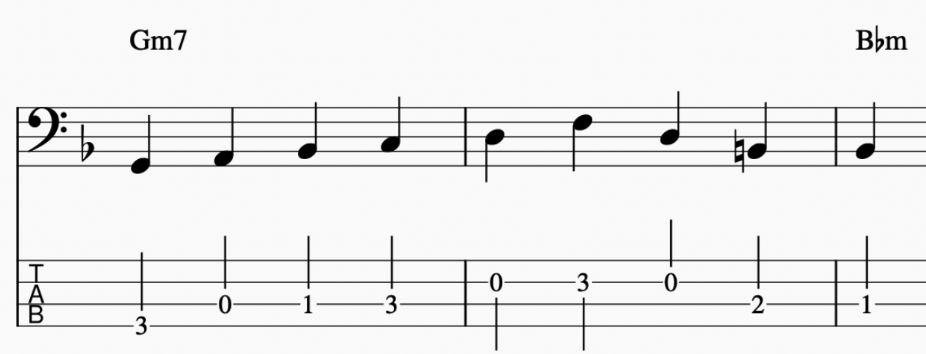
“My walking bass lines always end up feeling repetitive” is a question I hear constantly. When that comes up, instead of suggesting you change everything at once, I usually recommend changing just one thing: the octave of the root.
Say you’ve got a bass line like this one. The first time through, you play it in the position you’re used to:
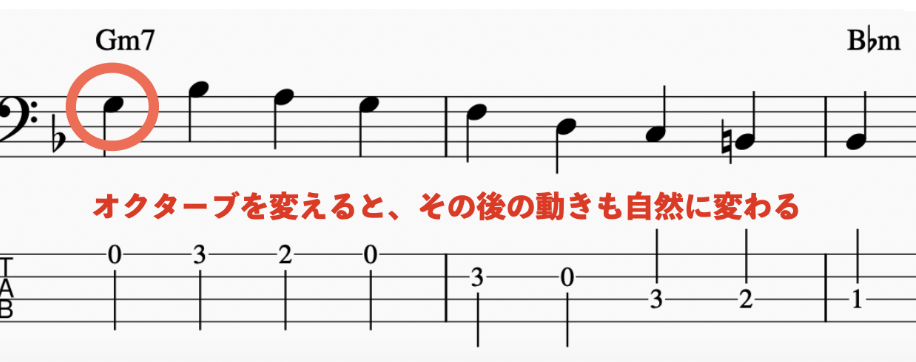
The second time through, shift the G in bar 1 up (or down) an octave:
The caption in the second image reads: “Changing the octave naturally changes the movement that follows it, too.”
That one change alone naturally changes how you approach the next bar, B♭m7, and shifts the overall feel of the whole line.
When you try to avoid repetition by changing every single note or phrase at once, it’s often too much to keep track of, and you end up not landing on the line you actually wanted. Instead, just try “shifting the octave of the root” — that alone creates a real, musical sense of change.
Give it a try.
One-change fixes like this are exactly the kind of thing that are easy to overlook on your own — a teacher can spot the repetitive pattern and suggest the fix in seconds.
Want Personalized Feedback on Your Playing?
This is exactly the kind of thing that’s hard to fix alone — and where having a teacher makes all the difference.
At Line on Bass, I offer an online lesson service where you send me a video of your playing, and I give you specific, detailed feedback — every single day if you want.
Students from around the world are using this to fix exactly these kinds of issues and steadily improve their jazz bass skills.
This article is written by Toru Hoshino, a jazz bassist and instructor based in Japan who teaches online lessons to students worldwide. In this article, he answers a common walking bass question: is it okay to play the 3rd below the root?
This is a question I get often when students are building walking bass lines:
“Is it okay to use the 3rd in a range below the root?”
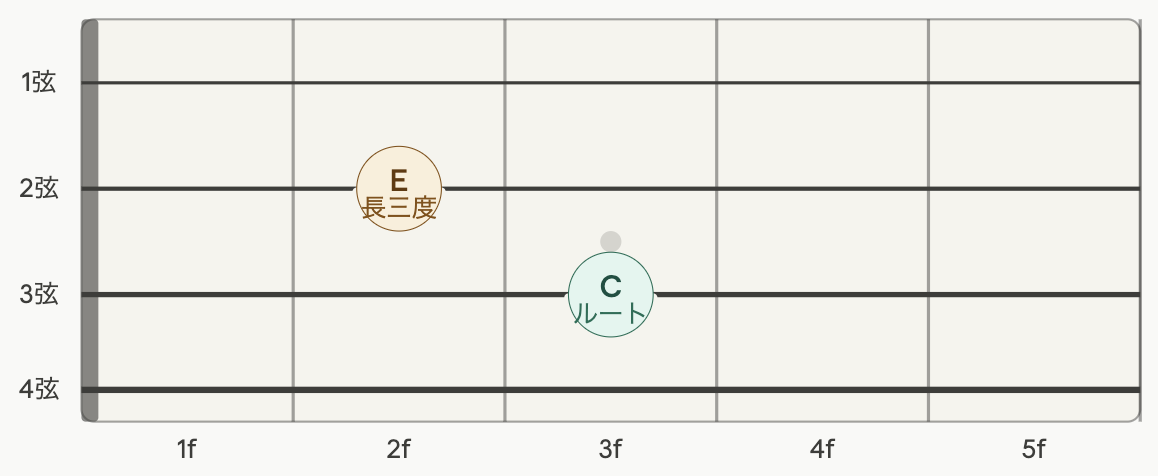
Say you’ve got a C chord and you’re using the major 3rd, E. Most of the time, people default to using it above the root — for example, going from C on the 3rd string/3rd fret up to E on the 2nd string/2nd fret, as in the image below.
Example 1
But —
can you use the E an octave lower as your 3rd instead?
This is a question I get asked constantly.
Short answer: absolutely.
As a chord tone, there’s nothing wrong with using an E below the root, as shown here:
That said, it does change the character of the sound.
• Using the 3rd above the root → brighter, more open sound.
• Using the 3rd below the root → calmer, heavier sound.
This isn’t unique to the 3rd, either — the same idea applies to other chord tones, like the 5th. Having both the upper and lower option available gives your lines a lot more range to work with.
As for which one to use, I’d base it on how easy it is to finger and how the line flows. Pick whichever one keeps your left hand moving efficiently, and the line tends to come together more naturally.
Choices like “above or below the root” are easy to get stuck overthinking on your own — a teacher can usually tell you in seconds which one fits the line better.
Want Personalized Feedback on Your Playing?
This is exactly the kind of thing that’s hard to fix alone — and where having a teacher makes all the difference.
At Line on Bass, I offer an online lesson service where you send me a video of your playing, and I give you specific, detailed feedback — every single day if you want.
Students from around the world are using this to fix exactly these kinds of issues and steadily improve their jazz bass skills.
This article is written by Toru Hoshino, a jazz bassist and instructor based in Japan who teaches online lessons to students worldwide. In this article, he breaks down a subtle mistake that can make an otherwise correct walking bass line feel slightly off — and how to fix it.
You’re teaching yourself walking bass, but it never quite feels right
You know your chord tones but aren’t sure how to apply them
You want smoother, more jazz-like connections between your bass lines
If that’s you, this one’s worth a read.
Starting From an F Blues Progression
This is based on something I actually pointed out in a lesson — a student’s bass line for bars 1–4 of an F blues. Grab your bass and check out how it moves.
A Student’s Version
Here’s the line in question. It’s built mostly around chord tones, and the note choices are solid overall.
It’s not technically wrong, but —
look at the 4th note of bar 2 (over B♭7). That note is an F.
F itself is a chord tone of B♭7 (the 5th), so there’s nothing wrong with using it.
But the next bar (bar 3) is an F7 chord — so playing F on beat 4 of bar 2 can sound like you’re playing the root of the next chord, F7, one beat early.
To the other musicians comping behind you, a move like that can come across as:
“Wait, did the chord already change to F7?”
So in this case, I suggested swapping out that 4th note for something else.
Two Fixes
Option 1
Approach the upcoming root, F, from a half step below — E.
The half-step move from E up to F creates a natural pull into the next bar. This is a classic chromatic approach-note move you’ll use constantly in walking bass.
Option 2
Same idea, but approach F from a half step above instead — G♭.
Both of these options sound and flow better than the original.
The takeaway: in walking bass, it’s not just about whether each individual note is theoretically “correct” — what matters is how it sounds in the context of what comes before and after it.
If you’re self-taught, it’s easy to know your chord tones and scales but still miss this kind of “something feels off” issue in the flow of a line.
If a bass line you wrote doesn’t quite sit right, these examples are worth revisiting.
5 Things to Check When a Bass Line Doesn’t Feel Right
One more video to wrap up. If you’re using chord tones and scales correctly but your walking bass still doesn’t feel locked in — or you’re self-teaching and struggling to put lines together — I made a video covering 5 things worth checking when you build a bass line.
This kind of “technically correct but something’s off” issue is exactly what’s hardest to catch in your own playing — and exactly what a teacher catches immediately.
Want Personalized Feedback on Your Playing?
This is exactly the kind of thing that’s hard to fix alone — and where having a teacher makes all the difference.
At Line on Bass, I offer an online lesson service where you send me a video of your playing, and I give you specific, detailed feedback — every single day if you want.
Students from around the world are using this to fix exactly these kinds of issues and steadily improve their jazz bass skills.
This article is written by Toru Hoshino, a jazz bassist and instructor based in Japan who teaches online lessons to students worldwide. In this article, he lays out nine concrete steps for building walking bass lines on your own, even if you’ve never improvised before.
This is for anyone who wants to play walking bass but isn’t sure where to even start.
This comes up constantly in trial lessons: plenty of bassists can play anything written out in standard notation or tab, but freeze up the moment they’re asked to improvise over a chord chart.
The 9 steps below are what I recommend to exactly those students.
If you’re teaching yourself walking bass, working through these steps in order is far more effective than just grinding through scale practice at random.
Follow them in sequence, and you can build a solid feel for walking bass from the ground up — even entirely self-taught. Get through step 6 alone, and with just 20–30 minutes of daily practice, you’ll be able to put together a line that sounds “right” over pretty much any tune or progression.
Here are the 9 steps.
9 Steps to Playing Walking Bass Improvisationally
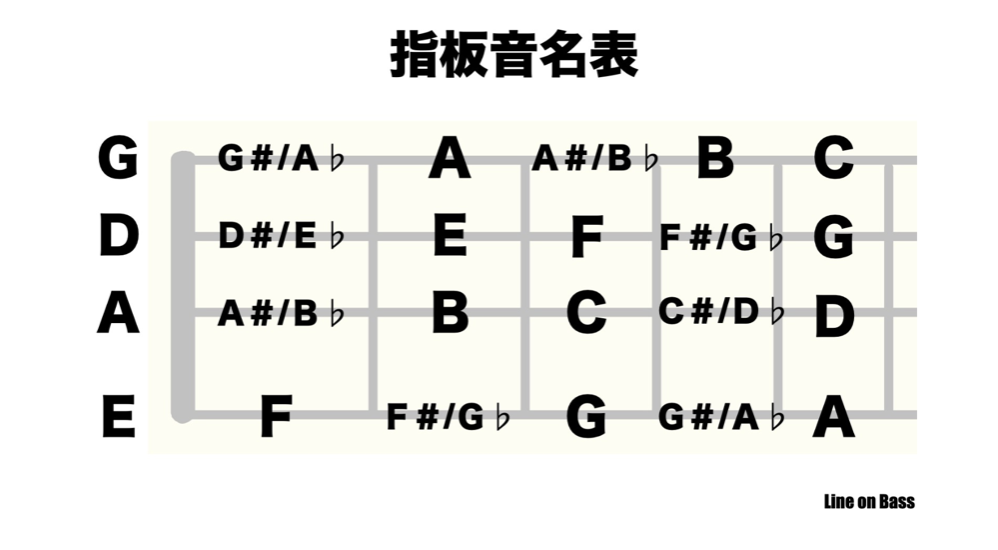
1. Map Out the Notes on the Fretboard
Start by making sure you can instantly name the notes on the fretboard, at least within the first 5 frets. If this part is shaky, no amount of theory will translate into actual notes. It’s worth nailing down first.
The chart above maps out the natural and sharp/flat note names across the strings within the first few frets.
2. Pick a Chord Progression to Practice With
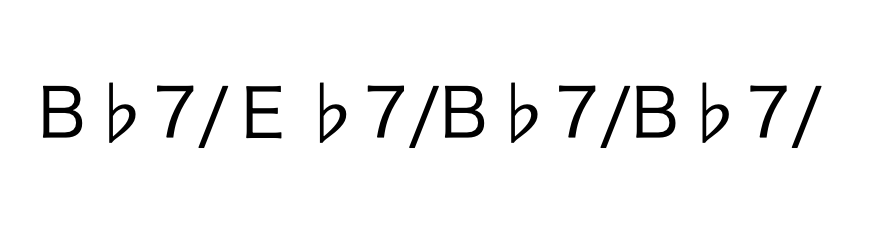
Choose one chord progression to use for practice. Here, we’ll use a B♭ blues progression as our example.
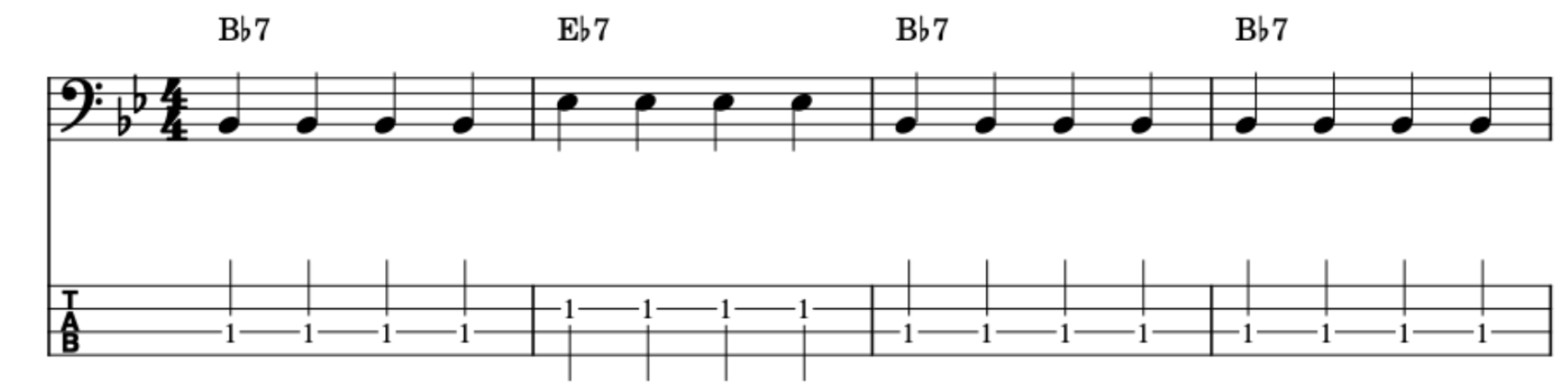
3. Play the Root on Quarter Notes
Start by playing just the root note in a steady quarter-note rhythm. Keeping every note’s length and volume even is the key skill here.
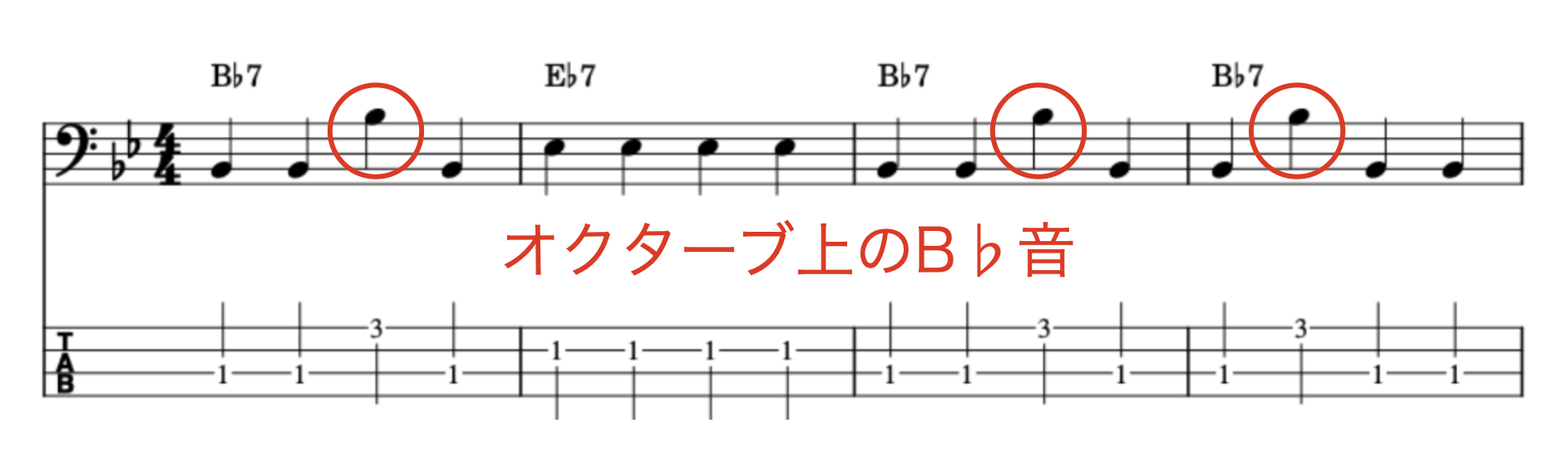
4. Add the Octave to the Root
Once the root alone feels comfortable, add the octave. This brings some up-and-down motion into the line and starts giving it a bit more shape.
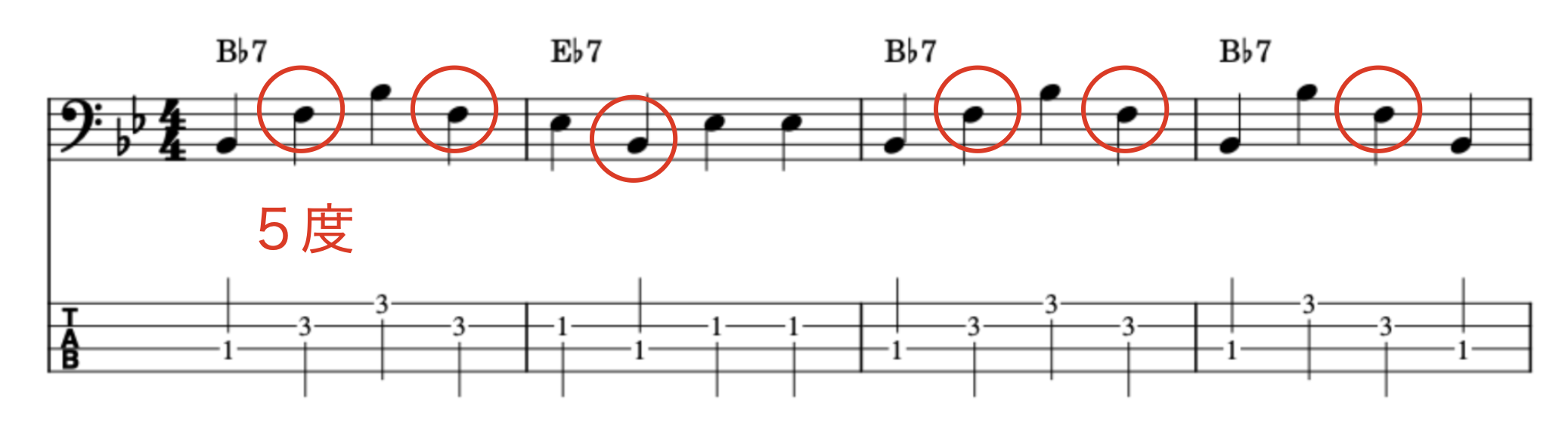
5. Add the 5th Between the Root and Octave
Now bring in the 5th. Adding it between the root and the octave thickens up the sound and gives the line more bounce.
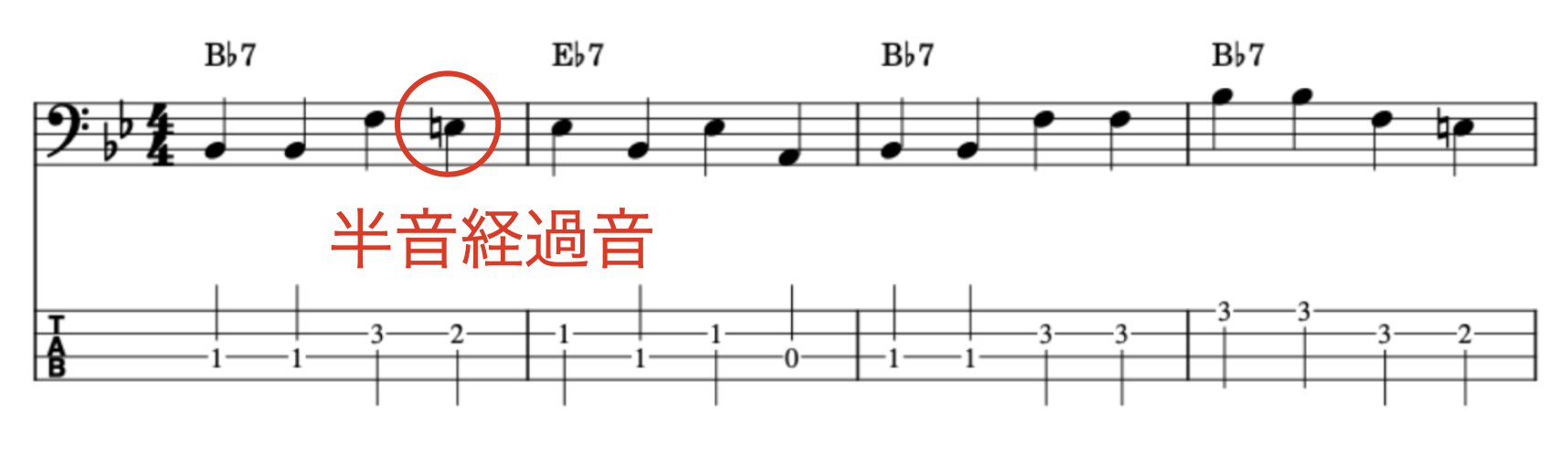
6. Add Chromatic Passing Tones
Adding a chromatic passing tone smooths out the connections between notes and starts giving the line a more genuinely jazz-like flow. Once you can do this comfortably, it should already be starting to sound noticeably more like jazz.
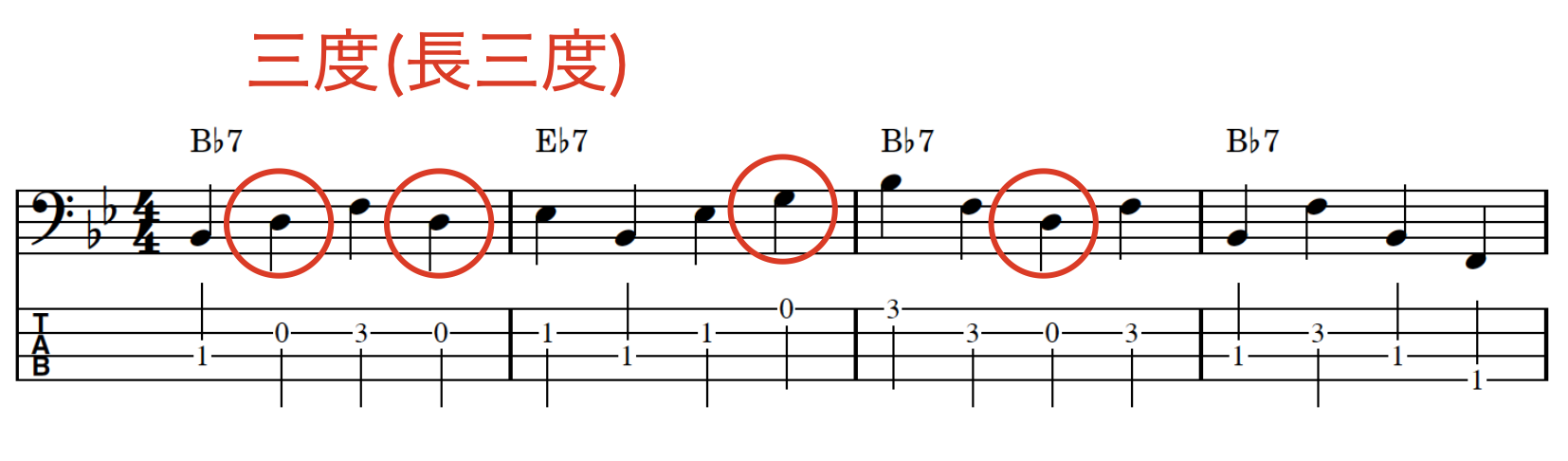
7. Add the 3rd
Adding the 3rd makes the chord quality much clearer and sharpens the overall outline of the harmony. It’s an essential note for actually expressing the chord.
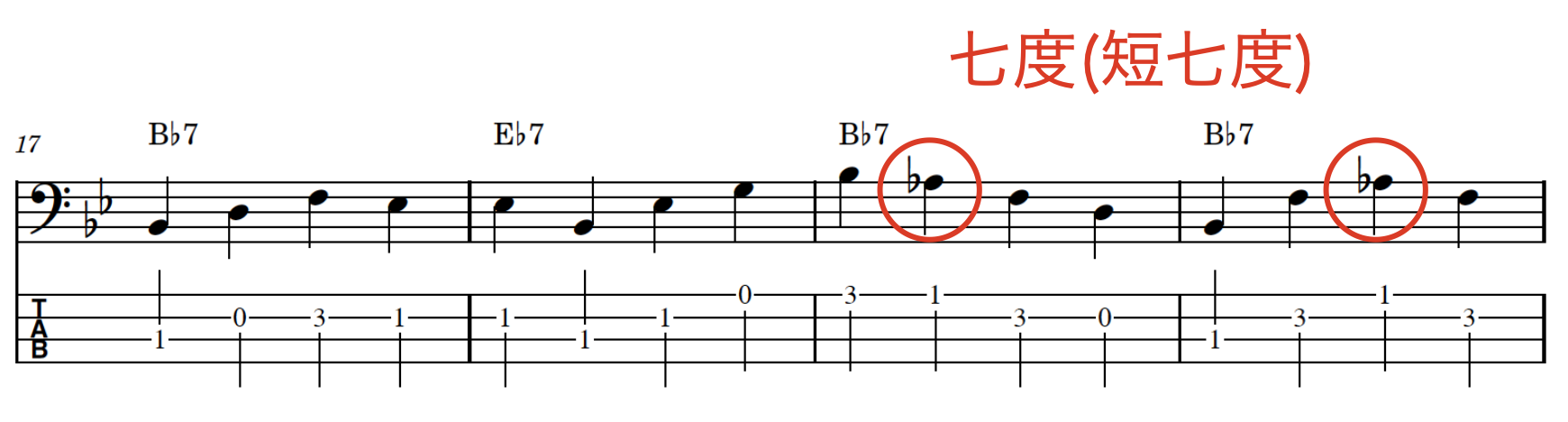
8. Add the 7th
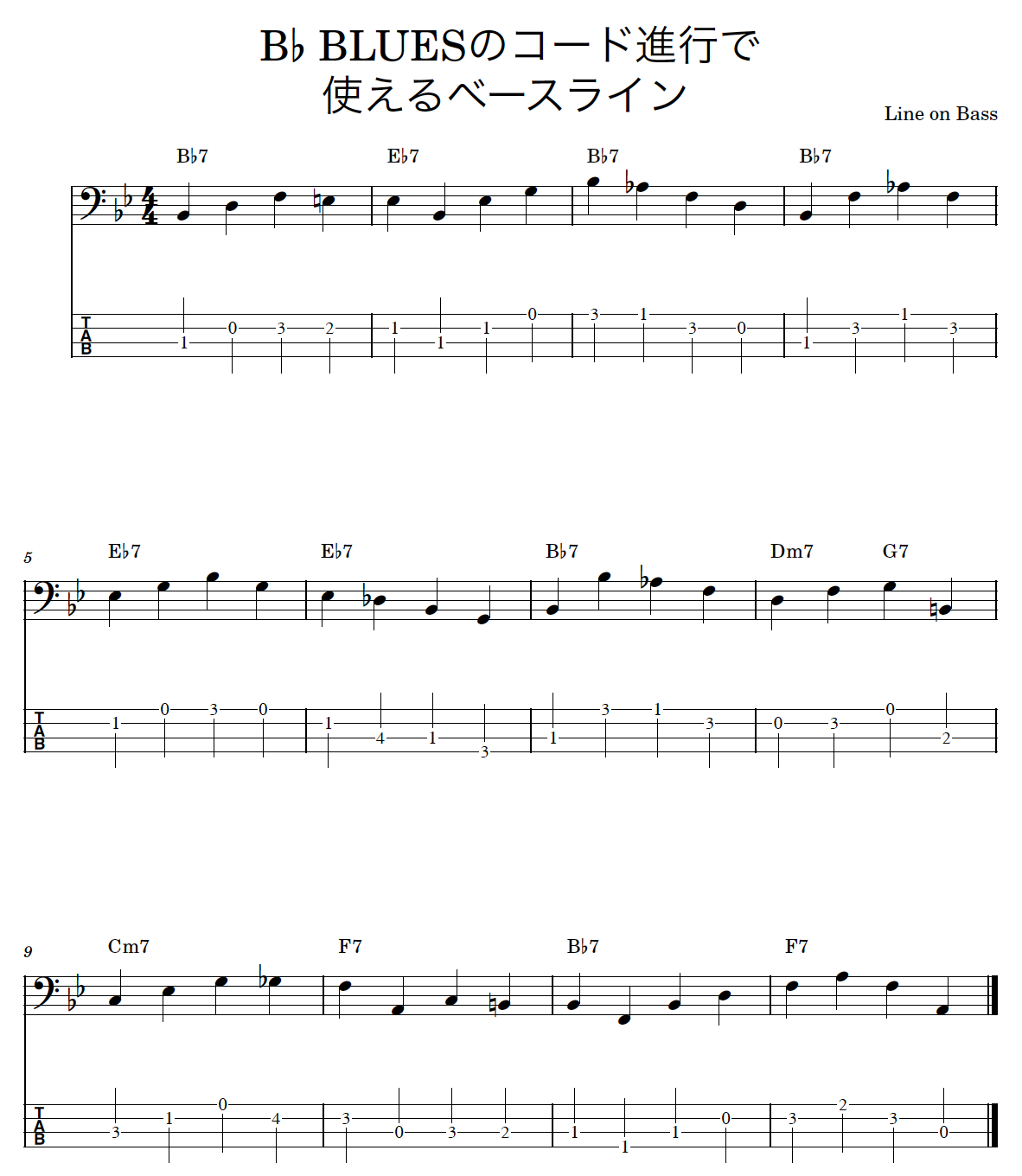
Adding the 7th on top instantly deepens the jazz flavor of the line — it’s the finishing touch for a more polished, sophisticated sound.
Here’s what a full 12-bar bass line looks like once the 7th is incorporated:
9. Practice With Real Tunes
Finally, try this out on actual songs.
Tenor Madness
Blue Monk
Blues By Five
Trane’s Blues
All of these are B♭ blues tunes. Try playing along with the recordings, or practice with backing tracks using an app like iReal Pro.
Wrapping Up
You don’t need to jump straight into advanced theory or complicated phrases to play walking bass.
Understanding the fretboard, knowing your chord tones, and adding notes one degree at a time — in that order — is enough for anyone to start building improvised lines.
Don’t just memorize the patterns. Once you understand what each note is actually doing, the music gets genuinely more enjoyable. I hope this gives you something useful for your daily practice.
Working through all nine of these steps on your own is absolutely possible — but it’s also exactly the kind of process where a second pair of ears can catch small issues early and save you a lot of trial and error.
Want Personalized Feedback on Your Playing?
This is exactly the kind of thing that’s hard to fix alone — and where having a teacher makes all the difference.
At Line on Bass, I offer an online lesson service where you send me a video of your playing, and I give you specific, detailed feedback — every single day if you want.
Students from around the world are using this to fix exactly these kinds of issues and steadily improve their jazz bass skills.