This article is by Toru Hoshino, a Tokyo-based upright and electric bassist and instructor (@jazzbassisttoru).
– Bassists who aren’t sure how to build a solo when improvising
– Players who want new ideas for their improvised solos
– Bassists who are just getting started with jazz bass
This time, I’ll share a concrete practice method using triads.
Contents
The Goal of This Practice
By consciously using triad tones with every chord change, you bring out the color of each chord
and you’re able to play improvised lines that feel like they “sing.”
That’s the goal here.
Here’s what it sounds like when you can do this:
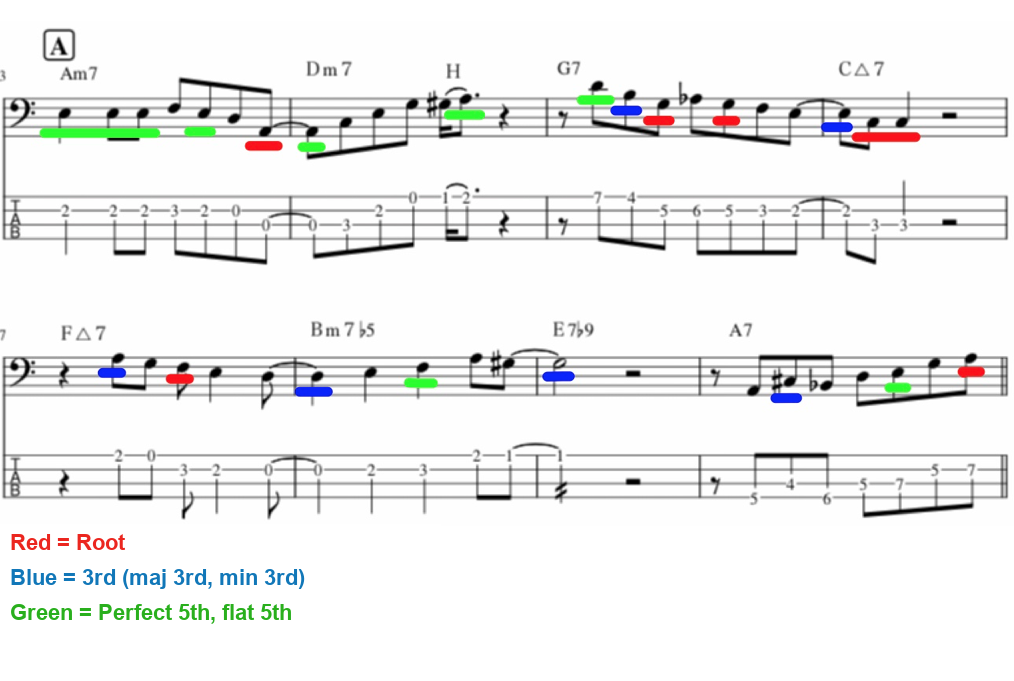
Not every note in this example is strictly a triad tone, but the idea is to eventually be able to weave triads and scales together like this. (I’ll cover that part in a future article.)
To be able to follow chord changes this closely, though, you first need to train yourself to instantly call up triads in your head, almost mechanically.
Steps for Triad Practice
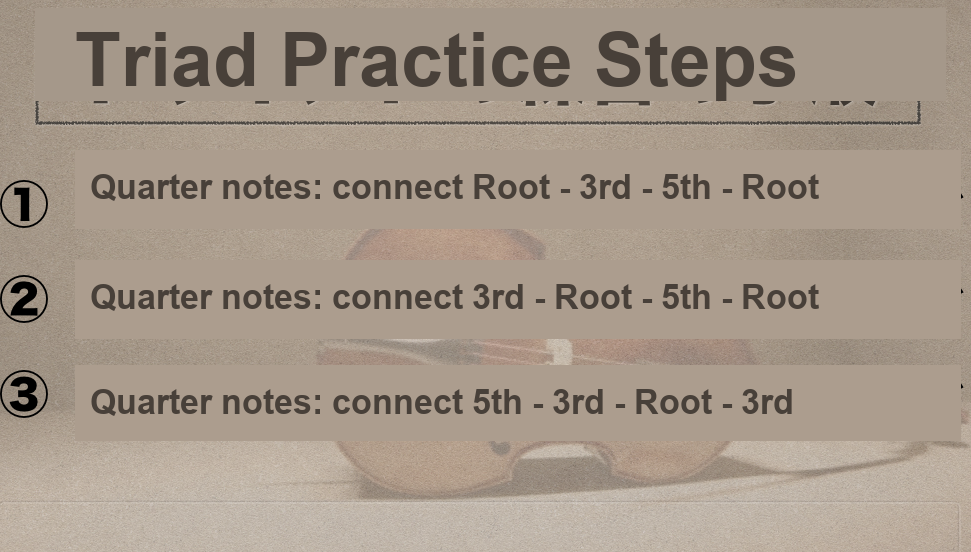
Here’s how the practice routine goes:
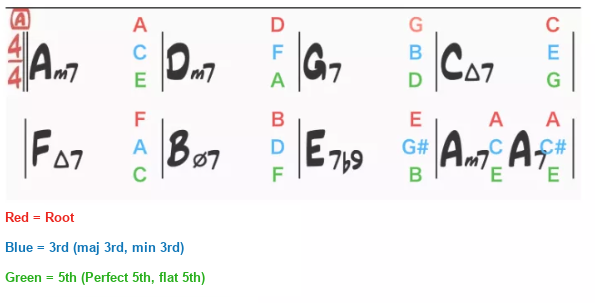
Can you picture the triads right away just by looking at this chart?

If you’re a beginner, I’d guess that’s pretty tough.
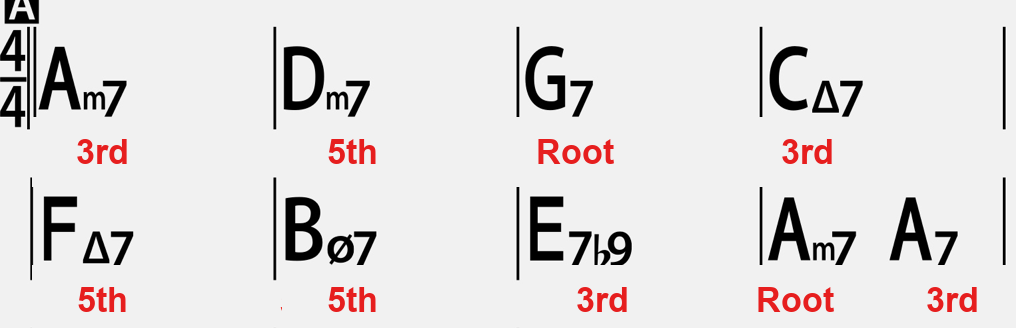
And it’s probably even harder when the line starts on the 3rd or the 5th instead of the root, like this:
Step 1: Try playing Root-3rd-5th-Root
While looking at the chart, think “Root, 3rd, 5th, Root” for each chord and play it in quarter notes.
Here’s the idea:

At first, most beginners won’t be able to picture the triad instantly, so it’s fine to skip the metronome for now.
Playing while mentally picturing each triad tone in your head is genuinely difficult.
So expect this stage to take a while.
Once you can play it as one quarter note per beat at 60 BPM, move on to the next step.
Step 2: Try playing 3rd-Root-5th-Root
Next, think “3rd, Root, 5th, Root” for each chord and play it in quarter notes.

This is harder than the first pattern. It’ll take time before you can play it in steady tempo, but once you can play this one too at quarter notes, 60 BPM, move on to the next step.
Step 3: Try playing 5th-3rd-Root-3rd
Now we’ll bring in lines that start on the 5th as well.

This one is also fairly hard. It takes time before you can play it in steady tempo, but the goal is to be able to play this at quarter notes, 60 BPM.
A Note on Practicing This
This kind of practice is tiring, and progress can feel slow.
When that happens, take a short break and just play loosely for a bit, without overthinking it.
If you do that, you’ll find that the playing you used to do by just running scales up and down on autopilot gradually starts to reflect the chord tones more and more, almost without trying.
Your brain won’t rewire itself after just a day or two of this.
But if you keep at this practice over time, your improvised lines will start to outline the chords much more clearly.
It’s a practice that takes a lot of concentration, so try to avoid doing it when you’re tired — ideally do it when you’re relaxed and can really focus.
Next time, I’ll cover a practice method that weaves these triads together with scales.
Thanks for reading.
Want Personalized Feedback on Your Playing?
This is exactly the kind of thing that’s hard to fix alone — and where having a teacher makes all the difference.
At Line on Bass, I offer an online lesson service where you send me a video of your playing, and I give you specific, detailed feedback — every single day if you want.
Students from around the world are using this to fix exactly these kinds of issues and steadily improve their jazz bass skills.