Posted on Leave a comment

The Very Long Way Around: How I Finally Started Playing Jazz

This article is written by Toru Hoshino, founder of Line on Bass online bass school.

I want to try jazz. But how?

That was where I was at 26 — a part-time worker, a pink-haired rocker.

Young Toru with pink hair

↑ That’s me back then. This is the story of the very long, very roundabout road I took — from the moment I first thought “I want to try jazz” to the moment I finally played at my first recital.

From “I’m Curious” to Signing Up for Lessons

A Conversation at the Rehearsal Studio (With the Lady at the Front Desk)

“Hey, I want to try playing jazz.”

“Then come to the session we run here. You can play blues, right?”

“Probably… (what’s blues?) Sure, I’ll come.”

A Few Days Later — I Go to the Session

I watched people playing blues and my jaw dropped. When one of them turned to me and asked “Want to join?”, my answer was immediate: “Oh no no no no no, I couldn’t!”

I declined. My girlfriend at the time was there with me. That was not a good look.

A Few Weeks Later — Back at the Studio

I worked up the nerve again. “I want to try jazz…”

The studio lady looked at me. “You keep saying that, but you didn’t actually come back to the session. That’s not how you’re going to learn jazz.”

A Few Days After That — I Actually Go to the Session (This Time Alone)

I watched the blues players again. Thought to myself: This is beyond me. And gave up again.

I kept going back and forth like this for about ten months, making basically zero progress.

I considered myself an action-oriented person — but looking back, I had three specific things holding me back:

  • I couldn’t picture myself actually playing jazz
  • Fear of going to a session, messing up, and getting yelled at
  • No one in my circle knew anything about music outside punk rock, so I had nobody to ask

What finally broke the loop was one simple comment from that studio lady:

“Why don’t you take bass lessons?”

The idea of taking lessons had never crossed my mind. In the end, I still took another two months to actually show up for a trial lesson — partly because even though I barely understood the difference between major and minor, I had this stubborn belief that I didn’t need to be taught anything.

Total time from “I want to try jazz” to sitting down for a trial lesson: almost a full year.

My First Ever Music Lesson

I searched “jazz bass lessons” near where I lived and found a music school in Shinjuku. I booked a trial lesson and went.

The teacher asked: “What bands are you into?”

“Uh… Rancid, Laughin’ Nose…”

Laughin' Nose

(Laughin’ Nose — a legendary Japanese punk band)

The look on the teacher’s face was priceless.

“Actually, what I’m going for with my band is more of an Ego-Wrappin’ kind of sound. I just can’t figure out how to construct bass lines…”

“Okay, got it. Just play something for me — anything.”

I played. “Da-da-da-da-da…”
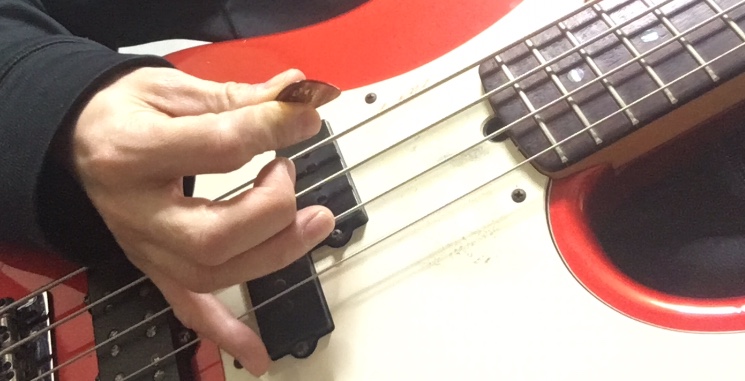
“One thing about your pick technique — try holding it like this.”

“Oh. Yeah, that’s different.”

Eight years of playing, and the very first piece of technique feedback I ever received was about how I was holding my pick. I’d done a national tour in a punk band. I was a walking ball of self-confidence. But in that moment I thought: maybe something can change here.

I walked straight to the front desk: “I’m signing up.”

The person at the front desk was very attractive. I did not ask for her number. I decided to focus on music.

From the School to My First Performance

Having a teacher meant someone who could look at where I actually was — technically and musically — and recommend the right songs and practice methods for my level.

Theory was hard at first and I struggled. But when the teacher pointed me toward a beginner jazz session course, I discovered other people were struggling with the same things I was. People from their teens to their 50s and 60s, all kinds of backgrounds, seriously wrestling with a single song and how to use its notes. We had discussions, went out for drinks, made friends.

At the same time I started to really enjoy practicing. Six months after joining the school, I got to play at my first public recital.

It cost ¥5,000 to participate. I played one song — “Straight, No Chaser” by Thelonious Monk, just the theme and walking bass, three choruses. That was it. But it was the first time I’d ever performed a non-punk-rock song in front of people, and it felt like a huge leap forward in my life.

You Don’t Need a Music Degree to Play Jazz

If I had bitten the bullet and gone straight to lessons instead of spending all those months going back and forth with the studio lady, I would have made it to that first recital a full year earlier.

Part of what held me back was a genuine belief that jazz required a music school background. Jazz seemed:

  • Incomprehensible in its note choices
  • Overwhelmingly theoretical
  • Music for a different kind of person than me

None of that was true. It was just a fixed mindset raising the bar to an impossible height.

When people think “I’d like to try an instrument,” most of them spend way too long in the “thinking about it” phase — and that’s usually what leads to giving up.

Jazz, classical, hard rock, progressive — anything takes time to get comfortable with. Building a community of fellow players takes even longer. But plenty of people without music degrees play jazz. Plenty of working adults perform at jazz gigs regularly. It gets harder before it gets easier — but when it clicks, it gets a lot more fun.

If you’re curious, just go for it.

And if you’re still feeling uncertain, feel free to reach out anytime.

Want Personalized Feedback on Your Playing?

This is exactly the kind of thing that’s hard to fix alone — and where having a teacher makes all the difference.

At Line on Bass, I offer an online lesson service where you send me a video of your playing, and I give you specific, detailed feedback — every single day if you want.

Students from around the world are using this to fix exactly these kinds of issues and steadily improve their jazz bass skills.

Check Out the Lesson Service →

Posted on Leave a comment

How a Working Bassist Practices: Reader Spotlight #1 — Papuchin

This article is written by Toru Hoshino, a jazz bassist and instructor based in Japan who teaches online lessons to students worldwide.

A while back, I put out a call in my newsletter asking: “Would you let me write about your daily practice routine on the blog?” I was delighted to get quite a few responses from people willing to share.

Most of my readers and students are working adults or students — so I thought it would be valuable to show how real, everyday people fit bass practice into their busy lives.

Today we start with the very first person in the series — please meet Papuchin!

Papuchin’s Profile

Nickname:

Papuchin

Prefecture:

Kumamoto

Favorite genres and artists:

Anything, but especially Jazz — and Christian McBride.

How long he’s been playing bass:

32 years since he first started; 6 years since returning after a long break.

Bass he plays:

Monteriburo (double bass)

What got him started:

He loved the warm woody sound of an upright bass. He wanted to play either tenor saxophone or bass — and the bass chair happened to be open.

What he loves about bass:

That propulsive, driving swing feel.

Current activity:

Daily solo practice. Bi-monthly lessons. Occasional sessions.

What he’s practicing:

Right-hand alternate technique (3-string crossing), left-hand third and fifth intervals, copying the composition “Visitation,” getting comfortable with jazz standards.

A word from Papuchin:

“I don’t always feel like I’m improving fast, but I keep reminding myself: just keep going. My goal is to be the bassist that people count on at a jam session.”

Papuchin has been taking Skype online lessons with me for about four years. He’s also been a regular participant in our online “Visitation” practice sessions — thank you, always!

Papuchin’s Two-Week Practice Log

July 1

13:30–13:45 — Alternate 3-string crossing; BPM=50, A-D-G strings and E-A-D strings.

July 2

21:15–21:30 — Open-string bowing.
21:30–21:50 — Bowing basics: Position 6/7-half.
21:50–22:10 — Shifting downward (bowed).
22:10–22:30 — Using iReal Pro to work on third intervals in “Alone Together.”

July 3

13:05–13:20 — Alternate 3-string crossing; BPM=55, A-D-G and E-A-D strings. “Visitation” copy work.
19:00–19:15 — Open-string bowing.
19:15–19:35 — Double thirds (bowed). Bowing basics: Position 6.

July 4

20:20–20:35 — Alternate 3-string crossing; BPM=70, A-D-G and E-A-D strings.
20:35–20:55 — “Visitation” copy work.

July 5

No time — day off from practice.

July 6

13:30–15:30 — Attended a live performance.
17:30–17:45 — Open-string bowing.
17:45–18:05 — Bowing basics: Position 6/7-half.
16:10–16:35 — “Visitation” copy work.
21:30–22:00 — “Alone Together” bass line practice.

July 7

16:10–17:50 — “Visitation” copy work.
16:00–16:30 — “Alone Together” bass line practice.

July 8

13:10–13:30 — Bowing practice (open strings, Position 6, shifting down).
13:30–13:45 — “Alone Together” third interval mapping.

July 9

21:10–21:30 — “Visitation” copy work.
21:30–21:45 — “Alone Together” third mapping.
21:45–22:00 — “Alone Together” bass line practice.

July 10

16:20–17:10 — Playing around casually (Spain theme, etc.).
17:30–18:00 — “Alone Together” bass line practice.

July 11

21:30–21:45 — Alternate 3-string crossing; BPM=65, A-D-G and E-A-D strings.
21:45–22:00 — “Visitation” copy work.

July 13

14:00–14:15 — Open-string bowing.
14:15–14:35 — Bowing basics: Position 6/7-half.
14:35–14:55 — “Visitation” copy work.
21:05–21:20 — Alternate 3-string crossing; BPM=70, A-D-G and E-A-D strings.
21:20–21:55 — “Alone Together” third interval mapping.

July 14

No time — day off from practice.

July 15

20:05–20:20 — Alternate 3-string crossing; BPM=65, A-D-G and E-A-D strings.
20:20–21:00, 21:10–21:30 — “Visitation” copy work.

Each individual session is fairly short — but what stands out is how consistently he’s showing up every single day. That’s excellent!

Thank you so much for sharing all of this.

I keep a practice journal just like this myself — every time. It helps organize your thinking, and it’s something I’d genuinely recommend to any musician.

Want Personalized Feedback on Your Playing?

This is exactly the kind of thing that’s hard to fix alone — and where having a teacher makes all the difference.

At Line on Bass, I offer an online lesson service where you send me a video of your playing, and I give you specific, detailed feedback — every single day if you want.

Students from around the world are using this to fix exactly these kinds of issues and steadily improve their jazz bass skills.
Check Out the Lesson Service →

Posted on Leave a comment

How a Working Bassist Practices: Reader Spotlight #2 — Ryo

Readers and Students: A Peek at Their Daily Practice #2

This article is written by Toru Hoshino, a jazz bassist and instructor based in Japan who teaches online lessons to students worldwide.

A while back, I put out a call in my newsletter asking readers and students to let me write about their daily practice routines on the blog. I was happy to get lots of people willing to share.

Most of my readers and students are working adults or students — so I thought it would be valuable to show how real, everyday people fit bass practice into their busy lives.

Today is number two in the series — meet Ryo!

Ryo’s Profile

Nickname:

Ryo

Age:

25

Job:

Automotive parts manufacturer, R&D division

Favorite genres and artists:

Jazz, Rock
Scott LaFaro, Marcus Miller, Billy Sheehan

How long he’s been playing bass:

7 years — started at 18

Basses he plays:

Ibanez SRH500F (fretless bass)
Hallstatt WBSE-850 (upright bass)
Fender Japan Jazz Bass
BUSKER’S Jazz Bass
Mavis PJ Bass

What got him started:

A friend’s band needed a bassist and he got recruited — with zero musical experience.

What he loves about bass:

The deep, soul-shaking low end. And how cool it looks.

Current activity:

In December 2018, he co-founded a jazz band called DeepValley with working-adult musicians. They play primarily in Tokyo and Kanagawa.
Instagram: https://www.instagram.com/jasst_friends/
YouTube: https://www.youtube.com/channel/UCeKF-dl6ZF_nWEixdPjdszw

The stunning band photo above was shot by their bandmate and professional photographer, Yudai Saki (@mis0panda).

What he’s practicing:

Improvisation — something he’s been wrestling with ever since he got into jazz. Lately, after some focused lessons, he says understanding is finally starting to click, little by little. “Don’t overplay” was his big recent insight.

A word from Ryo:

“Bass is seriously cool and so much fun. I’m happiest when I’m listening to bass — or when I’m playing it. I’ll keep working hard under your guidance, Teacher Hoshino!”

Ryo has a character that reminds me of my younger self — which makes him impossible to dislike (laughs). The bass duo sessions we do at the end of lessons always get pretty intense!

Ryo’s Two-Week Practice Log

Day 1 (Mon)

23:00–23:20 — “Softly As in a Morning Sunrise”: bass line, melody, and improv practice (electric bass).

Day 2 (Tue)

7:00–7:10 — Scale practice (upright).
23:00–23:10 — A tune called “Feel Like”: bass line, melody, and improv practice (electric).

Day 3 (Wed)

7:00–7:10 — Chromatic exercises (electric).

Day 4 (Thu)

6:00–6:30 — Copied phrase 17 from the daily phrase series, then improv practice on “Autumn Leaves” (electric).
7:00–7:10 — Scale practice (upright).

Morning practices like this at the crack of dawn are seriously impressive…

Day 5 (Fri)

22:00–22:10 — Improv practice over a backing track (electric).

Day 6 (Sat)

12:30–13:00 — Scale practice (upright).
13:00–13:30 — Band cover song practice (electric).

Day 7 (Sun)

12:00–14:00 — Band rehearsal.
14:00–18:00 — Jam session.

Day 8 (Mon)

Got home at 23:00, tried to practice but fell asleep. No practice.

Day 9 (Tue)

22:00–22:30 — Band cover song practice (electric).

Day 10 (Wed)

22:00–22:10 — Band cover song practice (electric).

Day 11 (Thu)

23:00–23:10 — Scale practice (upright).

Day 12 (Fri)

Went out drinking, got completely smashed. No practice.

Day 13 (Sat)

10:00–11:00 — Scale practice, “Softly As in a Morning Sunrise” melody practice (upright).
14:00–15:00 — Lesson with me.

Day 14 (Sun)

9:00–9:30 — Improv practice over a backing track (electric).

Looking at his overall log — one thing I genuinely believe works best for progress is morning practice. When your brain hasn’t taken in any other information yet, deeply focused scale and technique work just goes in so much more efficiently. Ryo is already showing up to sessions all over the place. If you ever cross paths with this bassist at a venue somewhere — go say hi!

Want Personalized Feedback on Your Playing?

This is exactly the kind of thing that’s hard to fix alone — and where having a teacher makes all the difference.

At Line on Bass, I offer an online lesson service where you send me a video of your playing, and I give you specific, detailed feedback — every single day if you want.

Students from around the world are using this to fix exactly these kinds of issues and steadily improve their jazz bass skills.

Check Out the Lesson Service →

Posted on Leave a comment

How a Working Bassist Practices: Reader Spotlight #3 — Aki

This article is written by Toru Hoshino, a jazz bassist and instructor based in Japan who teaches online lessons to students worldwide.

A while back, I put out a call in my newsletter asking readers and students to let me write about their daily practice routines on the blog. I was delighted to get lots of people willing to share.

Most of my readers and students are working adults or students, so I thought it would be valuable to show how real, everyday people fit bass practice into their busy lives.

Today is number three in the series — meet Aki!

Aki’s Profile

Nickname:

Aki

Age:

38

Job:

Social welfare / care sector

Favorite genres:

90s Visual Kei, 80s–90s J-Pop, Jazz

Favorite artists:

LUNA SEA, Marcus Miller, F-Chopper KOGA

How long he’s been playing bass:

Bought his first bass 25 years ago. Seriously playing bass for 5–6 years; before that, bouncing between keyboards and guitar.

Basses he plays:

4-string: Fender Japan Jazz Bass
6-string: Atelier Z Beta6 / 32″

(That Atelier Z is seriously cool!!)

What got him started:

Inspired by the bass heroes of the 90s Visual Kei era — X JAPAN, LUNA SEA, Kuroyume, L’Arc-en-Ciel, GLAY, Lacrimosa Christie — and the way those bassists moved and grooved on stage.

(We’re the same kind of people — the secret handshake is “Mechanical Dance”!)

What he loves about bass:

The fact that you can’t keep playing unless you stay dedicated to it.

Current activity:

Attending jazz sessions a few times a month on guitar. Planning to eventually make his bass debut at sessions.

What he’s practicing:

Basic walking bass patterns, major scale and pentatonic exercises, working on jazz standard melodies (themes).

A word from Aki:

“Right now I’m enjoying music life with guitar as my main instrument, but I’m slowly going back to my roots and restarting bass practice. I use your blog as a reference for both bass and guitar — thank you so much!”

Thank YOU, Aki! He’s been a regular reader of my blog. A multi-instrumentalist who plays both bass and guitar. He also came to a jazz session night I hosted — that meant a lot.

Same generation as me, both fallen deep into 90s Visual Kei — we totally get each other.

Aki’s Two-Week Practice Log

Reference books he was using:
“Introduction to Jazz Bass” (Japanese instructional book)
“Walking Bass Super-Beginner’s Guide” (Japanese instructional book)

Day 1 (Mon)

Day off from practice right out of the gate — had to read the new volume of Blue Giant (a jazz manga).

Day 2 (Tue)

9:00–10:15 — Tried playing bass lines to every song he knows, but on guitar.

Day 3 (Wed)

10:00–11:00 — Checked out the sound of harmonic minor using the blog. Then used the “Introduction to Jazz Bass” book to try playing root-only bass lines to “Fly Me to the Moon” and “Autumn Leaves.”

Day 4 (Thu)

10:00–11:00 — Focused on guitar comping practice. Realised that thinking consciously about bass lines actually shed new light on how guitar comping should work.

Day 5 (Fri)

9:00–10:15 — “Fly Me to the Moon” and “Autumn Leaves,” mixing in some passing tones alongside the root.

Day 6 (Sat)

Work in the morning, then drinks afterward — no practice.

Day 7 (Sun)

Attended a jazz session on guitar. Watched a great bassist very closely and listened hard to every note. On the way home, impulsively bought a second-hand guitar — without telling his wife…

Day 8 (Mon)

22:00–23:00 — Spent the night obsessively playing the guitar he bought yesterday. No bass practice.

Day 9 (Tue)

Unusually had an early shift when he normally works late; came home exhausted. Lazily played through a backing track by feel. Got to touch the bass, but didn’t feel like he got anything done.

Day 10 (Wed)

10:00–11:00 — Used the “Introduction to Jazz Bass” book to try songs beyond “Fly Me to the Moon” and “Autumn Leaves.” Blues felt natural right away; other songs — even ones he knows on guitar — just wouldn’t come out in his hands. Decided to narrow focus down to three songs for now: “Fly Me to the Moon,” “Autumn Leaves,” and blues.

Day 11 (Thu)

Couldn’t shake some workplace frustrations — no motivation. Escaped into reading a stack of manga that had arrived.

Day 12 (Fri)

22:00–22:30 — Tried playing bass standing up. Completely lost his grip on the fretboard — was shocked that things he could do sitting down suddenly didn’t work.

Day 13 (Sat)

Day off, but caught up in household chores — only managed a little guitar. Just did some prep for the next day’s session.

Day 14 (Sun)

Attended a jazz session on guitar. Was hoping to get a chance to play bass too, but there were unusually many bassists, so he never found the right moment to step in. On the way out, though, he managed to tell the host “I’ll play bass next time” — a small but meaningful step.

Summary from Aki:

“This year my shift schedule has me starting work late, so being able to practice in the mornings is a huge help. (The work itself is tough, though.) Guitar is my main focus, but I’m running bass alongside it, so the time I dedicate specifically to bass is short. I’m hoping the two instruments can lift each other up.”

Thank you so much, Aki!

Reading through this log, you really get a vivid picture of someone’s life — which I love.

For all of us, real life comes first, and practice fits in around it. There will be days when nothing happens. That’s okay — don’t drag it with you. Just keep enjoying bass at whatever pace you can!

Thank you again, Aki!

Want Personalized Feedback on Your Playing?

This is exactly the kind of thing that’s hard to fix alone — and where having a teacher makes all the difference.

At Line on Bass, I offer an online lesson service where you send me a video of your playing, and I give you specific, detailed feedback — every single day if you want.

Students from around the world are using this to fix exactly these kinds of issues and steadily improve their jazz bass skills.

Check Out the Lesson Service →

Posted on Leave a comment

How a Working Bassist Practices: Reader Spotlight #4 — Momo

This article is written by Toru Hoshino, a jazz bassist and instructor based in Japan who teaches online lessons to students worldwide.

A while back, I put out a call in my newsletter asking readers and students to let me write about their daily practice routines on the blog. I was happy to get lots of people willing to share.

Most of my readers and students are working adults or students, so I thought it would be valuable to show how real, everyday people fit bass practice into their lives.

Today is number four in the series — meet Momo, a female double bassist!

Momo’s Profile

Nickname:

Momo

Favorite genres and artists:

Classical, Jazz, Chopin, Bill Evans, Scott LaFaro

(Bill Evans is just the best. And I really enjoyed the documentary film about him too!)

How long she’s been playing bass:

1 year

Bass she plays:

Double bass (Oriente)

(A female double bassist — how cool is that!!)

What got her started:

Wanted to play sessions with her piano friends.

What she loves about bass:

The sound that resonates through your whole body.

Current activity:

Solo practice, and occasional sessions with friends.

What she’s practicing:

Scales across different positions on the neck.

A word from Momo:

“The road ahead feels very long…”

Yes — it is long. I’m still out there on that same road myself! (laughs)

Momo has come along to a few of our monthly practice sessions. Always great to see you there!

Momo’s Two-Week Practice Log

Day 3 (Wed)

21:00–22:00 — Bowing technique, finger-strengthening exercises, scale practice.

Day 4 (Thu)

21:00–22:00 — Bowing technique, finger-strengthening exercises, scale practice.

Day 5 (Fri)

Got home late — no practice.

Day 6 (Sat)

Out for the day — no practice.

Day 7 (Sun)

10:00–12:00 — Bowing technique, finger-strengthening exercises, scale practice, and the lesson assignment piece.

Day 8 (Mon)

21:00–22:00 — Bowing technique, finger-strengthening exercises, scale practice.

Keeping up consistently with evening sessions — that’s excellent!

Day 9 (Tue)

Got home late — no practice.

Day 10 (Wed)

21:00–22:00 — Bowing technique, finger-strengthening exercises, scale practice.

Day 11 (Thu)

Not feeling well — no practice.

Day 12 (Fri)

Got home late — no practice.

Day 13 (Sat)

Out for the day — no practice.

Day 14 (Sun)

Out for the day — no practice.

Day 15 (Mon)

21:00–22:00 — Bowing technique, finger-strengthening exercises, scale practice.

Day 16 (Tue)

Got home late — no practice.

Day 17 (Wed)

21:00–22:00 — Bowing technique, finger-strengthening exercises, scale practice.

Reflection after keeping the log:

“I often feel like I’m not practicing enough — but when I actually wrote it all down, I realized there were days when I actually was getting it done (laughs). It’s a surprisingly good way to see things more positively.”

Yes — putting your time on paper tends to reveal things you hadn’t noticed! I hope this two-week log helps Momo’s musical life going forward.

And I sincerely hope that female double bassists become as trendy as bubble tea!

Thank you so much for taking part, Momo! Hope to see you at the next session!

Want Personalized Feedback on Your Playing?

This is exactly the kind of thing that’s hard to fix alone — and where having a teacher makes all the difference.

At Line on Bass, I offer an online lesson service where you send me a video of your playing, and I give you specific, detailed feedback — every single day if you want.

Students from around the world are using this to fix exactly these kinds of issues and steadily improve their jazz bass skills.

Check Out the Lesson Service →

Posted on Leave a comment

How a Working Bassist Practices: Reader Spotlight #5 — Tany

This article is written by Toru Hoshino, a jazz bassist and instructor based in Japan who teaches online lessons to students worldwide.

A while back, I put out a call in my newsletter asking readers and students to let me write about their daily practice routines. I was happy to get lots of people willing to share.

Most of my readers and students are working adults or students, so I thought it would be valuable to show how real, everyday people fit bass practice into their lives.

Today is number five in the series — please meet Tany!

Tany’s Profile

Nickname:

Tany

Age:

34

Job:

Medical admin

Favorite genres and artists:

Lately: Snarky Puppy, Bad Religion, Art Blakey

(Hearing “Bad Religion” definitely triggered the former punk rocker in me.)

How long he’s been playing bass:

About 20 years — started in middle school

Bass he plays:

Freedom electric jazz bass (a Japanese boutique brand)

What got him started:

Got inspired by Kouji Ueno, the bassist from the Japanese rock band The Michelle Gun Elephant.

What he loves about bass:

The way it holds a band together — and the sound.

Current activity:

First studio rehearsal with a jazz band coming up next week.

What he’s practicing:

The songs for the upcoming studio session — walking bass and bass solos.

A word from Tany:

“I wonder how much I’ll actually be able to practice…”

Tany has been taking lessons since April. He already had a solid foundation when he started, so his progress has been fast — he’s improving quickly!

Tany’s Practice Log — July 2019

Day 1

Took a half day off and came home early — but had drinks and ended up not practicing.

Day 2

20:55–21:15 — Fingering exercises using F intervals, practicing holding each note out fully.

Day 3

Felt unwell and went straight to sleep.

Day 4

20:00–20:30 — Practiced solos and walking bass to songs planned for the studio session.

Day 5

Had drinks and went to bed.

Day 6

9:30–10:00 — Reviewed the lesson material in preparation for class.
11:00–12:00 — Lesson, mainly working on F blues and related material.
15:30–16:10 — Reviewed the lesson; focused especially on “Now’s the Time” — don’t want to forget that closing figure.

Day 7

13:30–15:30 — First jazz band studio rehearsal. Couldn’t get the solo at all — it was surprising how hard it was (laughs). Playing a bass solo with no backing is genuinely tough. Lots to work on.

Days 8–13

Work was hectic, wasn’t feeling great, and his wife was struggling with morning sickness — nothing got done.

Yes — Tany’s wife is pregnant right now. Managing all of that and still showing up to lessons is impressive!

Day 14

9:30–10:30 — Wrote out charts and listened through the material for a “Days of Wine and Roses” practice session that evening. Realized just how much is in that song.
15:30–17:00 — The study session: a four-bassist jazz session, which was pretty rare and a lot of fun.

Reflection after two weeks of keeping the log:

Looking back honestly, I didn’t practice much at all. Time to rethink how I’m building practice into my day.
That said, keeping the log helped me practice with more intention — and it helped me notice my own problem areas after lessons and studio sessions.

Figuring out how to carve out consistent practice time in your daily life is something you always have to actively think about.

Tany has work, family, and now a jazz band going — life is genuinely hectic. But let’s keep at it together!

Thank you so much for taking part, Tany!

Want Personalized Feedback on Your Playing?

This is exactly the kind of thing that’s hard to fix alone — and where having a teacher makes all the difference.

At Line on Bass, I offer an online lesson service where you send me a video of your playing, and I give you specific, detailed feedback — every single day if you want.

Students from around the world are using this to fix exactly these kinds of issues and steadily improve their jazz bass skills.

Check Out the Lesson Service →

Posted on Leave a comment

How a Working Bassist Practices: Reader Spotlight #6 — So

This article is written by Toru Hoshino, a jazz bassist and instructor based in Japan who teaches online lessons to students worldwide.

A while back, I put out a call in my newsletter asking: “Would you be willing to let me write about your daily practice routine on the blog?” I was happy to get lots of responses from people willing to share.

Most of my readers and students are working adults or students — so I thought it would be valuable to share how real, everyday people manage to fit bass practice into their lives.

So far I’ve featured five people. Today is number six — please meet So, a female bassist!

So’s Profile

Nickname:

So

Age:

34

Job:

Web-related work

Favorite genres:

Pop, City Pop, Funk, Electro Swing, R&B, Lounge

Right now she’s working on songs by Kinoko Teikoku (a Japanese indie rock band)!

How long she’s been playing bass:

7 months

Bass she plays:

Ibanez

I actually used to own an Ibanez myself — they’re really easy to play!

What got her started:

I started out teaching myself guitar and got to the point where I could play chords, but then hit a wall and couldn’t progress further. At that point I got the idea that learning bass might actually help my guitar playing improve at the same time — and that’s how I started.

What she loves about bass:

I wasn’t particularly interested in bass at first, but once I started playing, I started noticing the bass line whenever I listened to music. The more I listened, the more I thought, “bass sounds so cool” — and I got completely hooked.

Current activity:

She had a casual band going with friends, but they’re on hold due to everyone being busy.

What she’s practicing now:

Learning basic theory from her teacher and practicing from there.

A word from So:

“Little by little, I hope to keep improving going forward.”

So has been taking lessons since January 2019. She knows a lot of music I’ve never heard of — she’s always introducing me to new stuff!

So’s Practice Log for the Past Two Weeks

Day 6

Bass lesson day.
Reviewed lesson material for about 30 minutes when I got home.

Day 7

During breaks from work at home, played for about 2 hours — reviewing what I learned last lesson plus some favorite songs by chord. Got excited and ended up playing guitar for another hour too.

Day 10

After work, played for about 30 minutes during breaks from tasks at home — reviewing lesson material and playing favorite songs by chord.

Day 12

Practiced scales and played along to songs that came up on YouTube for about 2 hours.

Days 13–19

Things got hectic and I wasn’t able to practice at all…

So that was her report.

Honestly, the people who participated in this series before her tended to be pretty high-intensity practicers — some readers were surprised. But the truth is, most of my students practice at roughly this kind of pace. And that’s completely fine.

It sounds cliché, but what matters most is loving it and keeping going.

Don’t be too hard on yourself if you miss a day, or a week. Life gets busy. Keep enjoying bass at whatever pace works for you — that’s what counts.

Thank you so much, So! Let’s go get ramen again sometime!

Want Personalized Feedback on Your Playing?

This is exactly the kind of thing that’s hard to fix alone — and where having a teacher makes all the difference.

At Line on Bass, I offer an online lesson service where you send me a video of your playing, and I give you specific, detailed feedback — every single day if you want.

Students from around the world are using this to fix exactly these kinds of issues and steadily improve their jazz bass skills.

Check Out the Lesson Service →

Posted on Leave a comment

These 3 Things Aren’t About Repetition — They’re 90% Awareness

This article is written by Toru Hoshino, a jazz bassist and instructor based in Japan who teaches online lessons to students worldwide.

For these three things, it’s not repetition that fixes them — it’s awareness, about 90% of the time.

In lessons, I often get questions like:

“My left hand flails around too much — is there a good way to practice that?”

or

“I can’t get my muting right — is there a good way to practice that?”

Repetition practice is, of course, important. But what tends to work even better is pointing out specifically where the left hand is flailing, or where the muting is going wrong, and saying something like:

“Next time, focus on muting cleanly through beats 3 and 4 of bar 9.”

When I give that kind of specific feedback, things often improve noticeably right away.

Of course, how quickly someone improves varies depending on how long they’ve played the instrument. But in general, I find that the key is simply this:

Recognize for yourself exactly what’s not working, and consciously play to avoid it next time.

That’s basically it. Pretty unglamorous, I know.

It’s natural to want to look for “the right method,” but in particular, for things like:

・Left hand flailing
・Even note duration
・Muting

…mindless repetition often isn’t what fixes these. Simple awareness, like I described above, tends to do the job.

That said, it’s hard to notice these things on your own when you’re self-taught. Recording yourself playing and watching it back with an objective eye is a great way to catch what you’re missing.

I hope this gives you a useful way to think about it next time you hit a rough patch in a phrase or bass line.

Want Personalized Feedback on Your Playing?

This is exactly the kind of thing that’s hard to fix alone — and where having a teacher makes all the difference.

At Line on Bass, I offer an online lesson service where you send me a video of your playing, and I give you specific, detailed feedback — every single day if you want.

Students from around the world are using this to fix exactly these kinds of issues and steadily improve their jazz bass skills.

Check Out the Lesson Service →

Posted on Leave a comment

My Journey Shortening My Bass Strap: What I Was Thinking at Every Stage

Hi, I’m Toru Hoshino, a bass instructor (@jazzbassisttoru).

This article shares my own take on strap length, based on years of playing bass across rock and jazz.

If you’ve ever found yourself thinking “I’m not sure how long my strap should be,” I hope this helps.

A Common Struggle

A lot of students who come to me for lessons have a long background in rock and want to move into jazz or more technical styles of music.

When that happens, strap length is something many of them get stuck on.

Jazz / sessions / technical playing = a shorter strap = easier to play, but it doesn’t look cool.

So in the end, they can never settle on a length.

I get it completely — guys especially tend to worry about this.

So I want to walk through how I gradually shortened my own strap over the years, and what I was thinking at each stage.

My Strap Length at Age 19-24

This was my strap length back in my full-on punk days.

I was a big fan of Namba from Hi-Standard and J from LUNA SEA, so I kept my strap around the same length they did.

Back then, I had a strong belief that a short strap meant “uncool” or “looking like an old guy.”

My Strap Length at Age 25-27

I joined a fairly technical rock band, and found high-fret playing harder with my strap that low, so I raised it a bit.

You might look at this photo and think it’s not all that different from the last one, but in rocker circles, this counts as a fairly big difference.

It’s roughly the difference between a perfect 5th and a flat 5th (laughs).

Honestly, at the time I felt like it was “too high,” and it took a while before I got used to this length.

Or maybe it’s more accurate to say I had to get used to the visual of myself playing at that height.

Age 28 to Now

This is my current strap height.

As I’ve written elsewhere, I keep this same height whether I’m playing standing up or sitting down.

Of course, I felt resistance to this height at first too. But once I started going to jam sessions and seeing how most jazz bassists set up, I noticed nearly everyone played around this height, and my resistance gradually faded.

If anything, I once met a bassist at a session who wore his strap noticeably longer, wasn’t playing all that well, and said, “Well, this length is just my thing — I don’t want to change it.” Hearing that actually struck me as the less cool choice.

On Strap Length in General

There’s no rule that says “your strap has to be this exact length.”

So what should you base it on? I think most people choose based on either

playability

or

how it looks.

When people choose based on looks, most seem to land on “I don’t want to go from a longer strap to a shorter one.”

Part of that might simply be because they’re not often around other players wearing their strap at an “old-guy height.”

For me, being around other players with shorter straps gradually made me stop worrying about my own strap length, and now I’ve fully embraced — and even like — how short mine is.

That said, I’ll say it again: there’s no rule that your strap has to be a certain length, so in the end, the length is entirely up to you.

Thinking about your strap length can also be a sign that you’re searching for ways to make your playing better.


These days, even in rock, more and more bass heroes are wearing their straps higher, so it might be worth experimenting with a different length yourself.

By the way, a couple of rock players I personally think nail a great in-between height — not too high, not too low — are JIRO from GLAY and Taiji, formerly of X Japan.

Want Personalized Feedback on Your Playing?

This is exactly the kind of thing that’s hard to fix alone — and where having a teacher makes all the difference.

At Line on Bass, I offer an online lesson service where you send me a video of your playing, and I give you specific, detailed feedback — every single day if you want.

Students from around the world are using this to fix exactly these kinds of issues and steadily improve their jazz bass skills.

Check Out the Lesson Service →

Posted on Leave a comment

5 Things I Keep in Mind for Stage Banter, Even If You’re Not a Natural Talker

This article is written by Toru Hoshino, a jazz bassist and instructor based in Japan who teaches online lessons to students worldwide. In this article, he shares 5 things he keeps in mind for stage banter, for anyone who finds talking to the crowd between songs nerve-wracking.

This one’s for anyone who loves performing live but dreads the between-song talking. Even if you’re not confident at it, there are plenty of situations where you simply have to do it — and since people came out to see you, you naturally want that talking to be enjoyable too, not just the music. I actively perform live and handle between-song talking myself, and here are 5 things I’ve come to prioritize from years of doing it.

Don’t Script Out Every Single Word

If everything you say follows a rigid script — “Thank you all so much for coming out tonight. Seeing so many of you here makes all that practice feel worth it. Our next song is called…” — it loses all spontaneity and gets boring fast.

That said, jotting down rough talking points and keeping them on your music stand is something I did myself until I got more comfortable — bullet points like “song 2: mention the city this song is associated with,” “song 3 (original): mention where the melody came to me,” “song 4: mention a memory from a past gig where we played this.”

Don’t Try to Be Funny

If you’re not confident in your stage talking, don’t go for laughs. I’ve had the experience of going for a laugh and getting dead silence instead — that “oh no, what do I do now” look on my face spreads through the room instantly and kills the energy (trust me, I’ve been there). Landing a laugh on purpose takes a performer who’s genuinely comfortable both on stage and with talking. You don’t need laughs or applause — just aim to say what you actually want to say, clearly and directly.

Explain the Tune in a Way Anyone Can Follow

I do a lot of talking as a live jazz performer, and with jazz in particular, plenty of people in the audience are just enjoying it as background music over drinks and conversation. When I introduce a tune, I try to add a bit of context — who wrote it, the story behind it, what the title means — rather than just naming it.

So instead of just “Our next song is ‘Days of Wine and Roses,'” I’ll add something like, “Our next song is ‘Days of Wine and Roses’ — it actually won the Oscar for Best Original Song back in the ’60s.” A little extra context like that gets a lot more people nodding along, recognizing it, or just feeling more connected to what they’re hearing.

Remember There’s a Wide Range of People in the Room

When I first started playing jazz, I didn’t even know standards like “Autumn Leaves” or “Fly Me to the Moon” myself. Early on, I once heard a band introduce “Autumn Leaves” with “you all probably know this one already” — and since I genuinely didn’t, it stung a little, like I was the only person in the room who didn’t know it.

To someone who’s been listening to jazz for decades, saying “this next one’s called ‘My Favorite Things'” might earn you an “obviously, I know that” — but it’s worth remembering that all kinds of people, at all kinds of familiarity levels, are out there listening.

If You’re Going to Plug Yourself, Commit to It

Depending on the venue, self-promotion may not even be appropriate — playing background music in a hotel lounge, for example. But if it is appropriate for the setting, commit to doing it properly when you do.

I went on a tour overseas last year, and weaving a story from that trip into my self-introduction got people genuinely interested. It’s easy to think “I don’t want to repeat myself” and skip this kind of thing, especially across back-to-back shows — but remember, most of the people in the room are hearing it from you for the very first time.

At the end of the day, the main event is always the music itself. But I’m constantly thinking about how good stage banter can help even more people connect with and enjoy a performance — these are the things I personally keep in mind, based on years of doing this.

Reading a room and adjusting your stage presence on the fly is a skill that’s hard to build through self-reflection alone — feedback from an outside perspective speeds it up considerably.

Want Personalized Feedback on Your Playing?

This is exactly the kind of thing that’s hard to fix alone — and where having a teacher makes all the difference.

At Line on Bass, I offer an online lesson service where you send me a video of your playing, and I give you specific, detailed feedback — every single day if you want.

Students from around the world are using this to fix exactly these kinds of issues and steadily improve their jazz bass skills.

Check Out the Lesson Service →