This article is written by Toru Hoshino, a jazz bassist and instructor based in Japan who teaches online lessons to students worldwide. In this article, he covers a common misunderstanding about how minor scales actually move on the bass — something he himself got wrong before he learned the theory behind it.
Contents
Minor Scale Pattern 1
You can play a D minor scale using a fingering pattern like this:
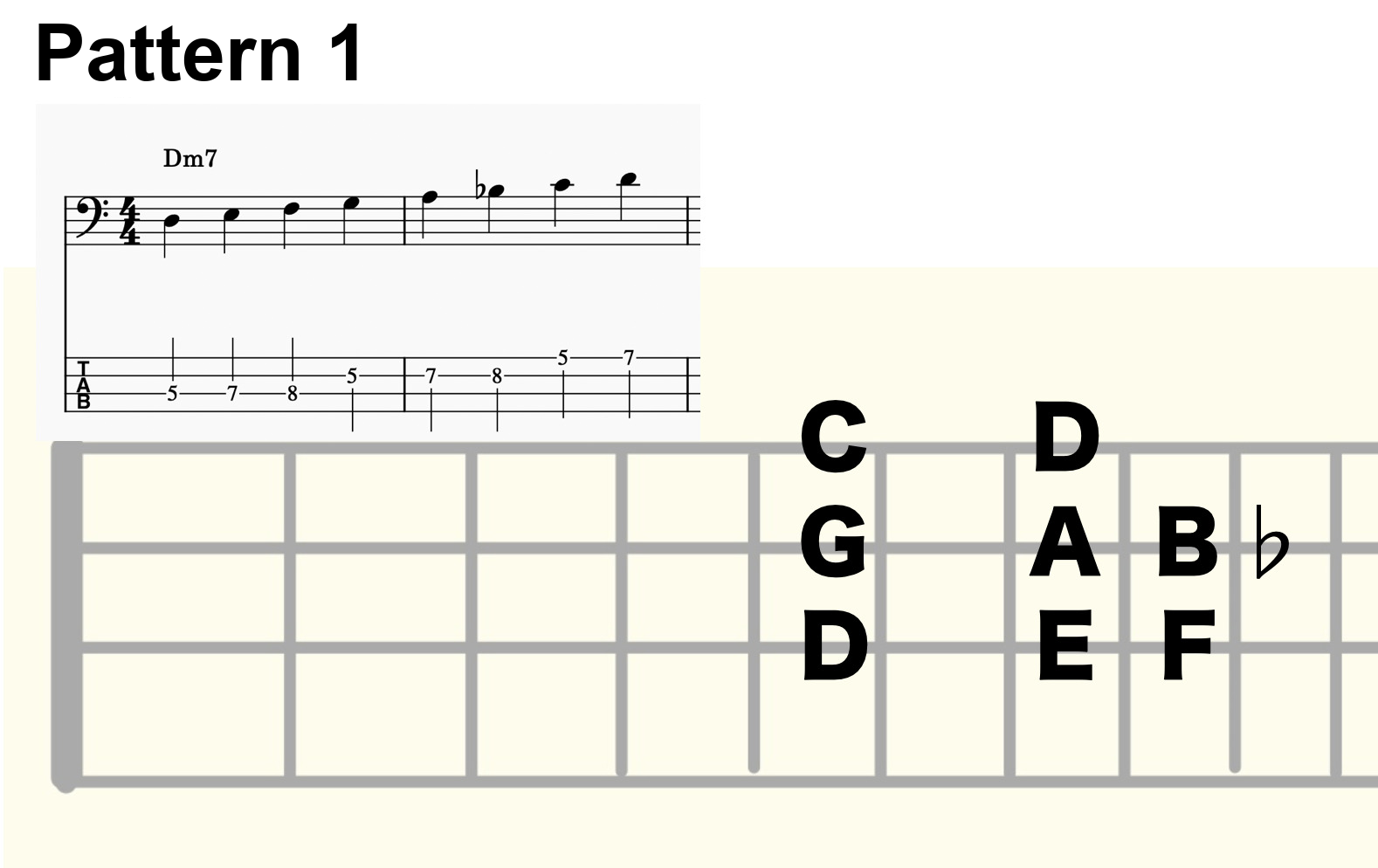
This is the shape I picked up by ear, self-taught, back when I was playing rock bass. But D minor isn’t limited to this one shape — there are other fingering patterns and ways the scale moves on the neck.
Minor Scale Pattern 2
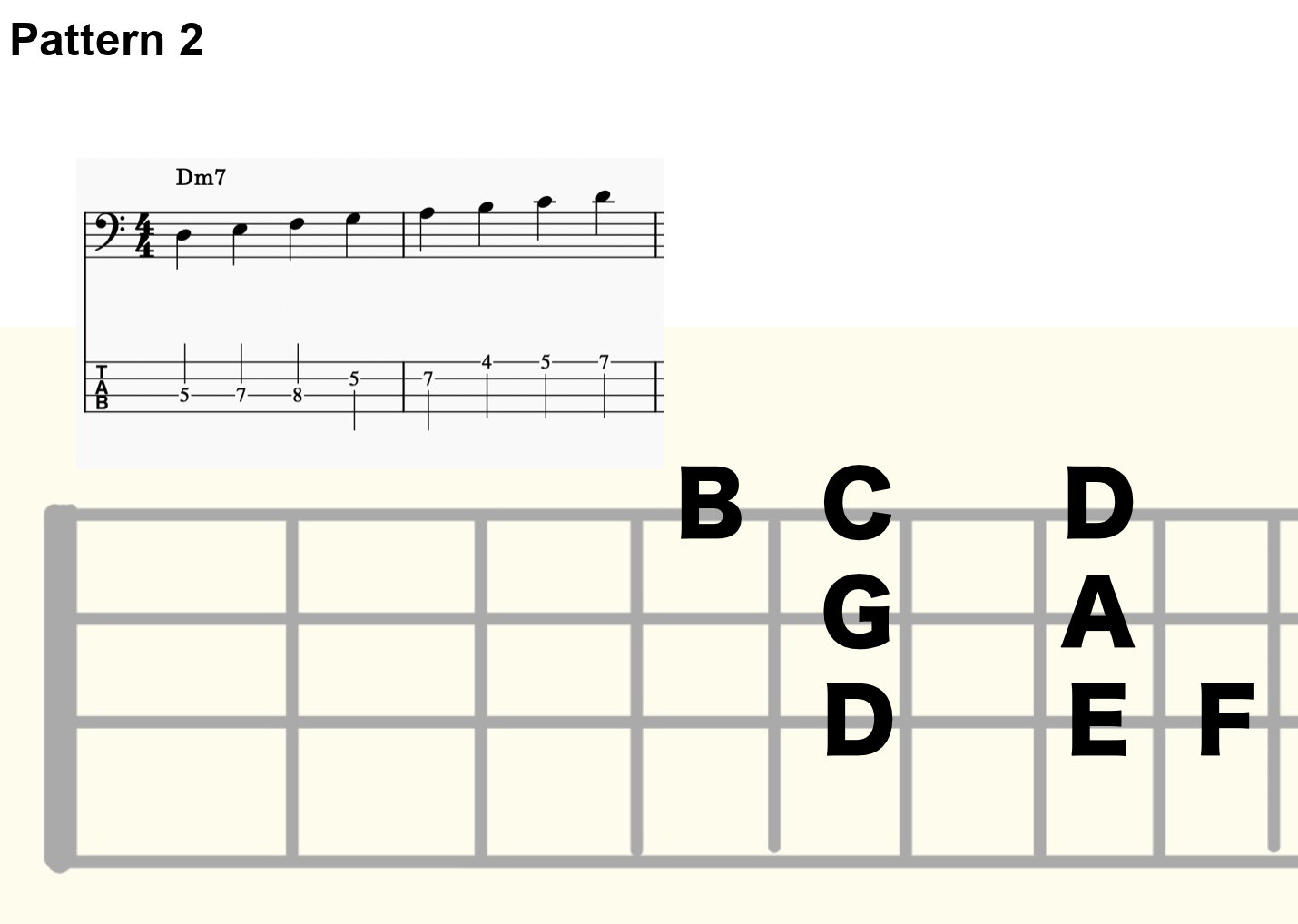
For example, it can also move like this:
Minor Scale Pattern 3
Or like this:
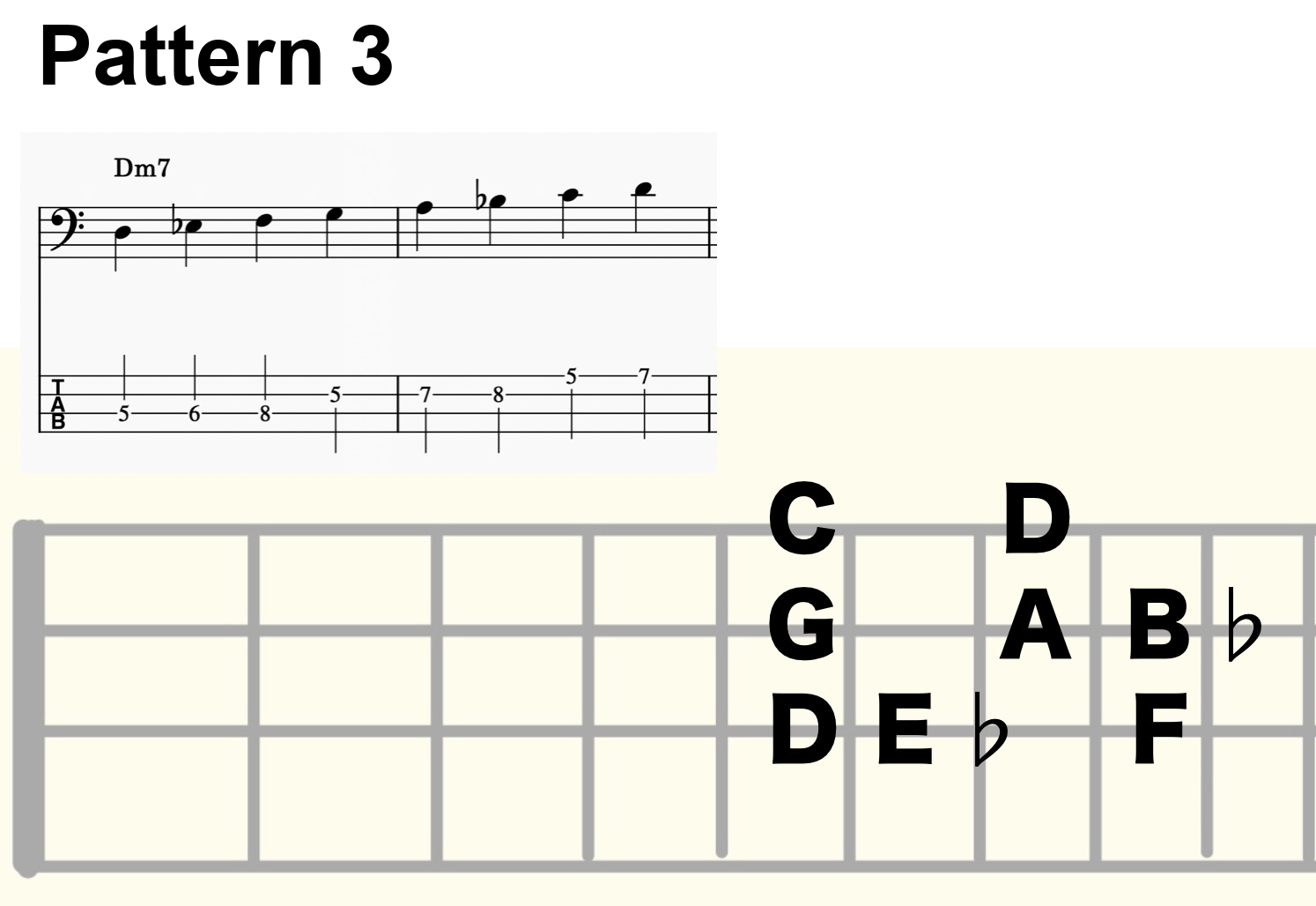
That’s probably a shape you don’t run into very often.
Why does the same D minor scale move differently like this? It’s because the scale you can use depends on the key (or more precisely, the chord) you’re playing over.
Because the minor scale shape is so easy to memorize visually on the fretboard, it’s easy to fall into the trap of thinking Pattern 1 is the only shape there is — which is a big mistake (I know, because that was exactly my mistake).
But I still vividly remember how it felt the first time this theory clicked for me after spending real time with it — like I’d leveled up, and my whole sense of the music had opened up.
For reference: Pattern 1 is the D Aeolian scale, Pattern 2 is the D Dorian scale, and Pattern 3 is the D Phrygian scale.
If this has caught your interest and you’re in the middle of studying scales and chord tones, getting comfortable moving between these shapes is well worth the time.
I hope this gives you something useful to think about in your own practice.
Want Personalized Feedback on Your Playing?
This is exactly the kind of thing that’s hard to fix alone — and where having a teacher makes all the difference.
At Line on Bass, I offer an online lesson service where you send me a video of your playing, and I give you specific, detailed feedback — every single day if you want.
Students from around the world are using this to fix exactly these kinds of issues and steadily improve their jazz bass skills.