This article is written by Toru Hoshino, a jazz bassist and instructor based in Japan who teaches online lessons to students worldwide. In this article, he breaks down a walking bass line he recorded on upright bass for the jazz standard “Someday My Prince Will Come.”
Contents
A Walking Bass Line Over “Someday My Prince Will Come”
What I Was Thinking About While Building This Line
1. Root-Centered Motion
I anchored beat 1 of each bar with the root for stability, while keeping beats 2 onward from feeling overstuffed — letting the line breathe rather than cramming in too much motion. Instead of moving busily through every beat, I focused on letting the chord’s foundational tones ring out longer, which gives the phrase more room to relax.
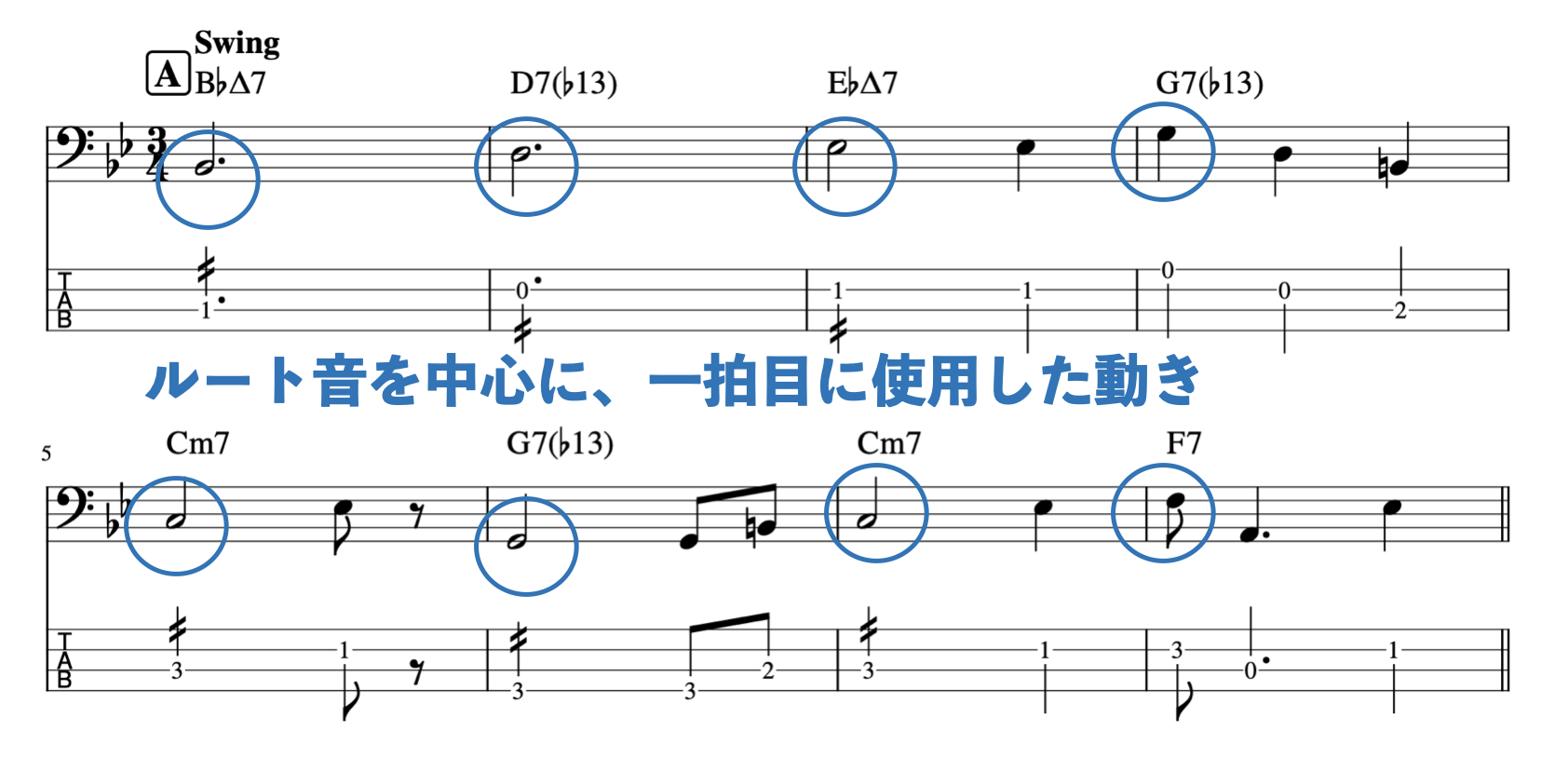
I also used rests deliberately to create some space, which keeps the line feeling like it swings even though it’s quite simple.
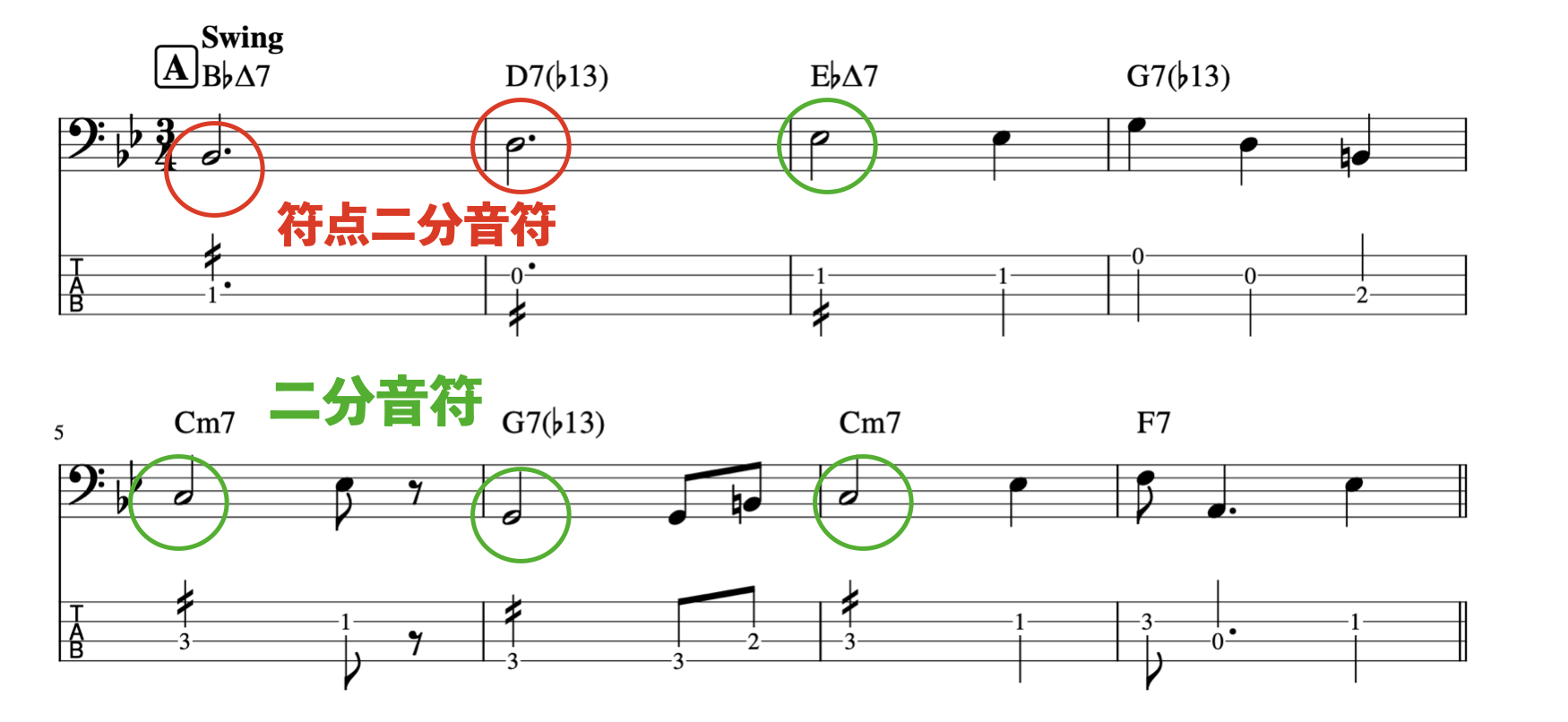
2. Half Notes and Dotted Half Notes
By building the line mostly around half notes and dotted half notes, I kept it flowing without feeling choppy. With the root solidly on beat 1, I prioritized “letting the note ring” over constant movement, which gives the whole phrase a relaxed, unhurried quality.
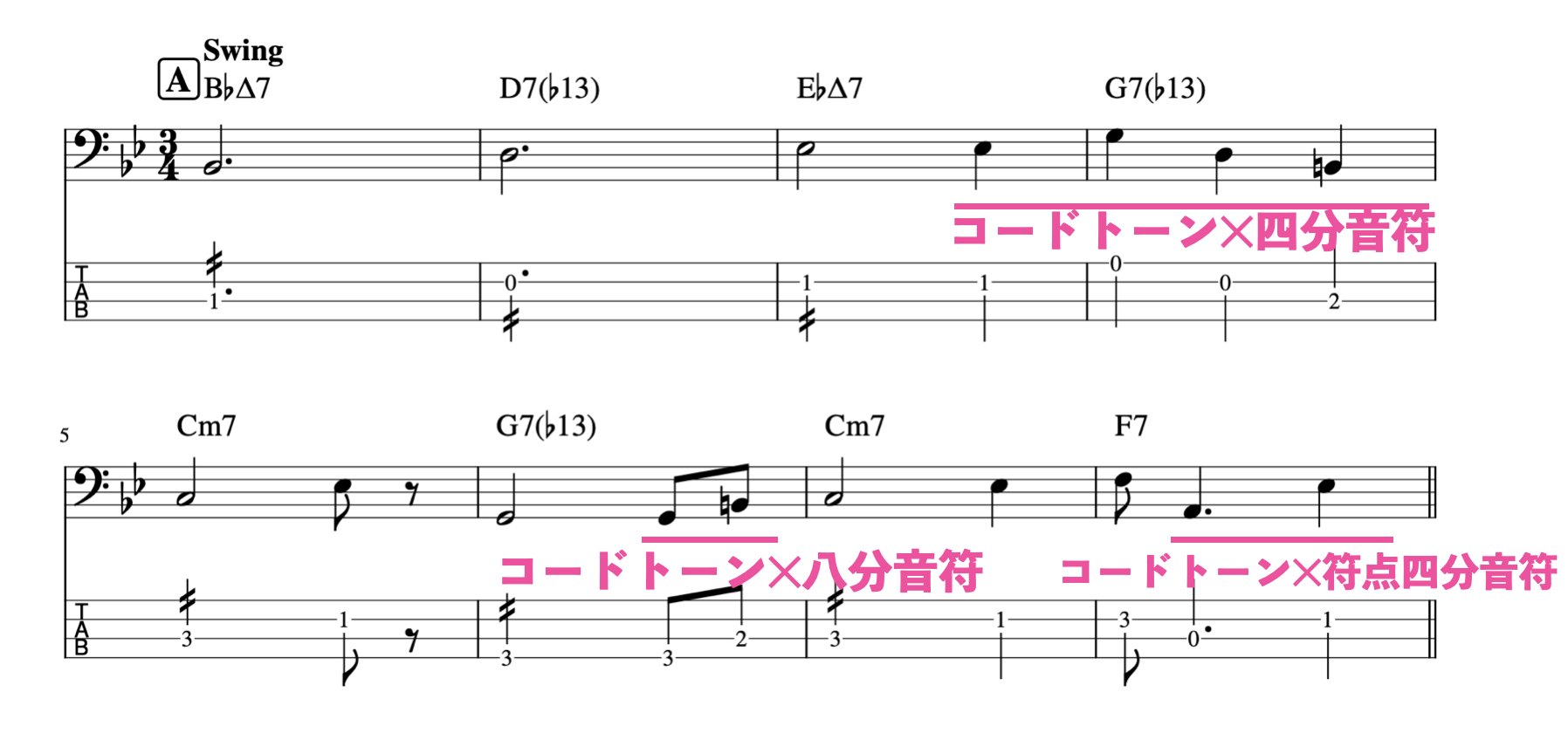
3. Where to Add Fills
With the root and half notes forming the foundation, I added “fills” only where they were needed. For example, using quarter-note chord tones to keep the motion going, eighth notes to add a bit of movement, or dotted quarters to add some rhythmic punch. The root and chord tones stay at the center of the phrase throughout, with short fills slipped in between — adding variation to the line without losing its simplicity.
A Reference Recording
The reference recording for this one is Miles Davis’s “Someday My Prince Will Come.” On this track, the bassist holds the root down firmly while weaving in just the right amount of understated fills, supporting the whole tune’s swing feel.
Listen for how the bass line places the root firmly on beat 1 for stability, then adds small quarter-note chord tones and eighth-note motion from beat 2 onward to avoid sounding monotonous, while still flowing naturally. Notice too how the occasional dotted rhythm gives the phrase its own subtle lilt.
It’s simple, but the way rests and held notes are used to create space is what makes the fills land so effectively. When you practice this, rather than just copying the notes, it helps to really listen for that balance — building a solid foundation on the root, and adding variation only where it’s needed.
Hopefully this gives you something useful for your own playing.
Hearing exactly where to add a fill — and where to leave space instead — is something a teacher can point out immediately in your own playing.
Want Personalized Feedback on Your Playing?
This is exactly the kind of thing that’s hard to fix alone — and where having a teacher makes all the difference.
At Line on Bass, I offer an online lesson service where you send me a video of your playing, and I give you specific, detailed feedback — every single day if you want.
Students from around the world are using this to fix exactly these kinds of issues and steadily improve their jazz bass skills.