This article is written by Toru Hoshino, a bassist and instructor based in Tokyo.
This is an explainer for people who are just getting started on bass.
It’s a basic exercise that helps stabilize your rhythm — chromatic scale practice.
It varies from person to person, but
if you keep doing this chromatic scale exercise for 10 minutes a day, your rhythm will stabilize within 1 to 3 months.
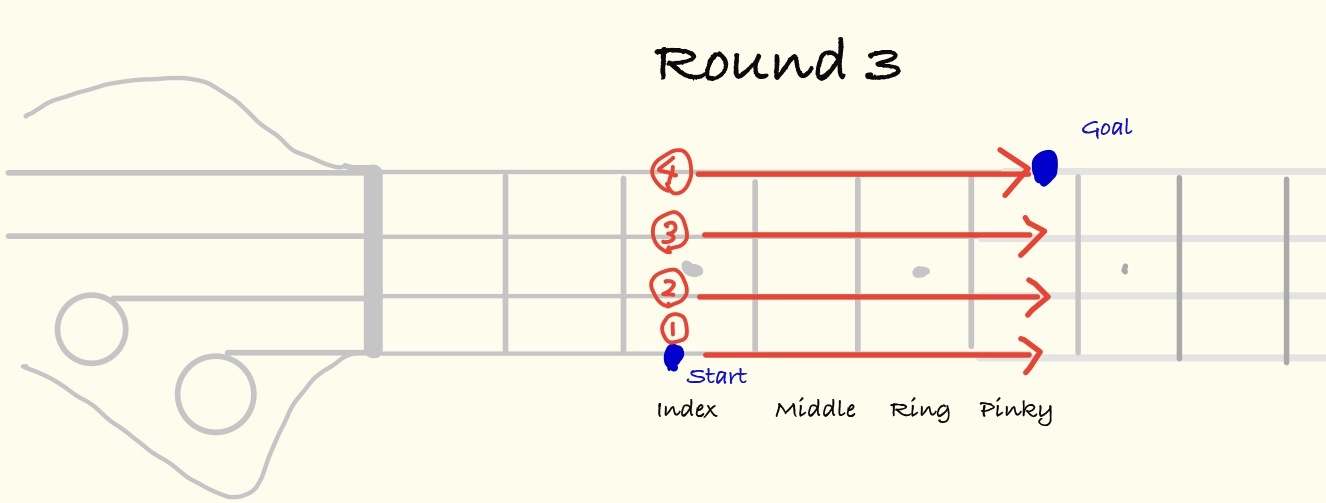
As shown in the example, it’s an exercise where you move one fret at a time, using all four fingers from your index to your pinky.
Contents
How to Practice the Chromatic Scale
Here’s the breakdown, explained with text and diagrams.
First, place your index finger on the 1st fret of the 1st string.
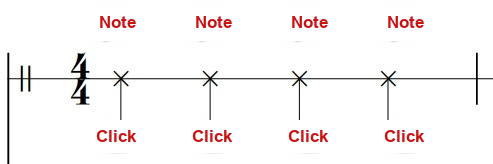
Set your metronome to 60 BPM, and move one note for every click.
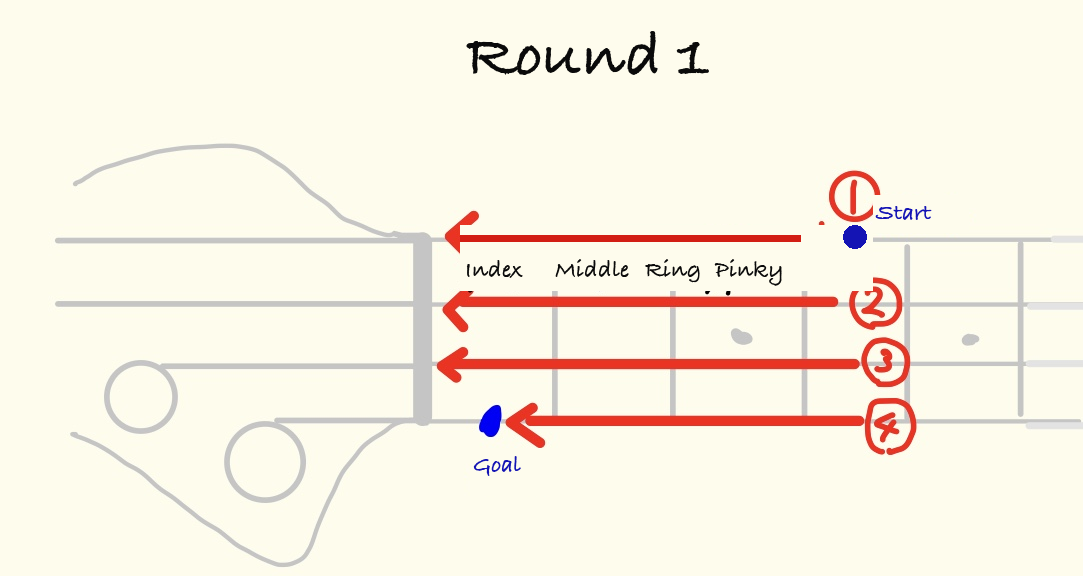
Here’s how it goes — make sure you’re using all four fingers properly to fret each note.
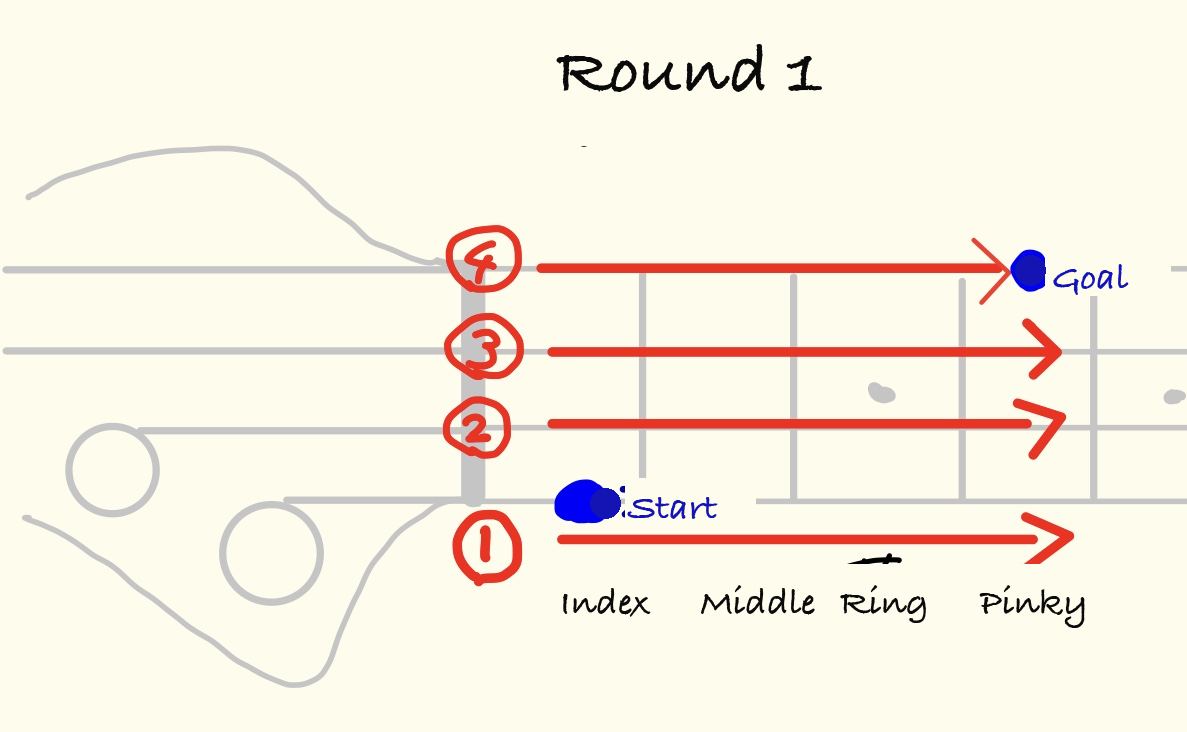
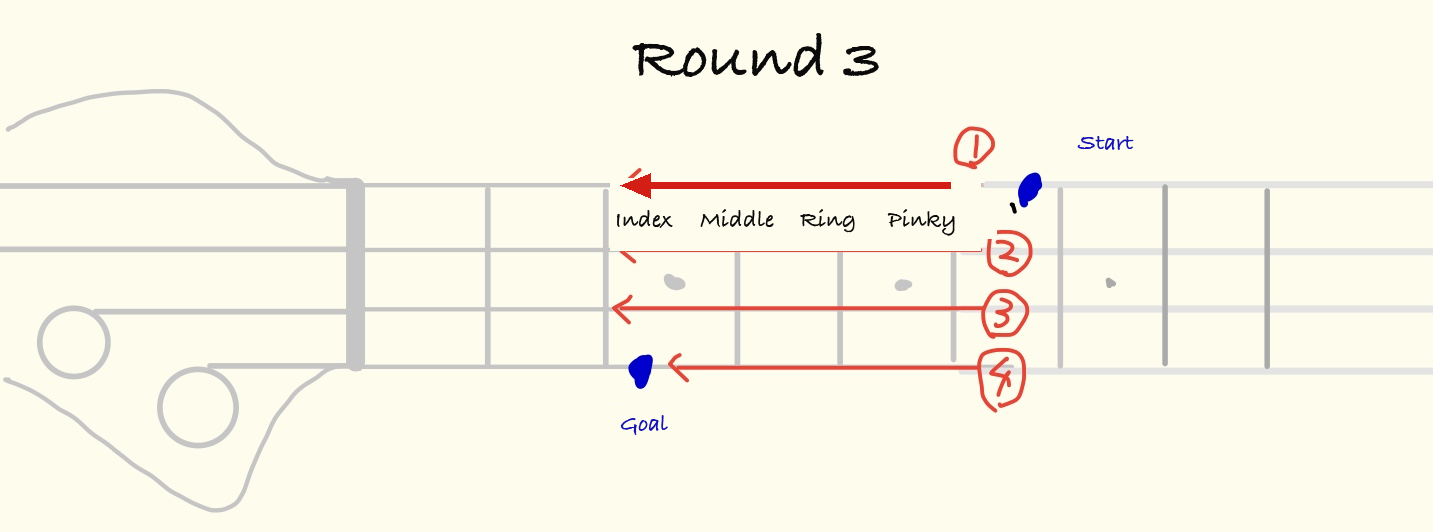
Then come back.
Once you’re back, move on to starting from the 2nd fret.
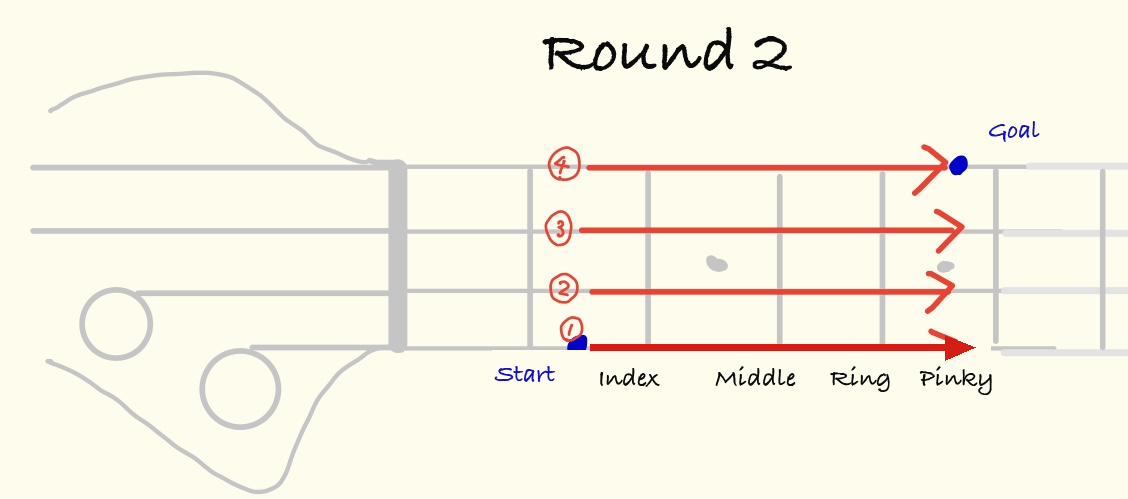
Then come back.
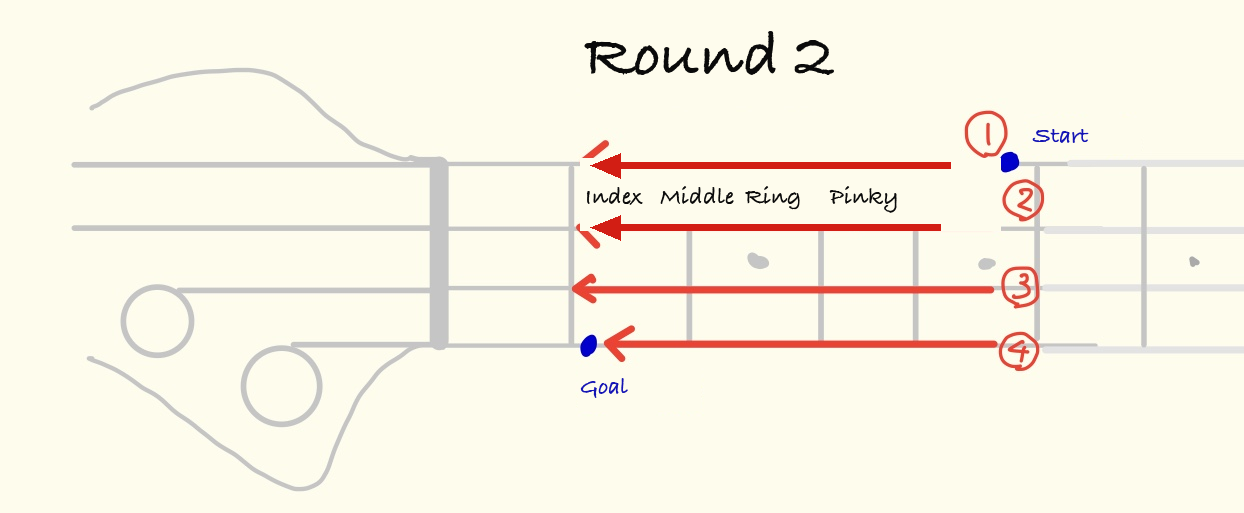
Next, go from the 3rd fret and come back. That’s one full set.
What You’ll Need
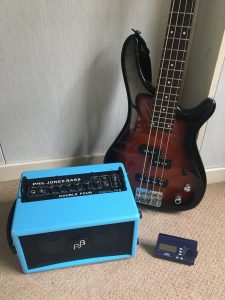
· A metronome
· A bass
· An amp
You also want to be mindful of evening out your note attacks (smoothing out the volume differences caused by your fingers or pick), so practice plugged into an amp whenever you can.
If playing through an amp isn’t practical, a headphone amp simulator that lets you hear your tone through earphones is a handy option.
How to Practice at Home
Do this exercise at home for 10 minutes a day.
Go from the 1st fret and come back
Go from the 2nd fret and come back
Go from the 3rd fret and come back
This whole sequence takes under 2 minutes at a tempo of 60.
Ten minutes is plenty — that’s about 4 to 5 sets.
But during those 10 minutes, focus completely.
Turn off the music, turn off the TV, move to a different room from your family, and if you can, switch your phone off too.
And when the 10 minutes are up, stop — even if you didn’t get through everything. Don’t let it drag on. Cut it off right there.
Keep this up for one to three months, and your fundamentals will improve.
Why 10 Minutes Is Enough

If you actually time yourself doing this, you’ll see just how long 10 minutes really is.
Unlike playing along with a recording, metronome practice has no backing track to hide behind, so your weaknesses — in picking, form, sustain, and so on — become obvious.
And the more seriously you approach it, the more it tests your focus.
You might not even make it 3 minutes at first — but give the full 10 minutes a try anyway!
Things to Watch Out for With the Chromatic Scale
Note Length (Sustain)
Focus on making each note ring out evenly — boooom, boooom, boooom — with the same sustain each time.
If it comes out like booooooom, bo, boooom, that’s not even.
Note Strength (Picking)
Focus on keeping each note at the same volume — boooom, boooom, boooom.
If it comes out like boooom, BOOOOM, boom, boooom, that’s not even.
Don’t Drift From the Metronome
Focus on playing each note at a perfectly steady interval.
If Fretting With Your Pinky Feels Tough
If fretting with your pinky feels like a strain, try tucking your elbow in toward your body as you fret.
It’s something I cover in more detail in a separate guide on pinky-finger technique.
The Chromatic Scale Isn’t Exactly Fun, But…
Chromatic scale practice isn’t a song, so it’s not exactly fun. And despite how simple it looks, it’s surprisingly hard to play it cleanly.
With no backing track, it’s actually much harder than playing a normal tune.
So don’t get discouraged if you can’t nail it right away.
That said, it packs in all the essential fundamentals — picking, sustain, rhythm, fingering — into one compact exercise.
I still do this myself before every practice session, even now.
It’s a training method I’d genuinely recommend for stabilizing your rhythm. Give it a try.
Want Personalized Feedback on Your Playing?
This is exactly the kind of thing that’s hard to fix alone — and where having a teacher makes all the difference.
At Line on Bass, I offer an online lesson service where you send me a video of your playing, and I give you specific, detailed feedback — every single day if you want.
Students from around the world are using this to fix exactly these kinds of issues and steadily improve their jazz bass skills.