This article is written by Toru Hoshino, a jazz bassist and instructor based in Japan who teaches online lessons to students worldwide. In this article, he answers five questions he gets constantly from upright bass students.
- Where does the left thumb go?
- Is it okay to put position marker stickers on the fingerboard?
- How high should the end pin be?
- Is it okay to wrap a band around your middle and ring fingers?
- Does the ring finger actually press the string?
Here are my answers to each — hopefully useful if you’re teaching yourself upright bass and feel like you’ve plateaued.
Contents
1. Where Does the Left Thumb Go?
In a half-position setup (the lower-pitched position), the left thumb sits roughly between the middle and index fingers.
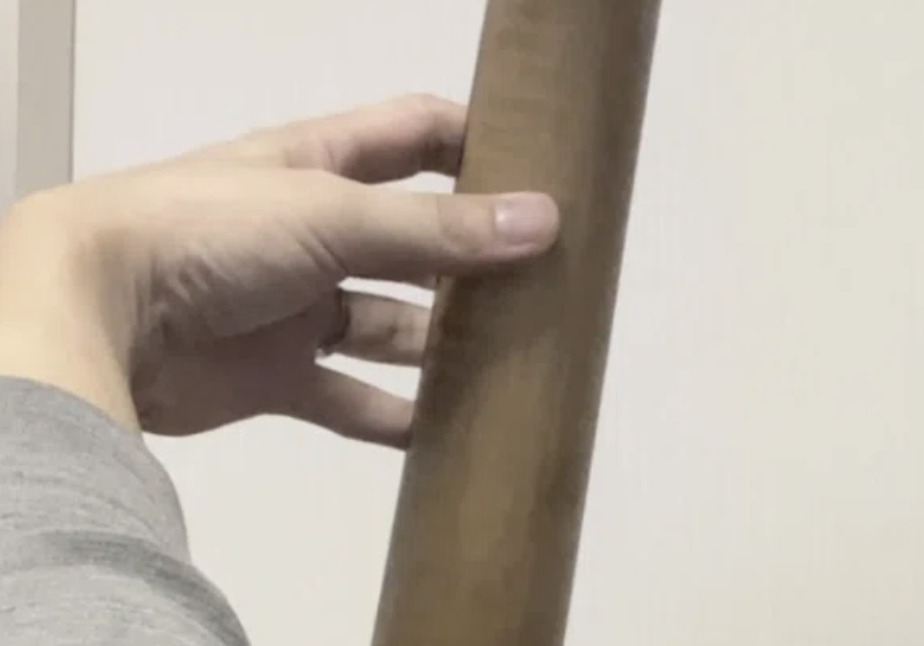
Rest it lightly around the middle of the back of the neck, and use that as the anchor point for moving your whole hand. Be careful that the thumb doesn’t drift too far toward the index-finger side — if it does, it becomes harder to transfer force through the rest of your fingers.
2. Is It Okay to Put Position Marker Stickers on the Fingerboard?
This comes up a lot from beginners who are struggling with intonation — “can I put marker stickers on the fingerboard?”
The answer is yes, that’s fine. I did this myself, and some method books even say “use position markers while you’re still getting used to it.”
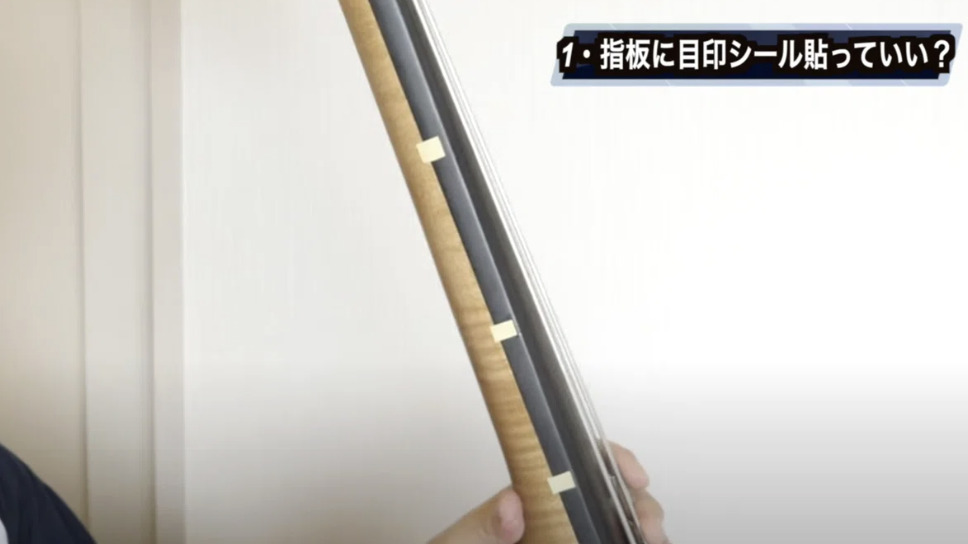
Just be careful of the following:
- Don’t damage the fingerboard with a cutter or blade when applying them.
- Don’t end up craning your neck at an extreme angle to peek at the stickers.

↑ This is leaning in way too far to check the stickers.
3. How High Should the End Pin Be?
End pin height varies a lot from person to person depending on height.
In my case — I’m 5’3″ (161cm) — I run the end pin fully retracted, and I also wear shoes with a bit of a thicker sole to adjust further.
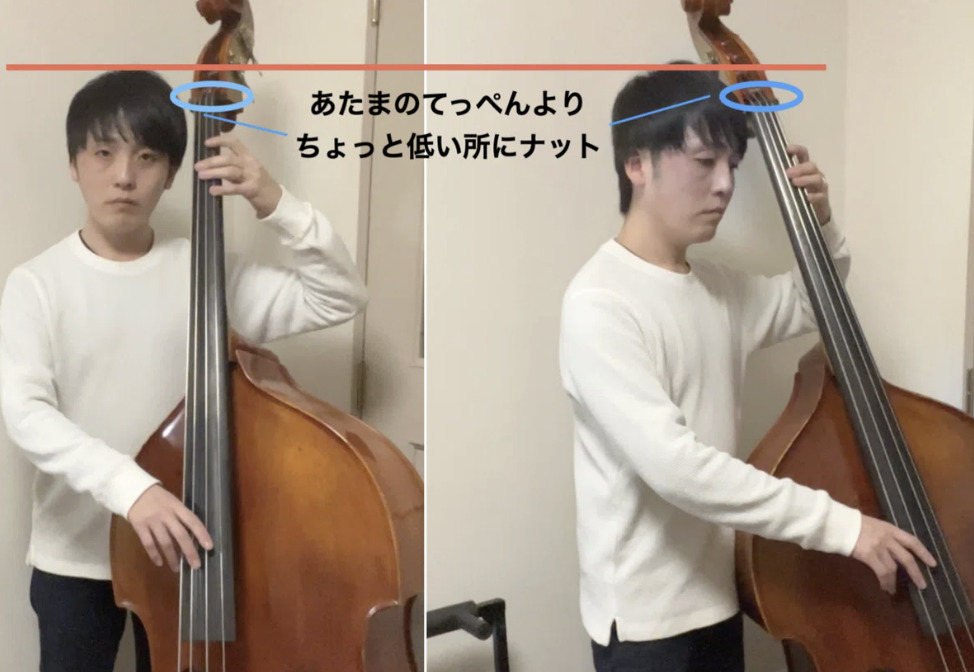
From there, a good general target is having the nut (the part supporting the strings at the top) sit roughly at forehead height.
4. Is It Okay to Wrap a Band Around Your Middle and Ring Fingers?
If your middle and ring finger tend to drift apart, a lot of people ask whether it’s okay to practice with a rubber band wrapped around them like this.
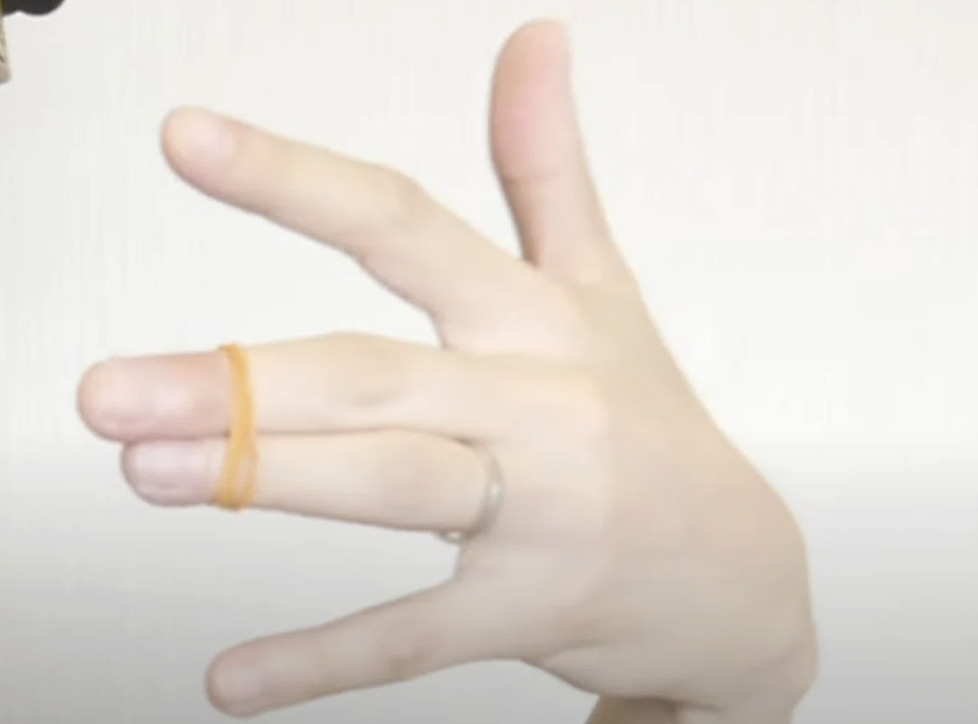
I never used one myself, but I’ve had students try it, and it didn’t seem to cause any bad habits in particular.
That said, it’s completely natural for your middle and ring finger to drift apart early on. Just keeping the conscious intention of “don’t let them drift too far apart” is usually enough on its own.
Holding onto that awareness during practice makes a noticeable difference in your stability a few months down the line.
5. Does the Ring Finger Actually Press the String?
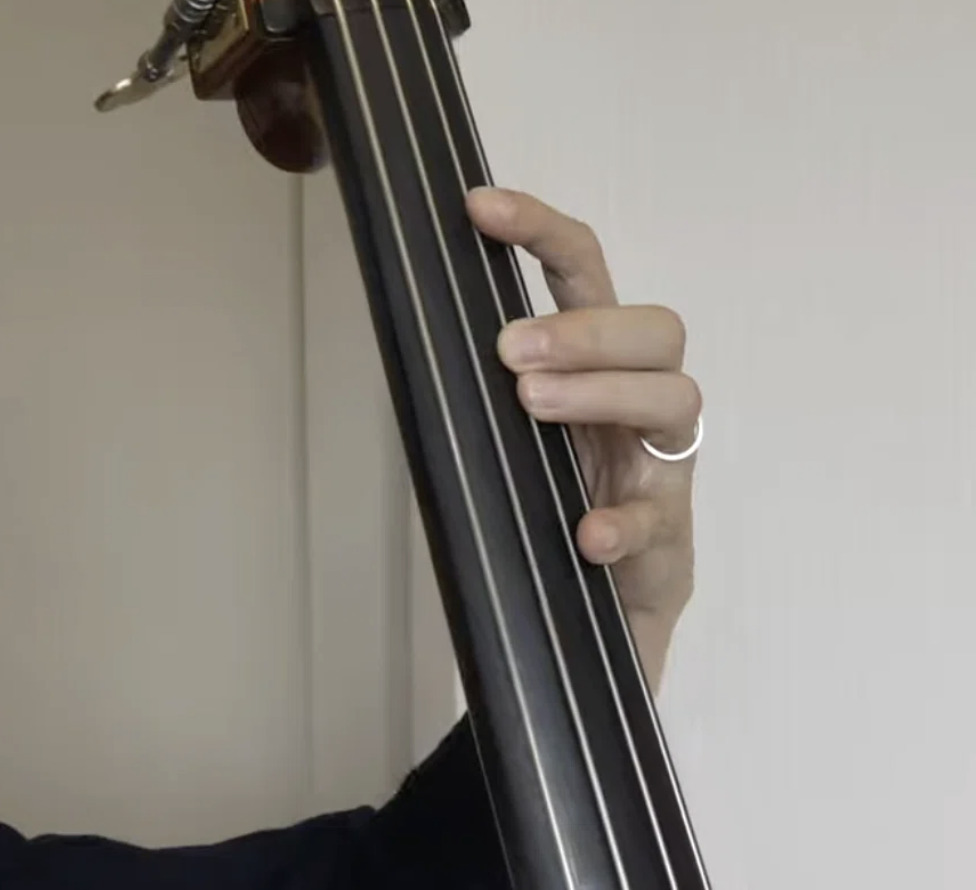
For example, when your middle finger is fretting the E note on the D string, should your ring finger be pressing down too?
The answer is: no, the ring finger doesn’t press the string. Just rest it alongside the middle finger, while the middle finger does the actual pressing.
These are exactly the kinds of small form details that are nearly impossible to catch on your own — and exactly where a teacher reviewing your playing makes the biggest difference.
Want Personalized Feedback on Your Playing?
This is exactly the kind of thing that’s hard to fix alone — and where having a teacher makes all the difference.
At Line on Bass, I offer an online lesson service where you send me a video of your playing, and I give you specific, detailed feedback — every single day if you want.
Students from around the world are using this to fix exactly these kinds of issues and steadily improve their jazz bass skills.