This article is written by Toru Hoshino, a working jazz bassist and instructor based in Tokyo who has played bass for an estimated 500+ jam sessions around the city.
· You’re not sure how to build an improvised solo
· You want some new ideas for improvising solos
· You’re a bassist who’s about to get started with jazz bass
Last time, I shared a written-out transcription of one of my own solos over “Fly Me to the Moon” and walked through how it was built. This time it’s the hands-on version: a practice method for getting there without writing anything out first.
• You can find the previous article here.
This time, let’s build an improvised solo over the 8-bar A section progression used in “Fly Me to the Moon” and many other tunes, shown below.

Contents
A Major Scale Will Sort of Work… But
“Fly Me to the Moon” is built mostly around diatonic chords in the key of C, more or less throughout.
If you take a solo over the opening 8 bars, you can get away with just playing the C major scale up and down — it’ll sound “sort of right” — but it ends up feeling pretty flat and uninteresting.
Here’s what it sounds like when you noodle through those opening 8 bars using only the major scale, without much thought:
For moments like that, I want to share a practice method that helps you capture more of each chord’s character and make your lines sound more like singing.
Here’s the roadmap we’ll follow:
1. The key is the 3rd! Get familiar with how it sounds first
2. Improvise using 1st–3rd–5th (the triad)
3. Improvise using 3rd–1st–5th (a rearranged triad)
4. Improvise using 5th–3rd–1st (another rearranged triad)
5. Mix these rearranged triads randomly into each bar as you improvise
6. Play freely while staying aware of the underlying triad
That’s the order we’ll go in.
The Key Is the 3rd! Get Familiar with How It Sounds First
The note that makes it easiest to hear a melody “riding” on top of a chord is the 3rd.
For example, let’s take the chords from those same 8 bars and play nothing but long tones on the major or minor 3rd of each chord.
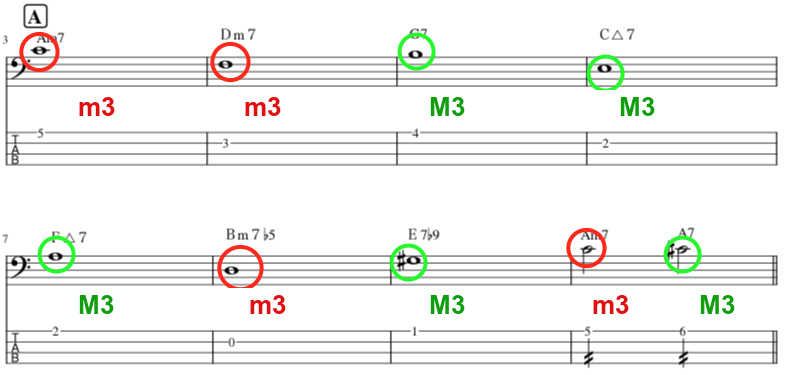
Even though there are fewer notes than before, doesn’t it already sound a lot more melodic — like it’s actually singing?
Now let’s connect those 3rds using a variety of rhythms.
Something like this:
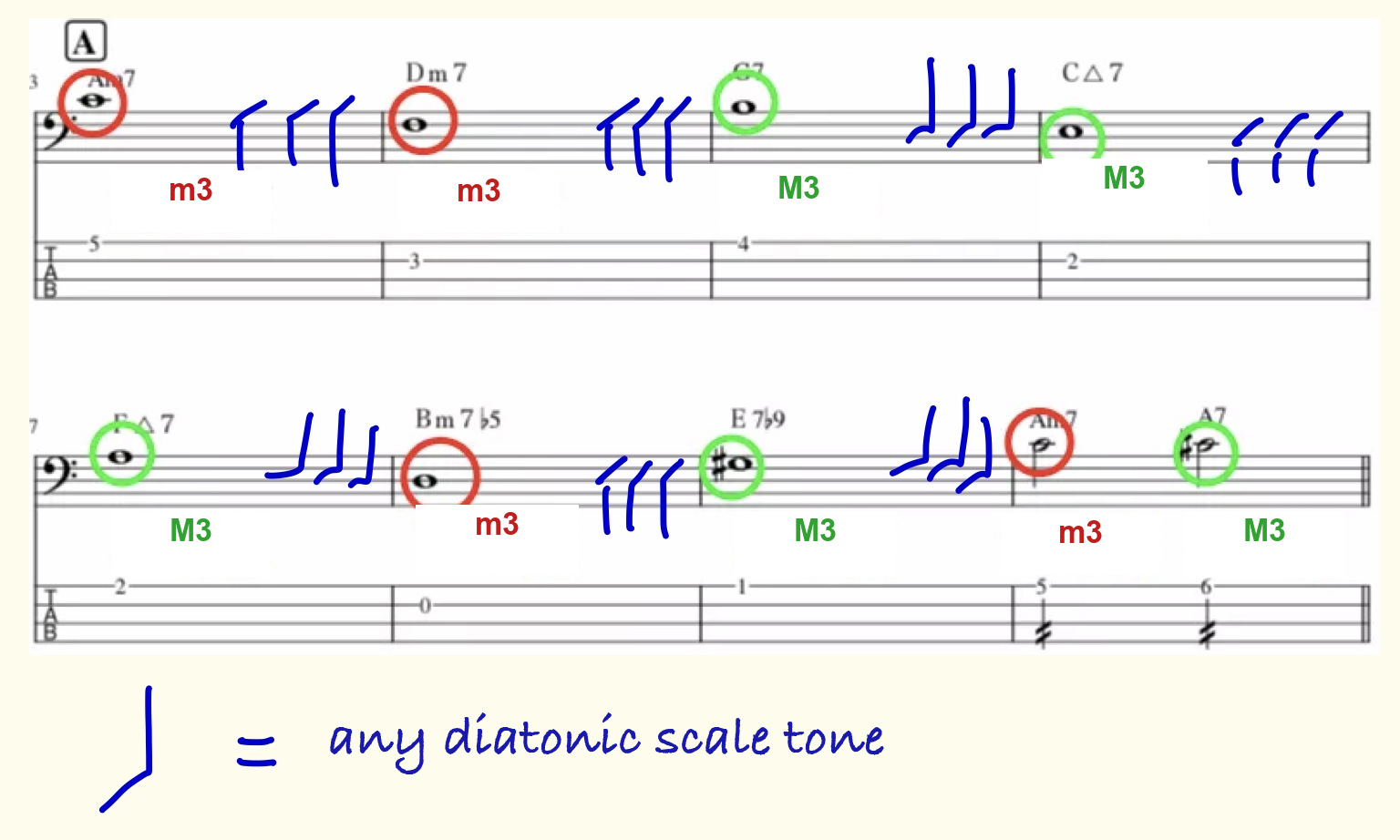
Doing this brings out even more of that singing quality.
This approach — building a solo around the 3rd — carries over to a huge number of standards, so I really encourage you to try it for yourself.
How to Practice It
First, without a metronome, go through and find the 3rd for each chord.
As mentioned above, try out a few different positions on the neck for each one.
Once you’ve got the notes down, connect them with long tones, like this:
Once you can do that, fill the space between the long tones with any note from the diatonic scale, connecting them like this:
Don’t rush — what matters most is staying aware of exactly which note you’re playing as you play it.
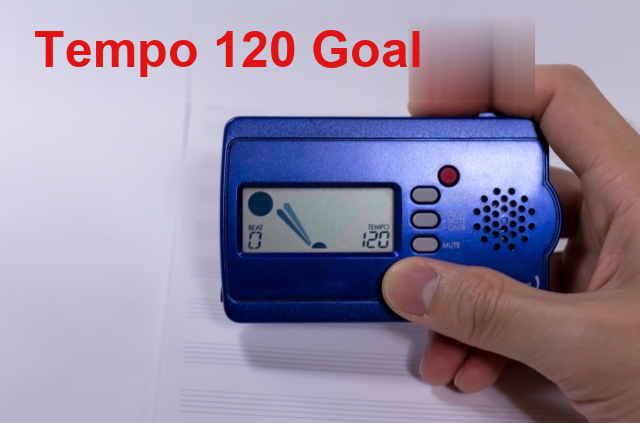
Once you can do this comfortably at a tempo of 120, move on to the next step.
What This 3rds Practice Is Really Aiming For
Open-ended practice like this — as opposed to copying a transcription note-for-note — can go on forever if you let it, so it helps to set yourself some rules and a clear goal.
For this exercise, the goal is tempo 120.
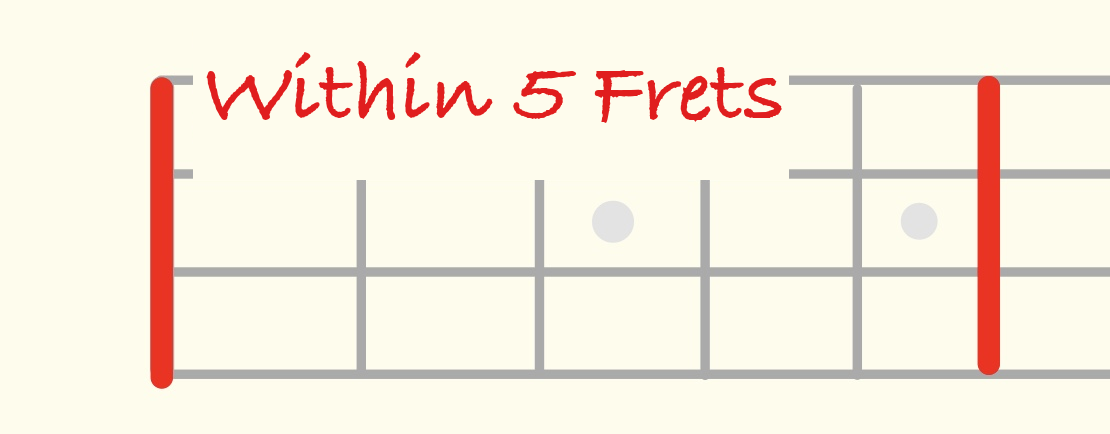
If you let yourself range freely up into the high frets there’s no end to it, so limit yourself to the first 5 frets (up to second position on upright) while you practice.
If You Can’t Find the 3rd Right Away
If the 3rd doesn’t come to you immediately, it’s fine to jot it down like this:

Keep practicing this and before long, you’ll find yourself instinctively associating the m3rd of Am7 with C, the m3rd of Dm7 with F, the M3rd of G7 with B, and so on, without even thinking about it.
Try Out a Few Different Positions for Each 3rd
For example, the m3rd of Am7 can be found in these two spots:
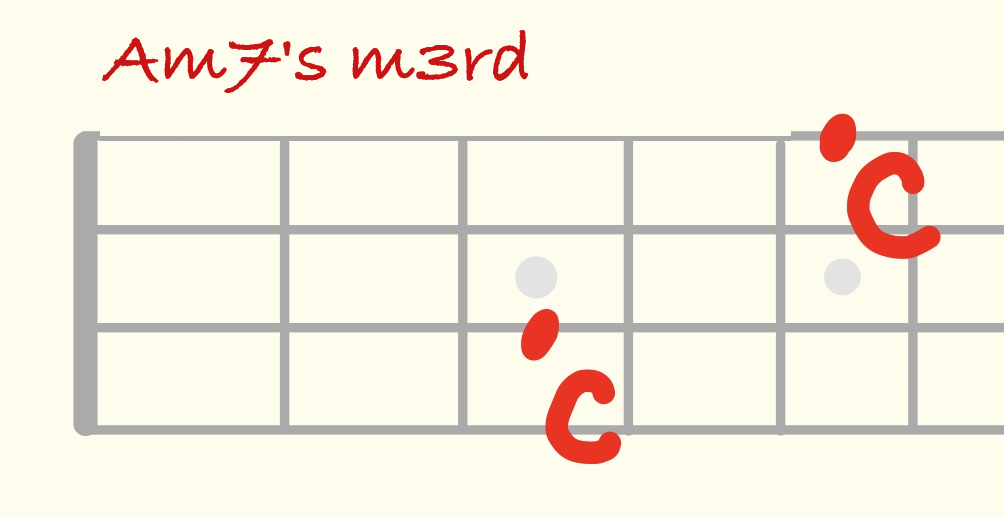
And the m3rd of Dm7 can be found in these two spots:
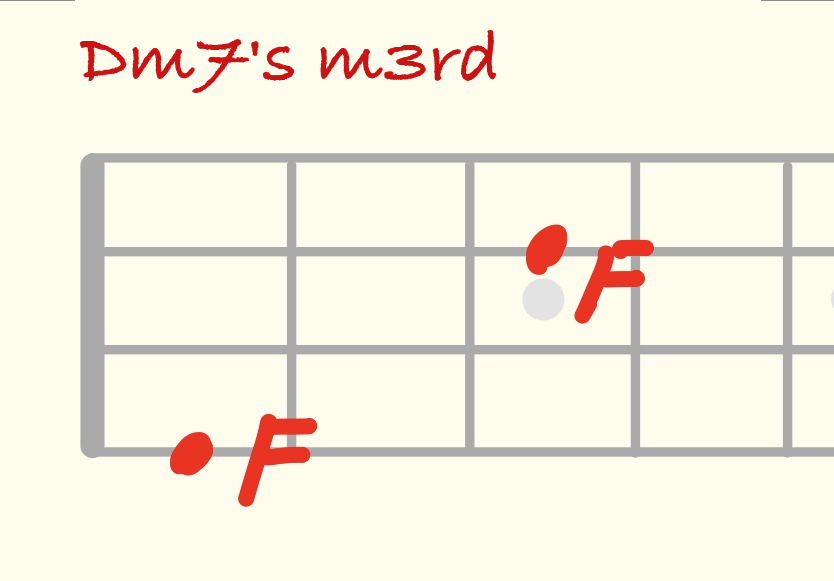
This isn’t about drilling your fingers to memorize one fixed position.
By not locking each note into a single position, you build up your ability to improvise on the fly.
Want Personalized Feedback on Your Playing?
This is exactly the kind of thing that’s hard to fix alone — and where having a teacher makes all the difference.
At Line on Bass, I offer an online lesson service where you send me a video of your playing, and I give you specific, detailed feedback — every single day if you want.
Students from around the world are using this to fix exactly these kinds of issues and steadily improve their jazz bass skills.