This article is written by Toru Hoshino, a jazz bassist and instructor based in Japan who teaches online lessons to students worldwide. In this article, he breaks down how he fingers the low positions on the bass with his left hand, for anyone wondering how they should be fretting notes down there.
Contents
Fingering in the Low Positions
For low-position fingering, I use:
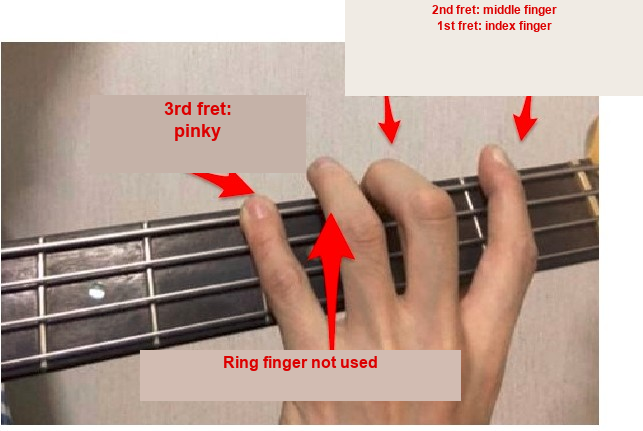
1st fret: index finger, 2nd fret: middle finger, 3rd fret: pinky
1st Fret: Index Finger, 2nd Fret: Middle Finger, 3rd Fret: Pinky
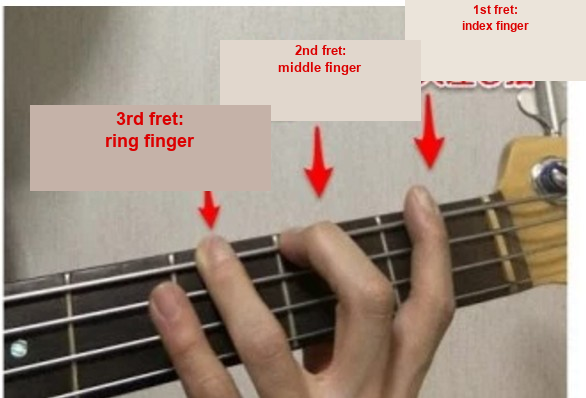
I don’t fret the 3rd fret with my ring finger, like this:
Here’s why. When I fret a note, I want to be pressing right at the edge of the fret — the part closest to the fret wire itself.
This is what I mean by the edge of the fret:
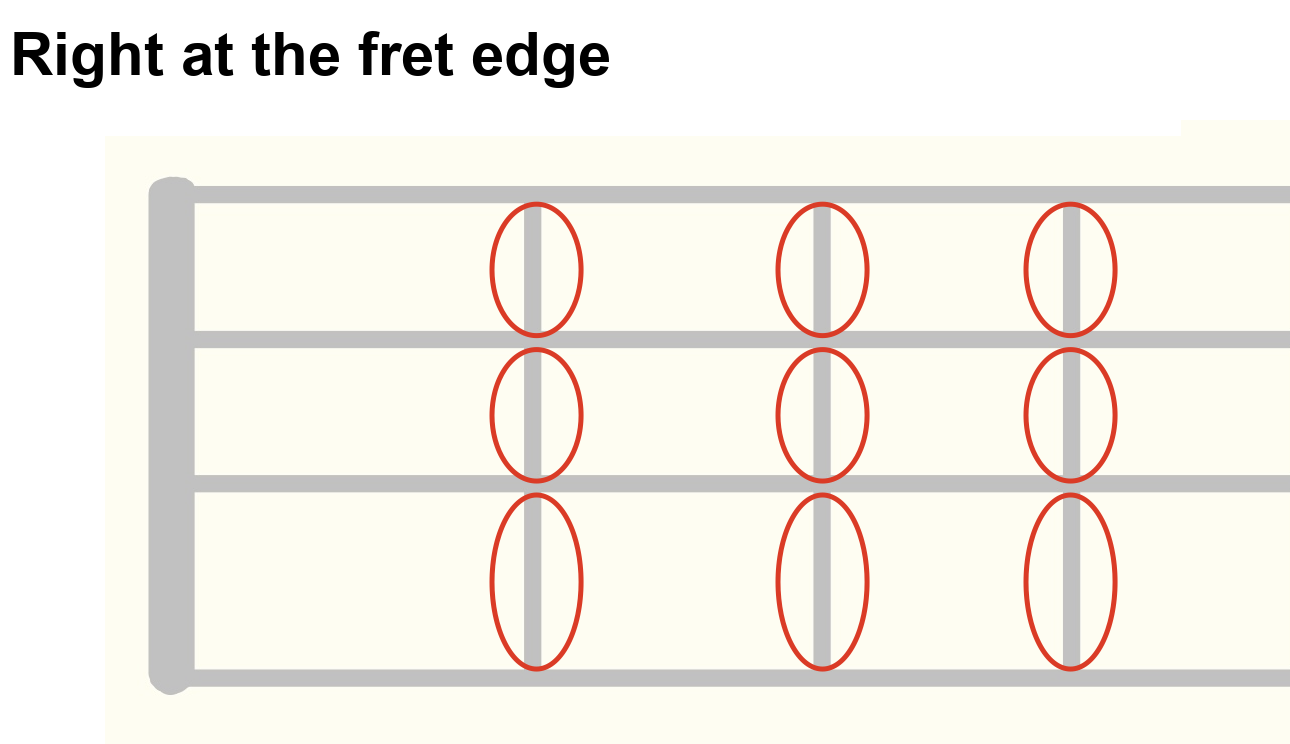
It’s not that you can’t reach that spot with your ring finger — it’s just that the pinky reaches that edge more comfortably.
So When Do I Use My Ring Finger?
There’s no hard rule for this, but I start bringing it in from around the 7th fret. From the 7th fret up into the higher positions, I switch to what’s usually called “one fret, one finger” — using all four fingers, one per fret.
Plenty of players use one-fret-one-finger even down in the low positions, and there’s no right or wrong answer here. But if your notes tend to buzz, or you want to take a fresh look at your fingering, this might be worth trying out.
I hope this gives you something useful to experiment with in your own playing — and ironing out a fingering habit like this is exactly the kind of thing that’s hard to catch on your own.
Want Personalized Feedback on Your Playing?
This is exactly the kind of thing that’s hard to fix alone — and where having a teacher makes all the difference.
At Line on Bass, I offer an online lesson service where you send me a video of your playing, and I give you specific, detailed feedback — every single day if you want.
Students from around the world are using this to fix exactly these kinds of issues and steadily improve their jazz bass skills.