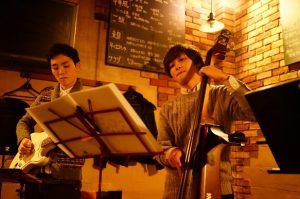
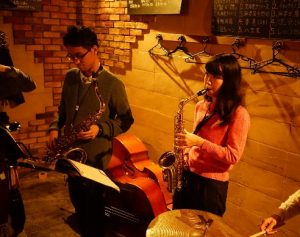
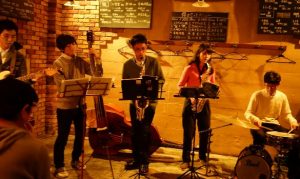
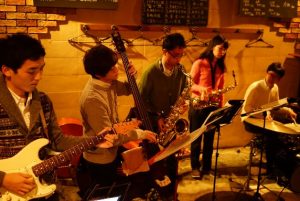
Posted on Leave a comment

A Jazz Weekend in Korea: Playing Geumsan’s Ginseng Town (Part 1)

I played walking bass in South Korea.
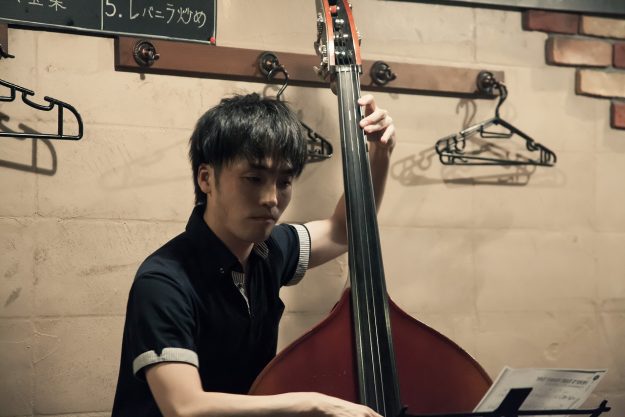
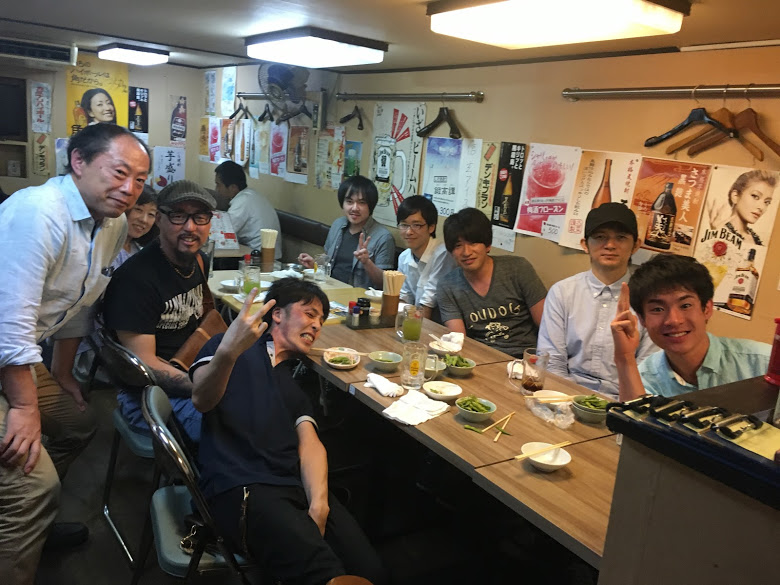
October 1–2, 2015. I joined a local jazz band and played two nights in Geumsan (Kumsan), a small town in South Korea. Here’s the full story — travel log and live report.

Day 1 — Getting There

Left Haneda at 9:00 AM, landed at Seoul Gimpo Airport by 11:30.
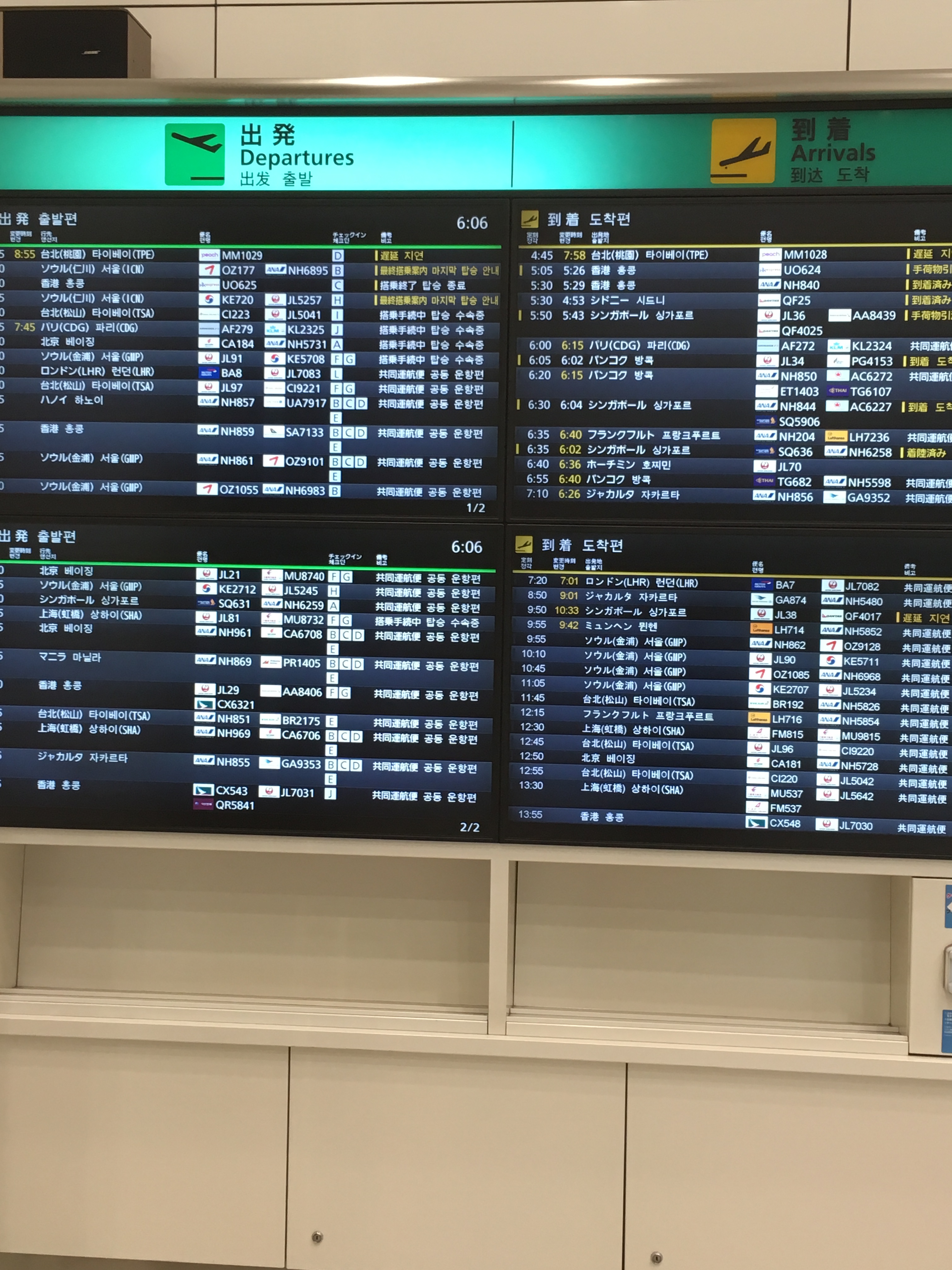
I’d been to Seoul the year before, so I had a rough sense of the city. I headed to Yeongdeungpo-Gu Office station on subway line 7, where my friend Hansoo lives. Hansoo was a classmate at a language school when I lived in New York — a 20-year-old fresh out of mandatory military service.

He took me to a famous naengmyeon (cold buckwheat noodle) restaurant in Seoul, apparently popular with celebrities.
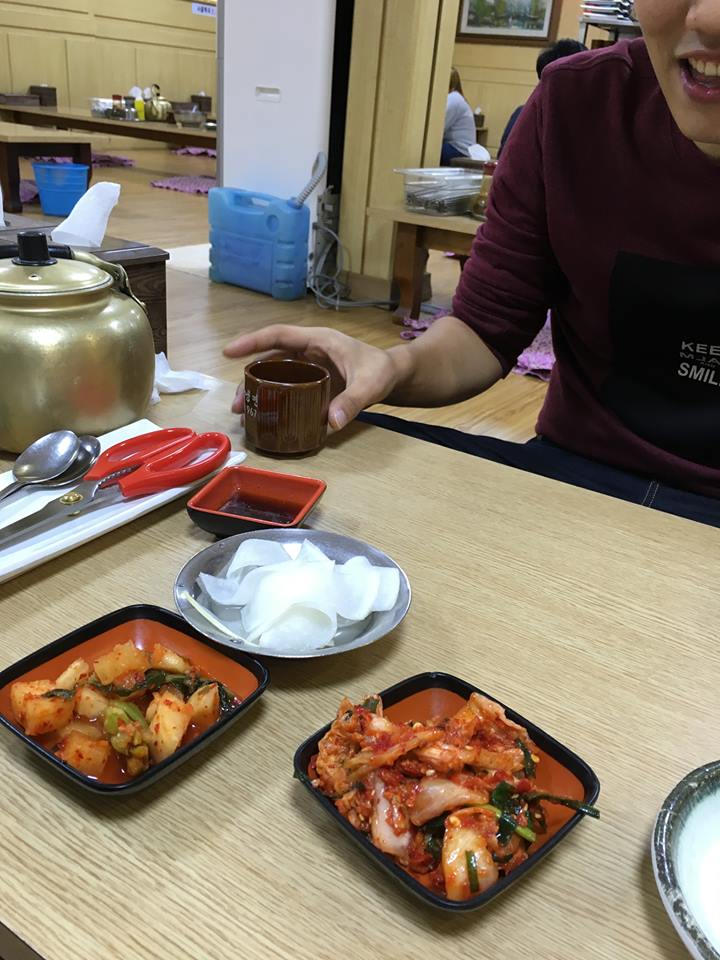
I love how they start you with kimchi before anything else.
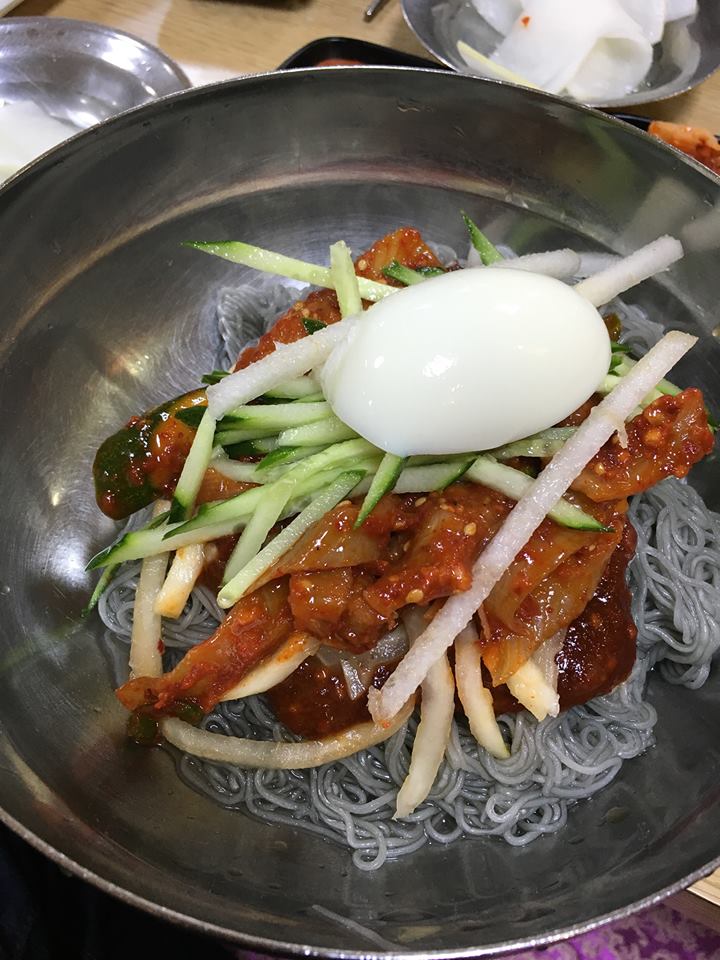
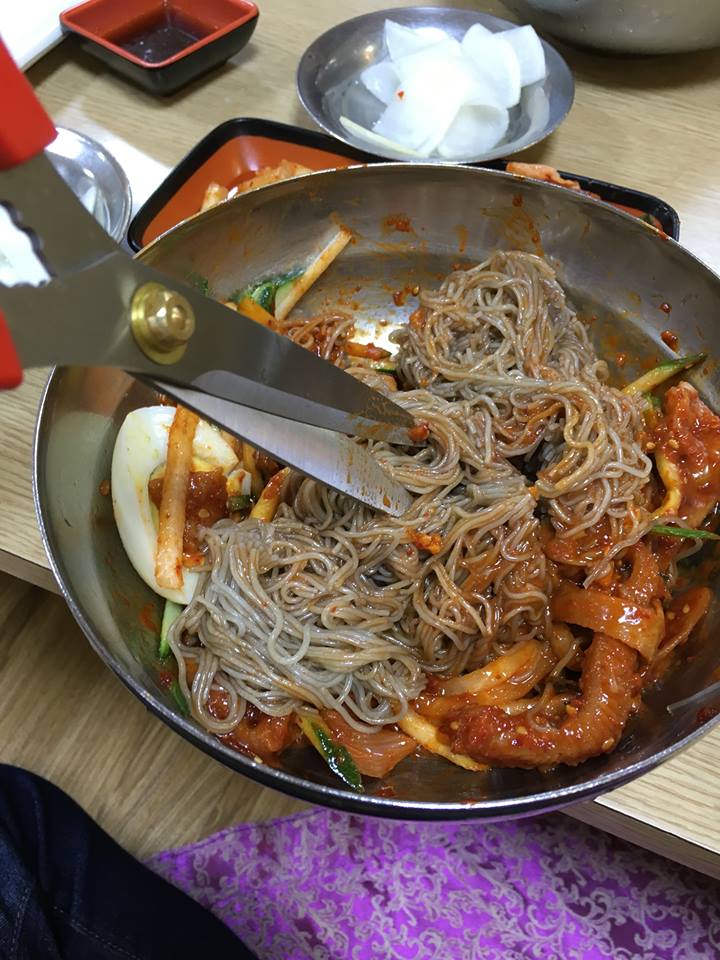
The noodles come incredibly long, so you cut them with scissors at the table.
After catching up over the meal, we wandered through the city. I love the busy, layered feel of Seoul streets — very much that classic Asian city energy.
I hadn’t slept the night before, so I crashed at Hansoo’s for about three hours. Dinner was home-cooked kimchi jjigae — delicious.

(Apparently every Korean household has a dedicated kimchi refrigerator separate from the regular fridge. Hansoo had two, about the size of a dryer each.)

Club Evans — Jazz in Hongdae

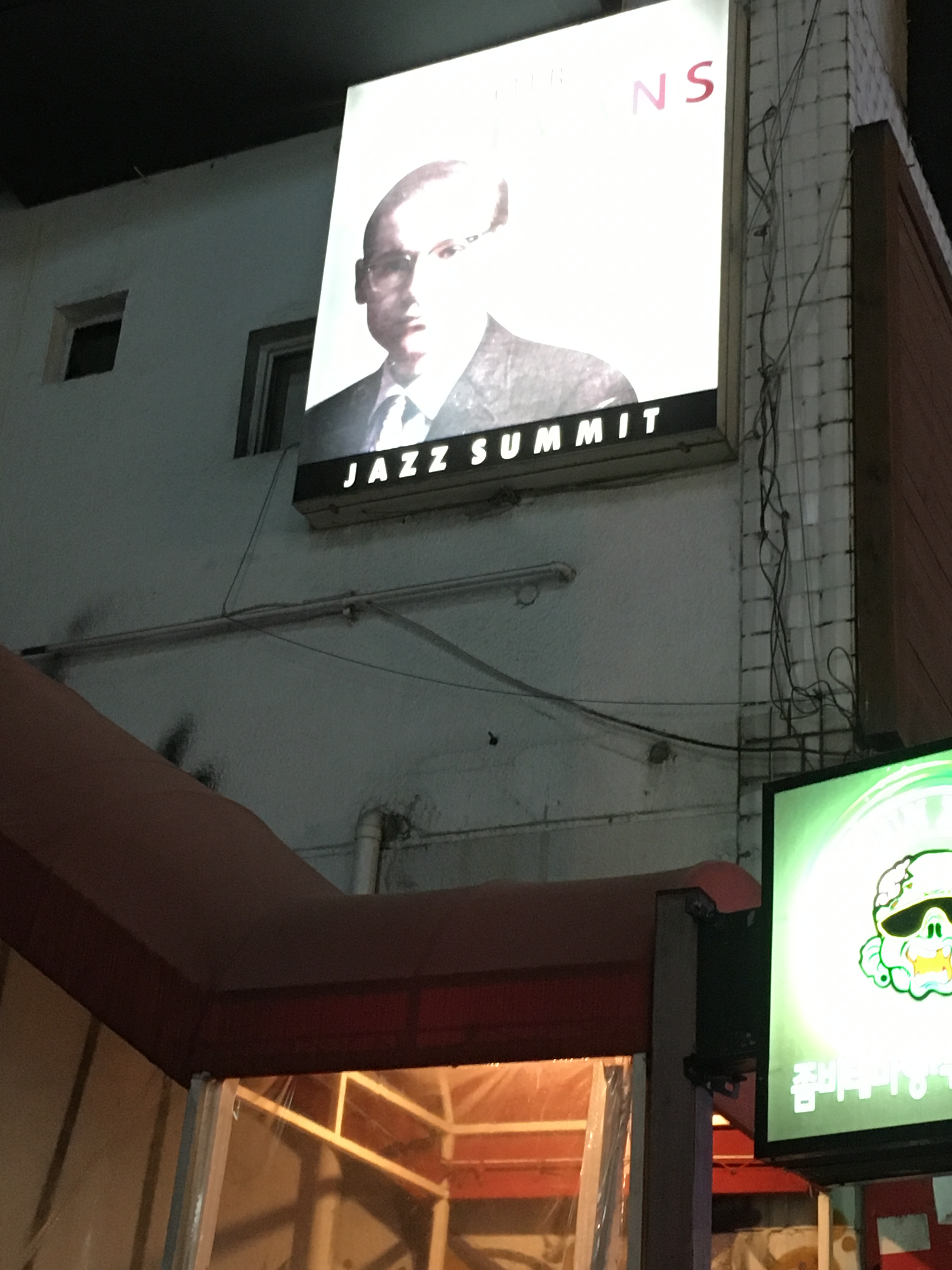
That evening we went to a jazz club in Hongdae called Club Evans. Named after Bill Evans — I couldn’t not go. I’d actually visited the year before too.
That night’s act was a piano quartet playing violin, cello, upright bass, and piano — original arrangements of classical and fusion pieces rather than straight jazz.
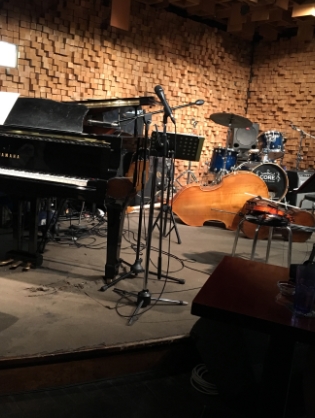
Honestly I was hoping for hard bop, so it wasn’t quite what I’d had in mind — but the quality was high, the room was packed, and I genuinely enjoyed it. Cover charge: 8,000 won. Beer: 5,000 won. About 1,300 yen total. The room felt roughly like a medium-sized Tokyo basement jazz club — comfortable and easy to take in.

Day 2 — Show Day

October 1st. Up early, then a 2-hour bus from the Express Bus Terminal to Geumsan.
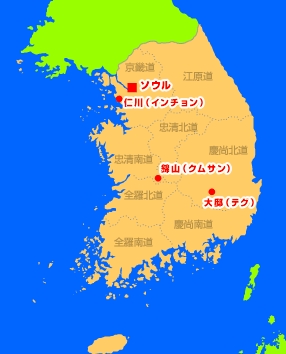
Geumsan is a town of about 10,000 people, roughly two hours from Seoul — similar to the Tokyo-Maebashi distance. It’s known throughout Korea for its high-quality ginseng, called “jinseng” locally. The drummer who invited me, Jinwoo, lives there. We’d met in New York playing jazz together.

Breakfast at the bus terminal:
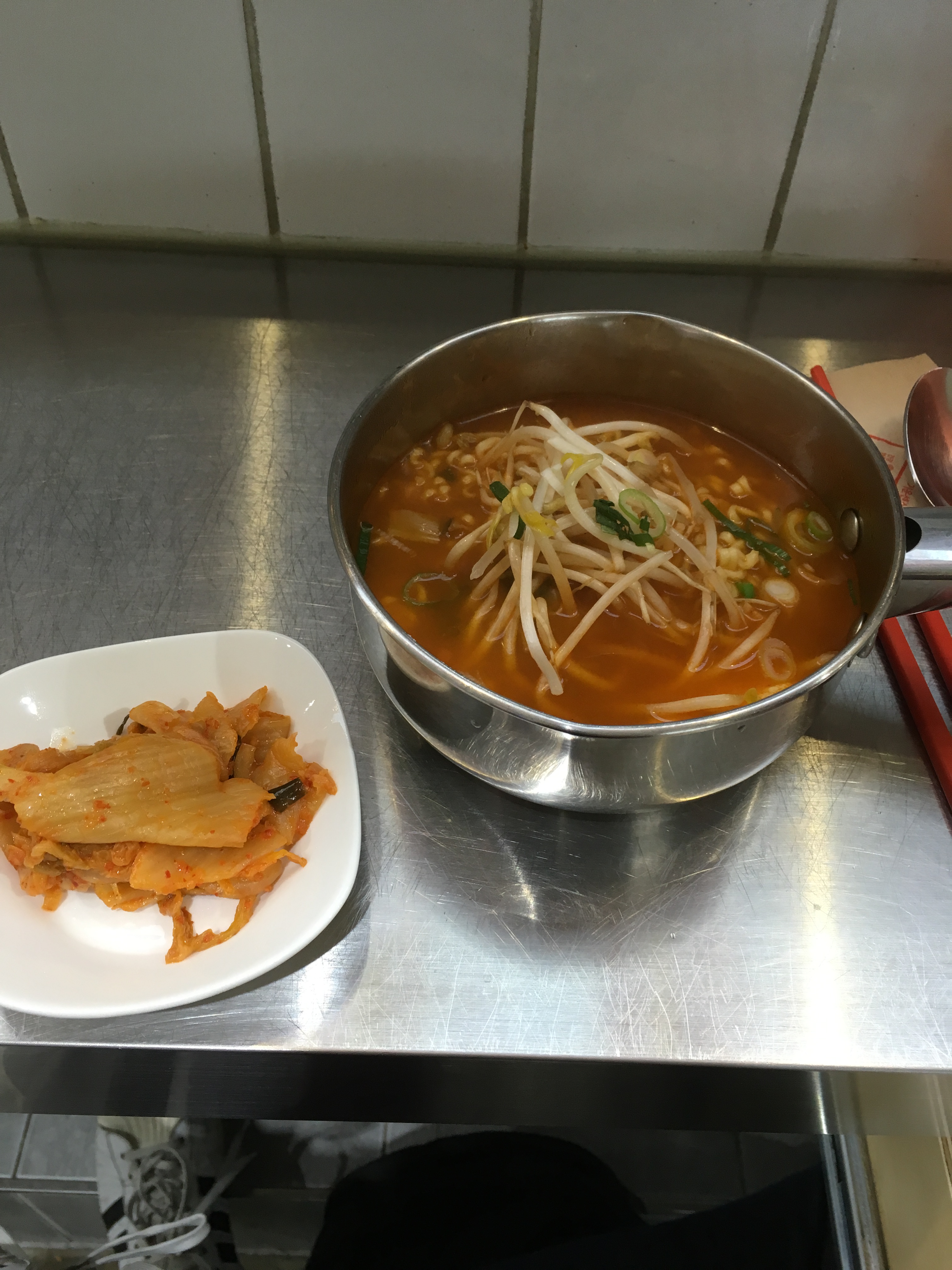
Instant ramen, served in the pot. 4,000 won.
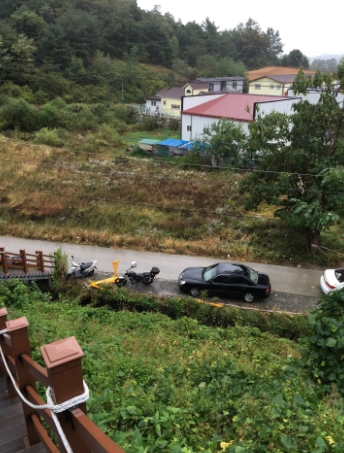
Arrived. Very rural.

Then we ate again.
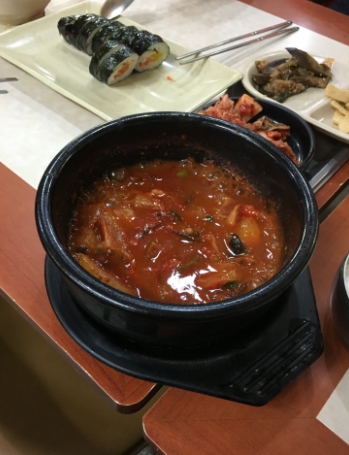
Kimchi jjigae again. Spicy. But completely addictive.

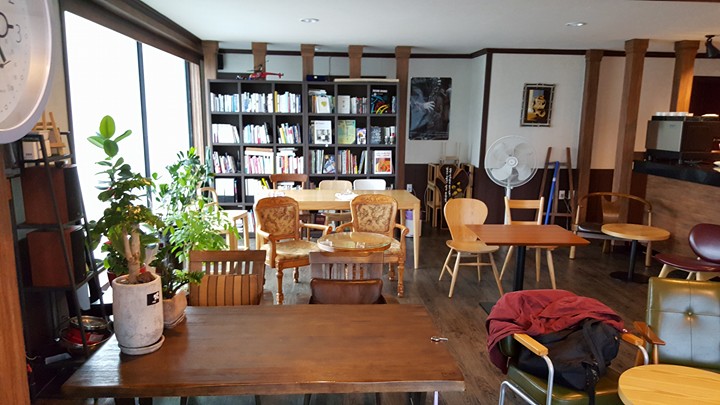
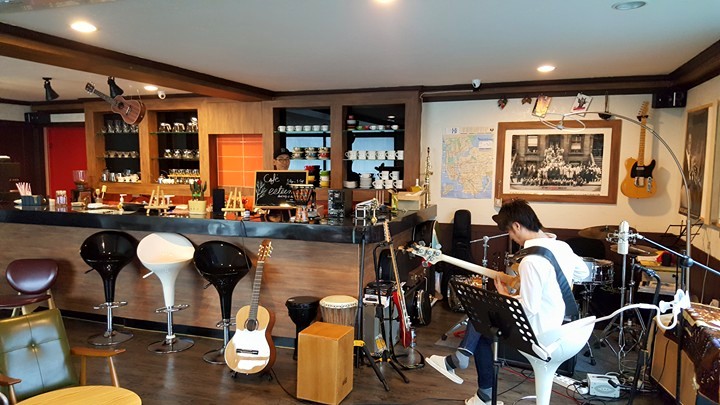
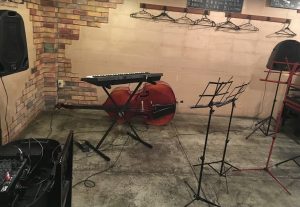
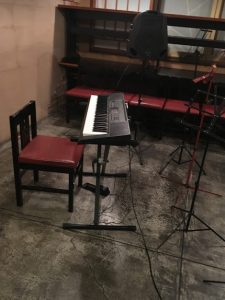
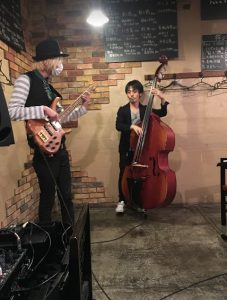
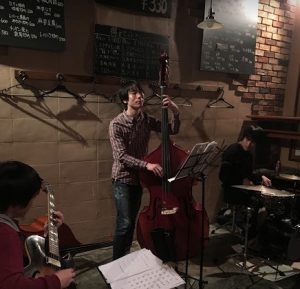
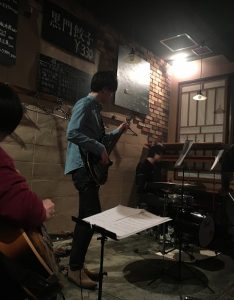
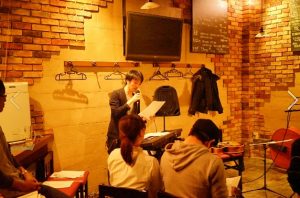
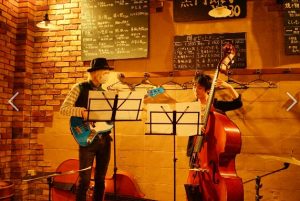
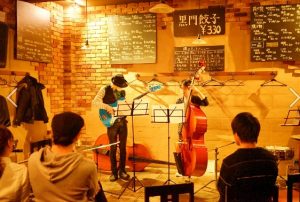
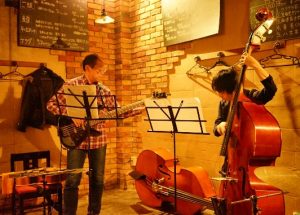
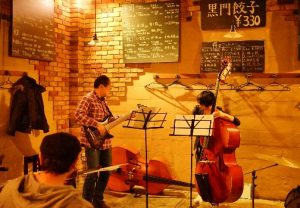
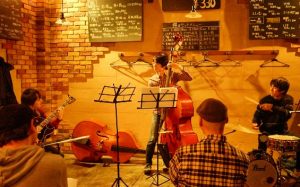
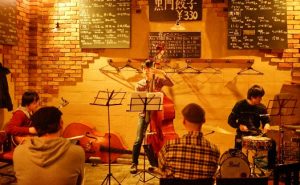
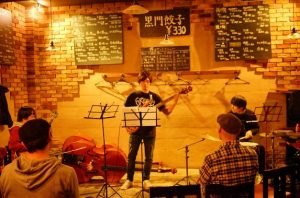
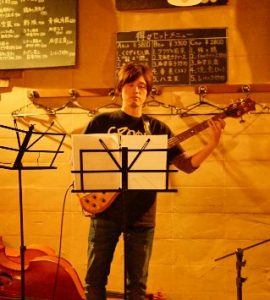
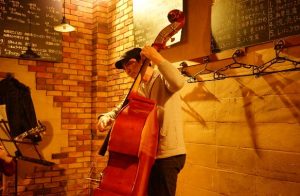
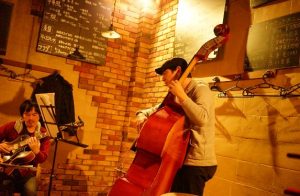
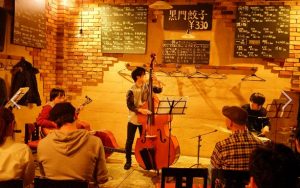
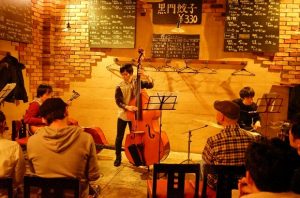
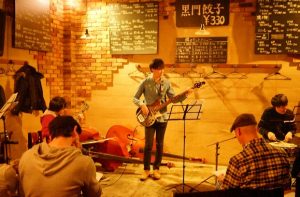
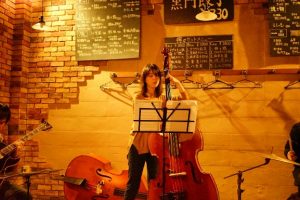
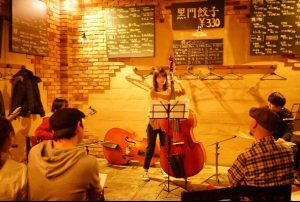
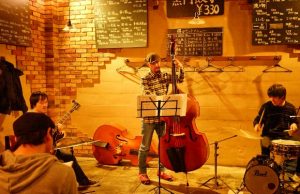
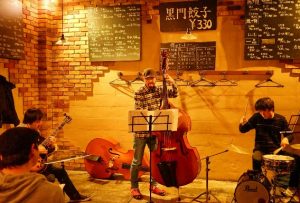
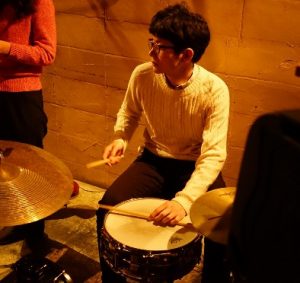
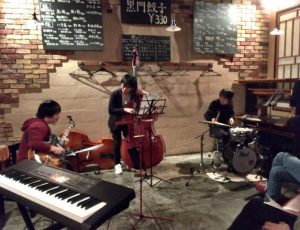
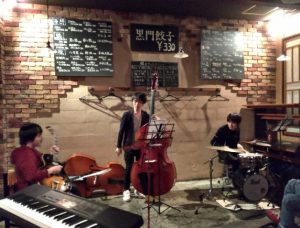
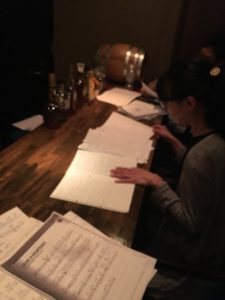
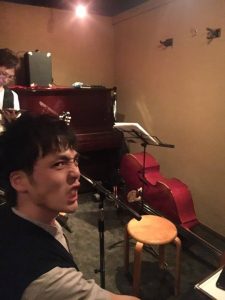
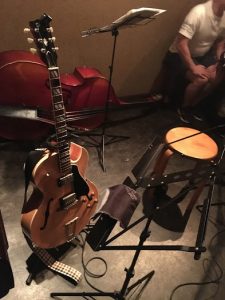
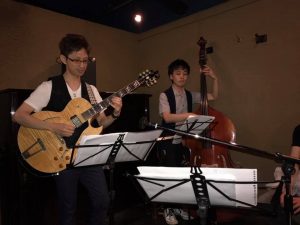
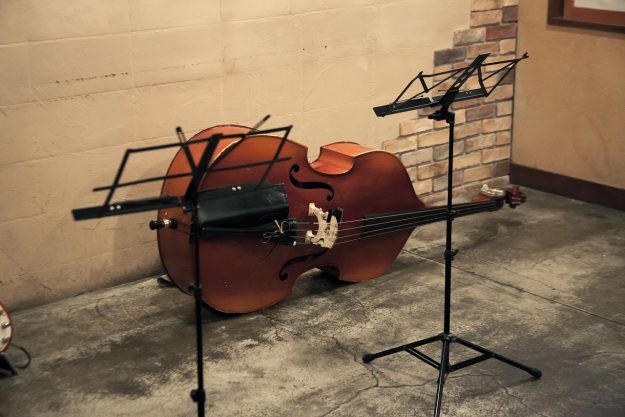
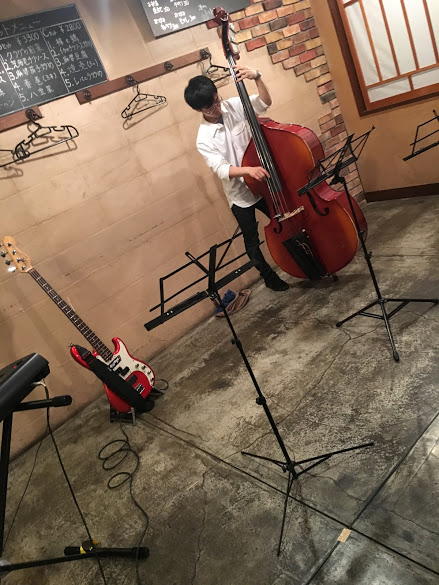
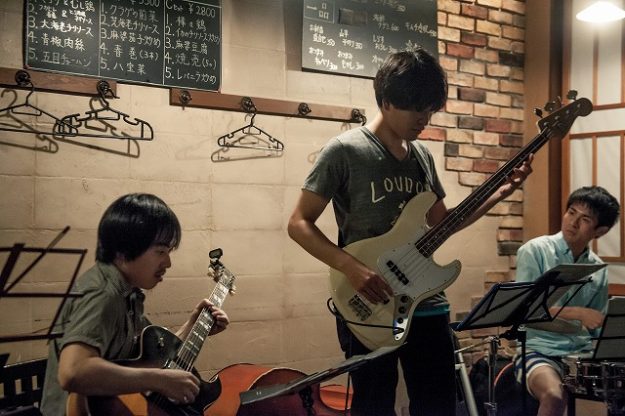
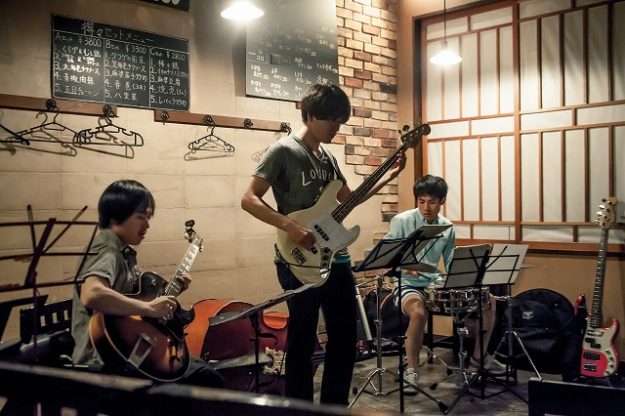
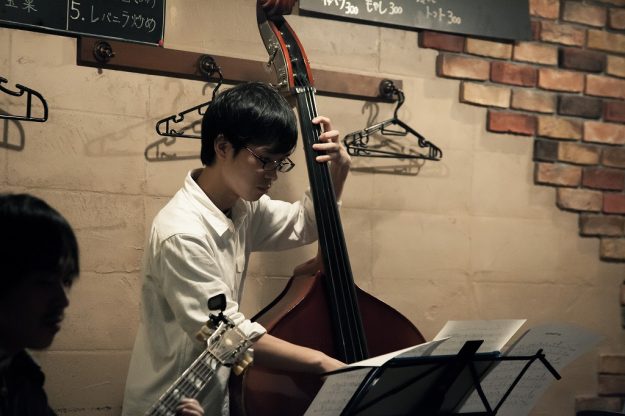
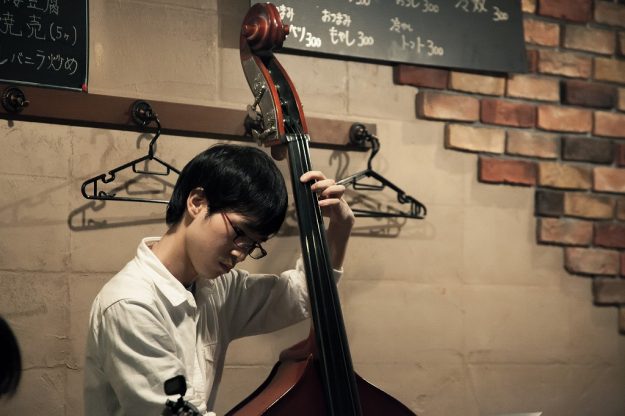
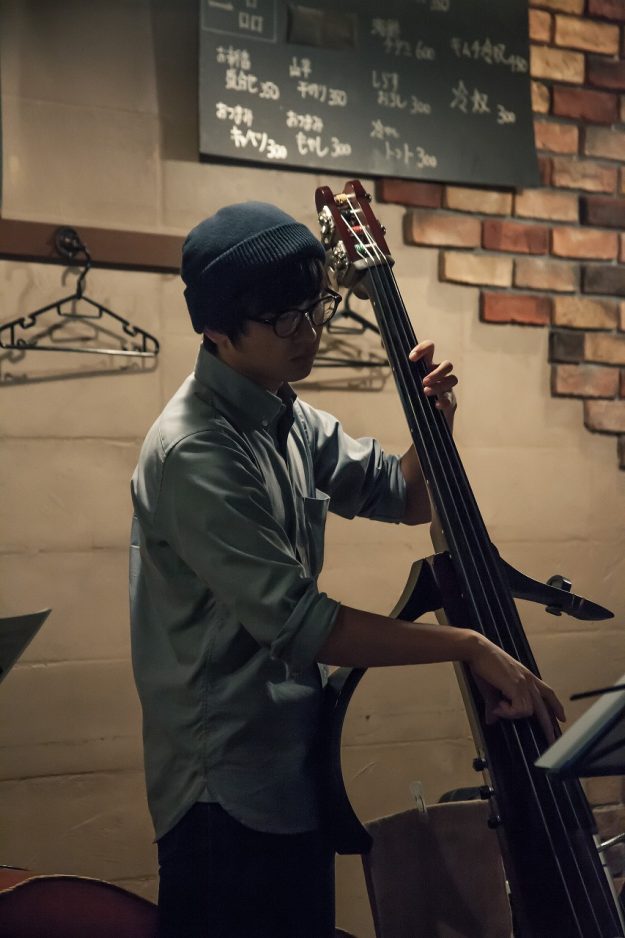
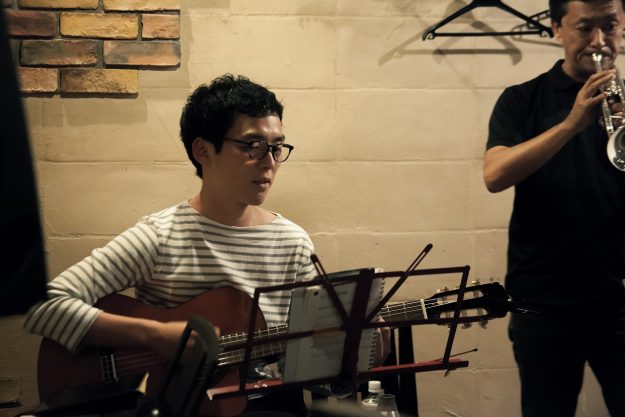
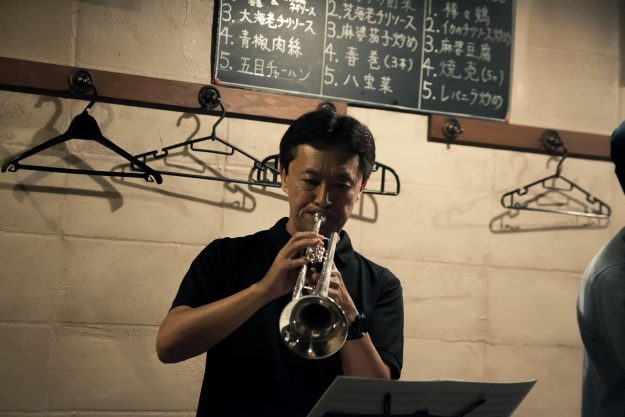
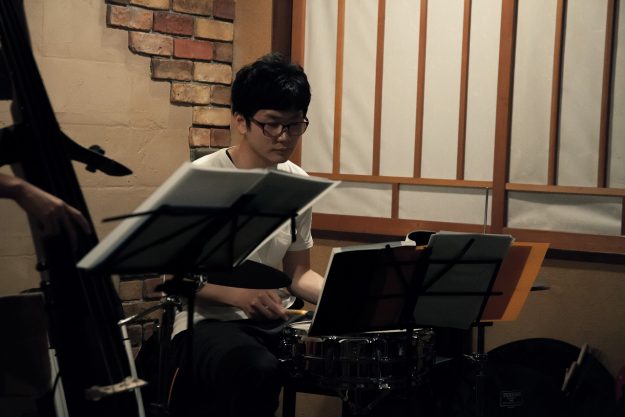
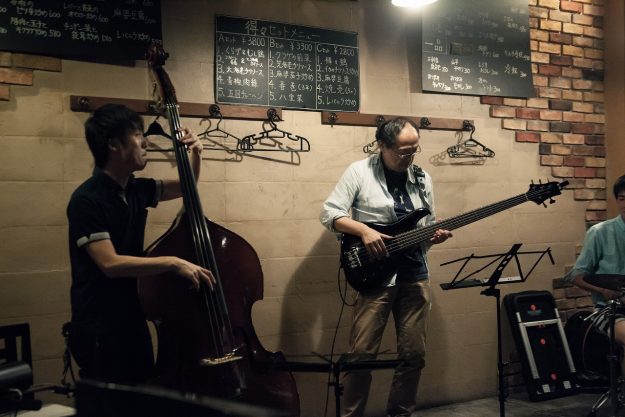
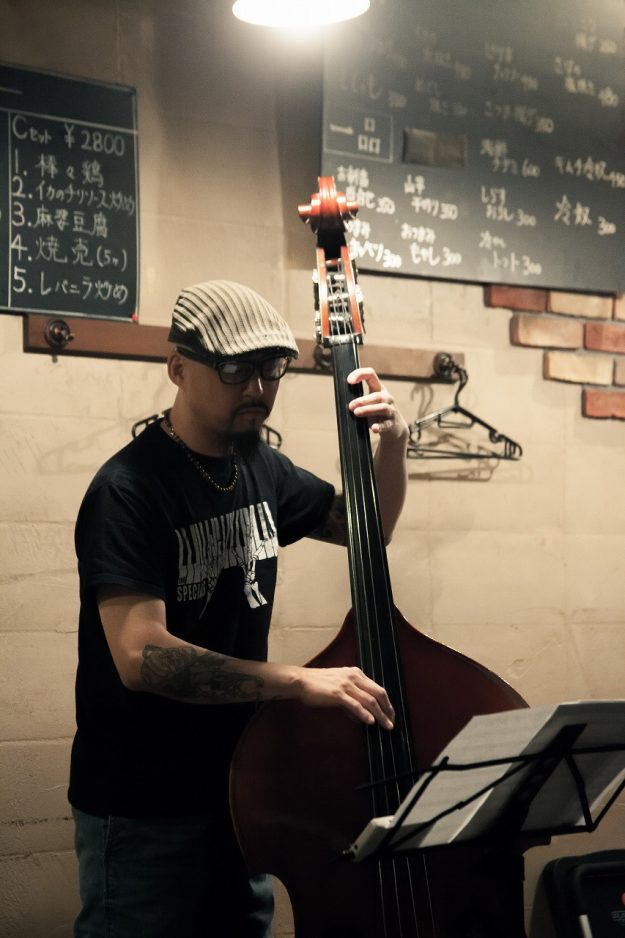
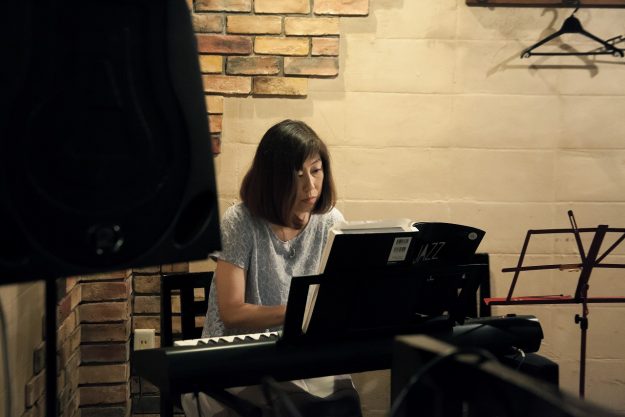
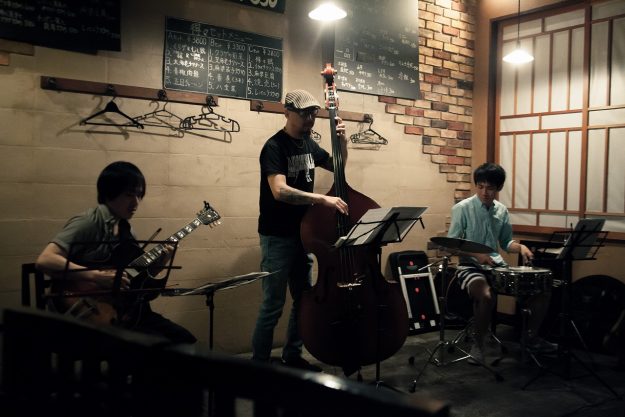
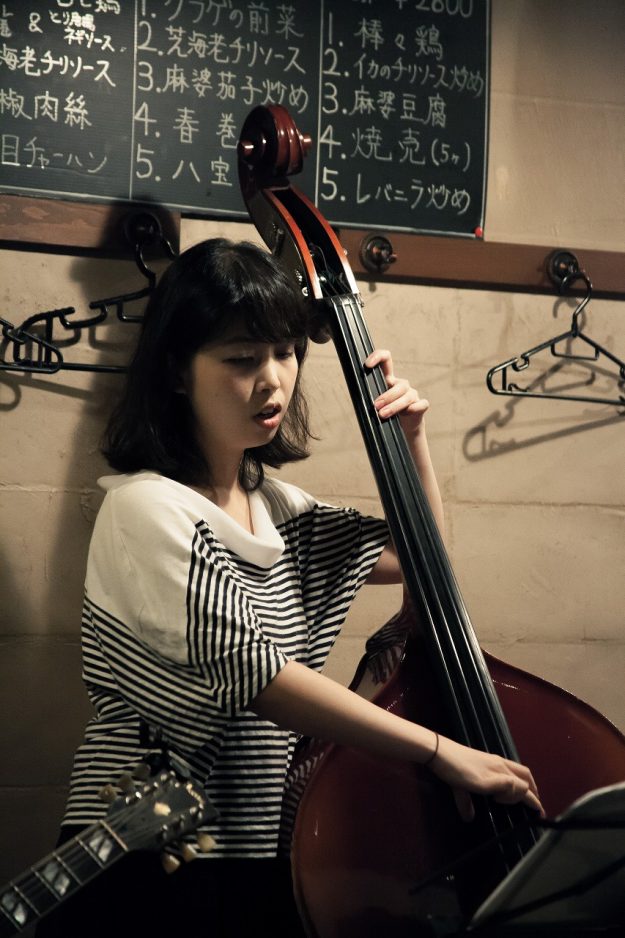
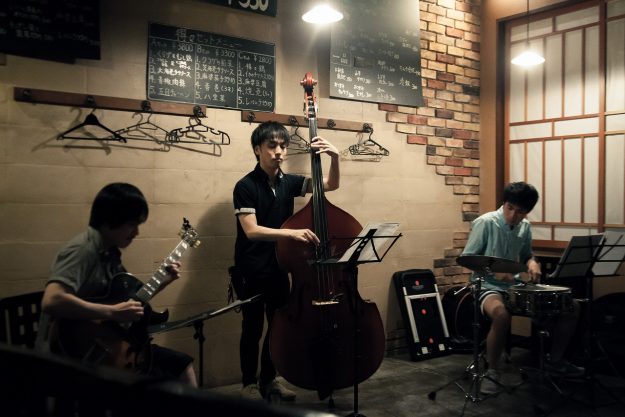
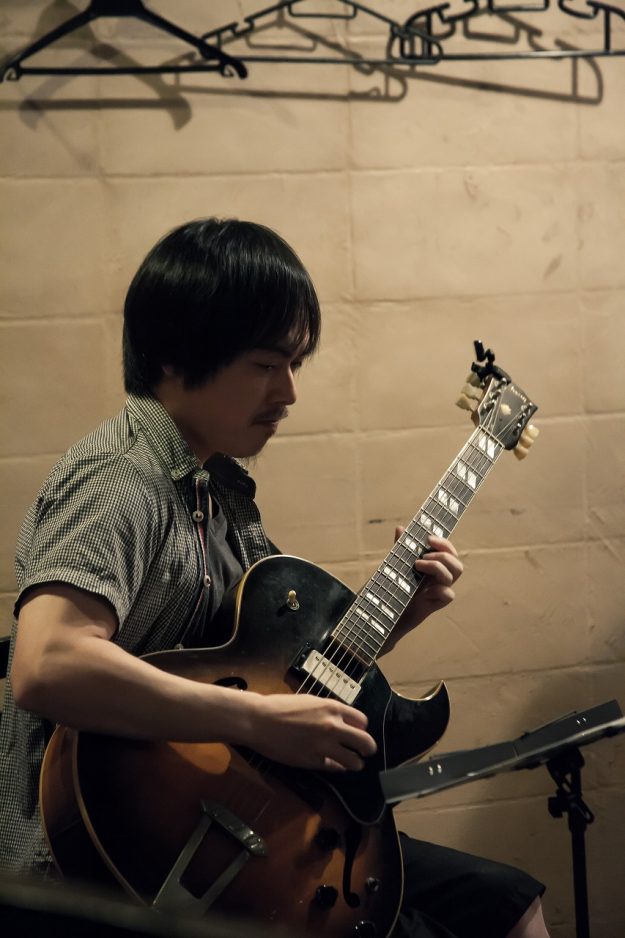
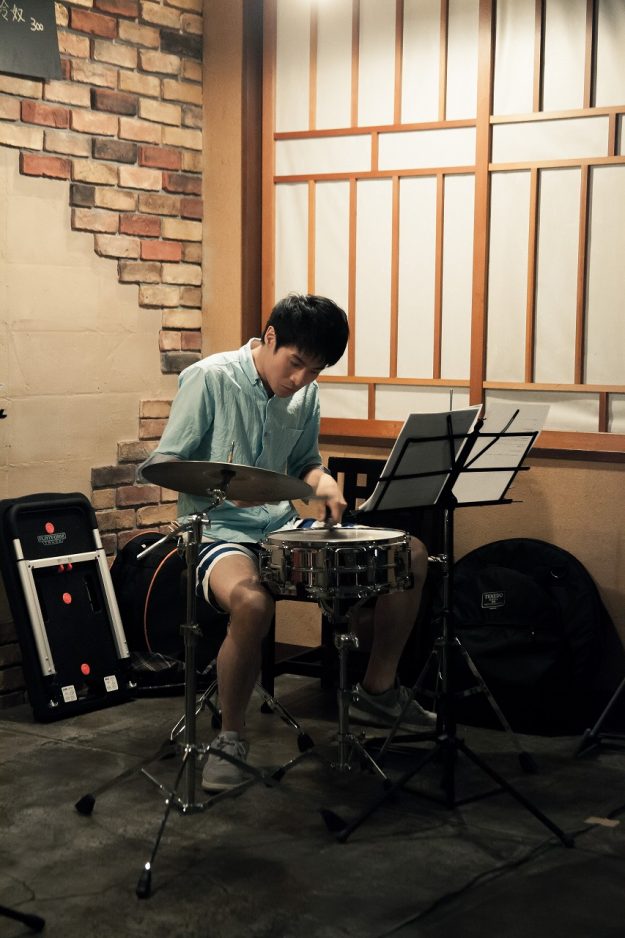
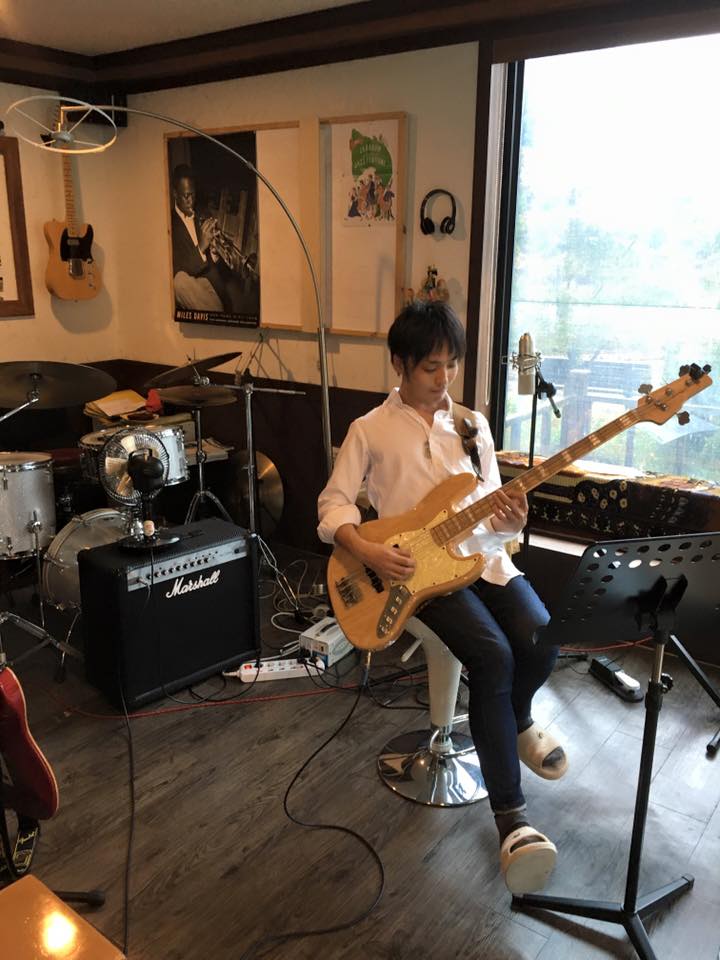
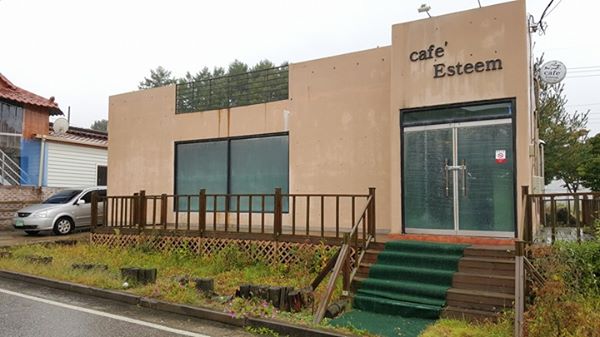
The venue for both nights was “Cafe Estate.” Here’s the space:
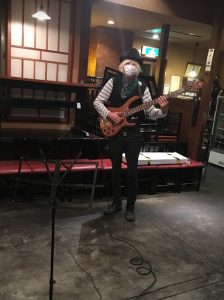
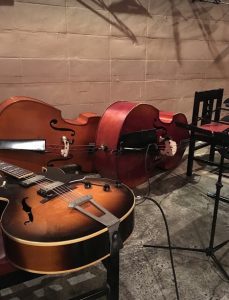
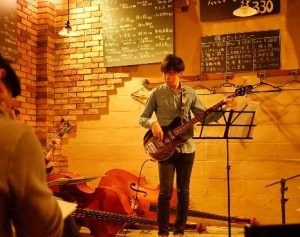
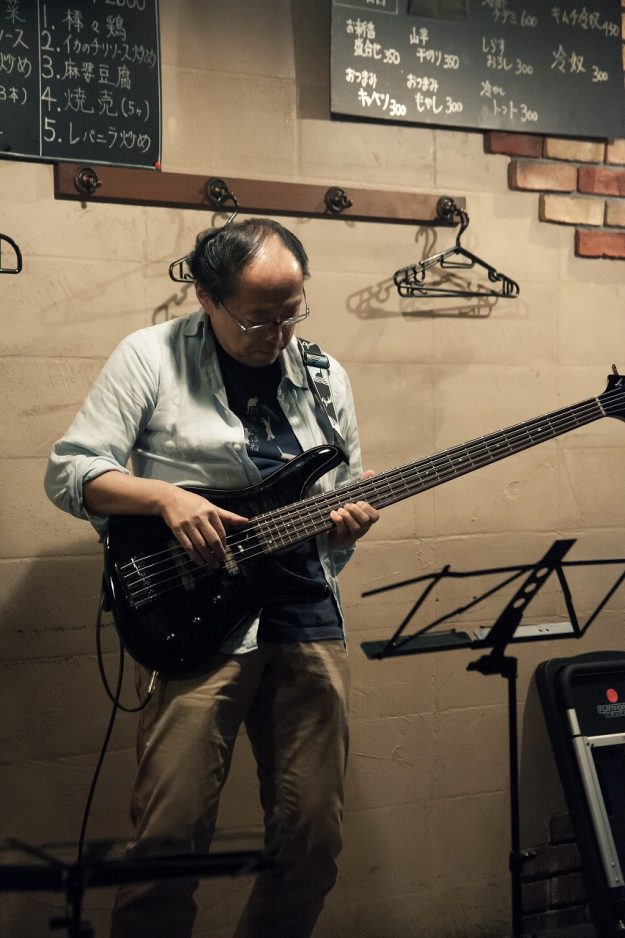
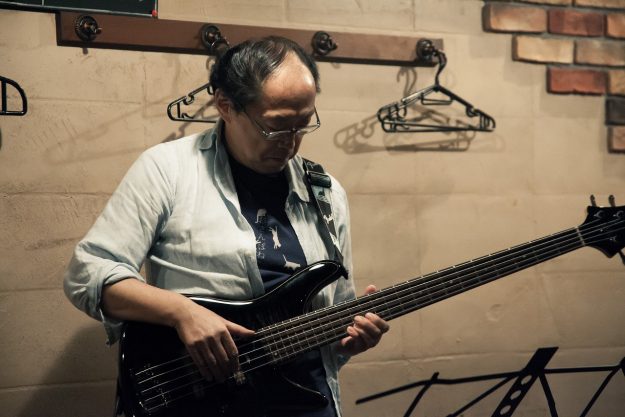
Jinwoo offered to lend me an electric bass, which saved me a huge amount of hassle — I traveled with just two backpacks and no bass case.

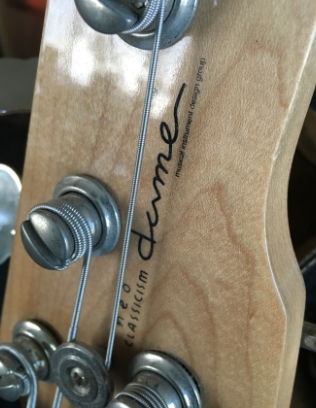
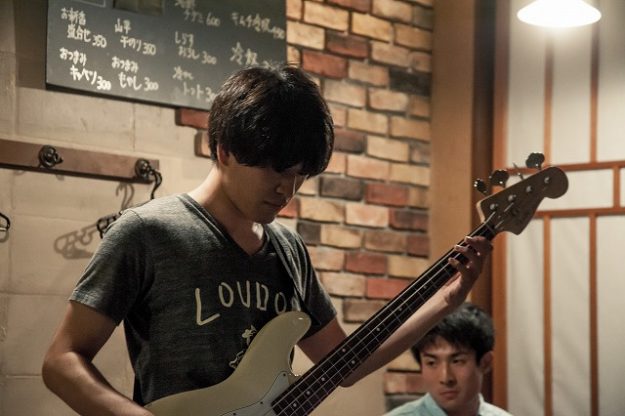
The bass was a jazz-type with two single-coil pickups — high action, very punchy and growly. It reminded me of an Atelier Z in feel. It blended into the ensemble beautifully. Easily one of the best-playing basses I’ve ever gigged on.
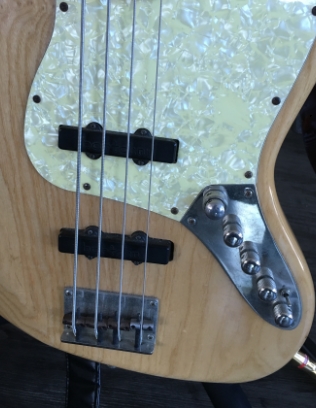
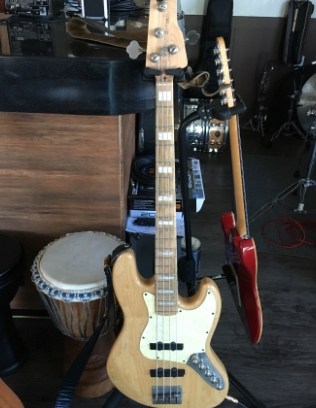
I couldn’t quite make out the brand name. Jinwoo said he’d paid $1,000 for it in New York.

The Ginseng Festival

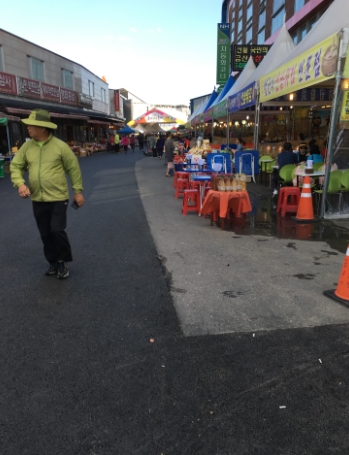
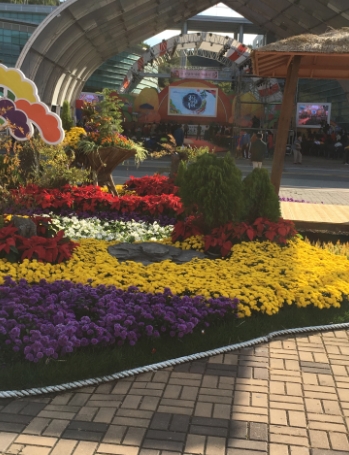
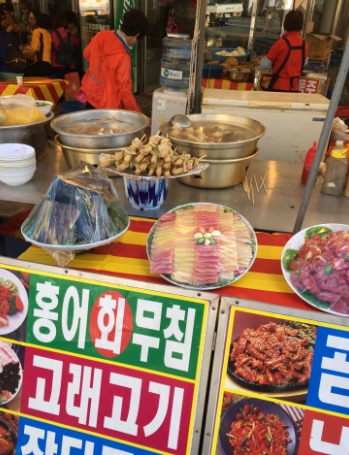
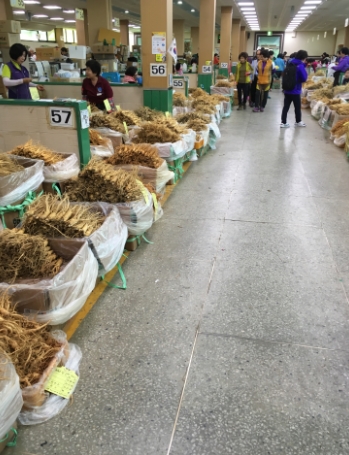
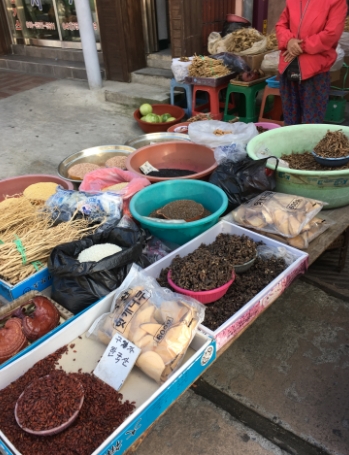
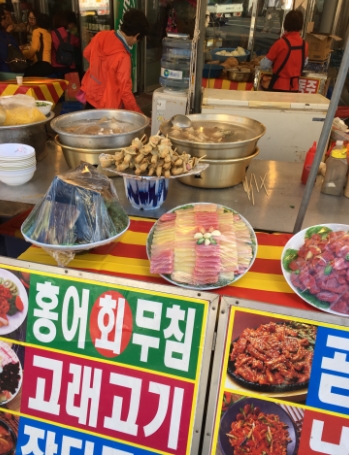
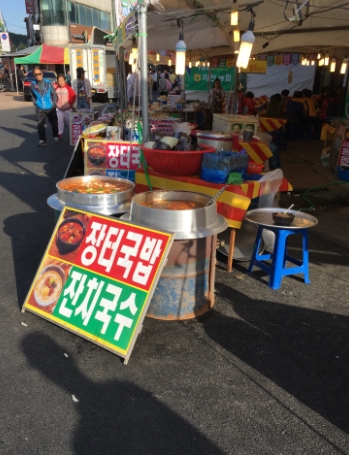
Before soundcheck, we had some time so we walked around the town. It happened to be the annual Jinseng Festival — stalls everywhere selling ginseng in every form.
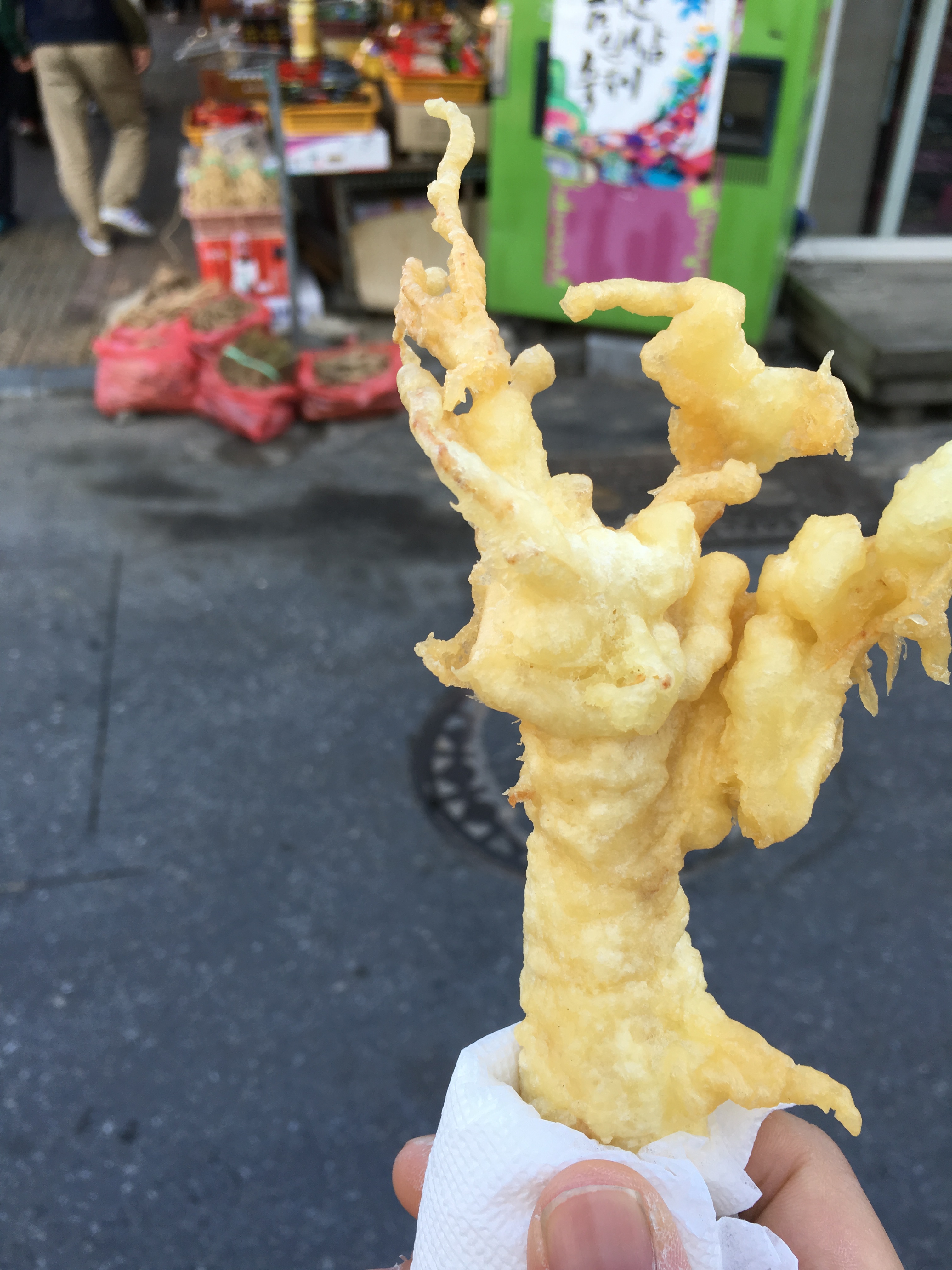
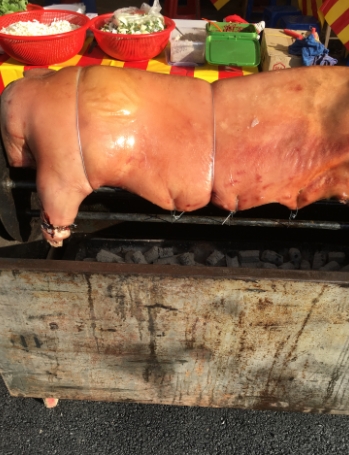
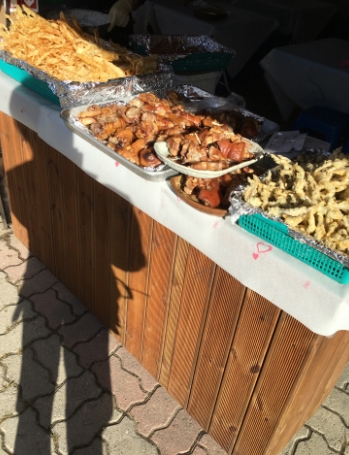
Ginseng is quite bitter on its own, but deep-frying it makes it much easier to eat.
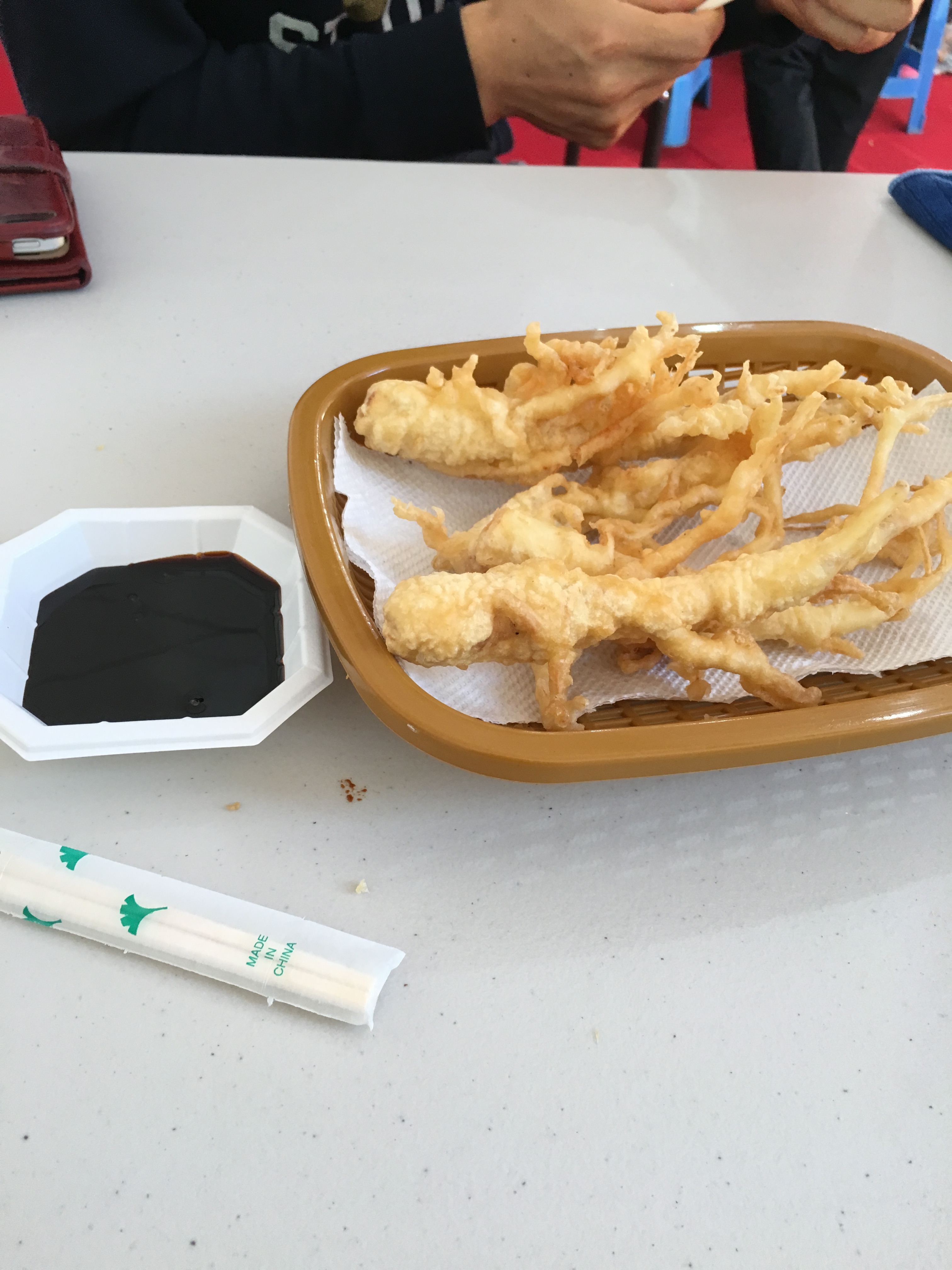
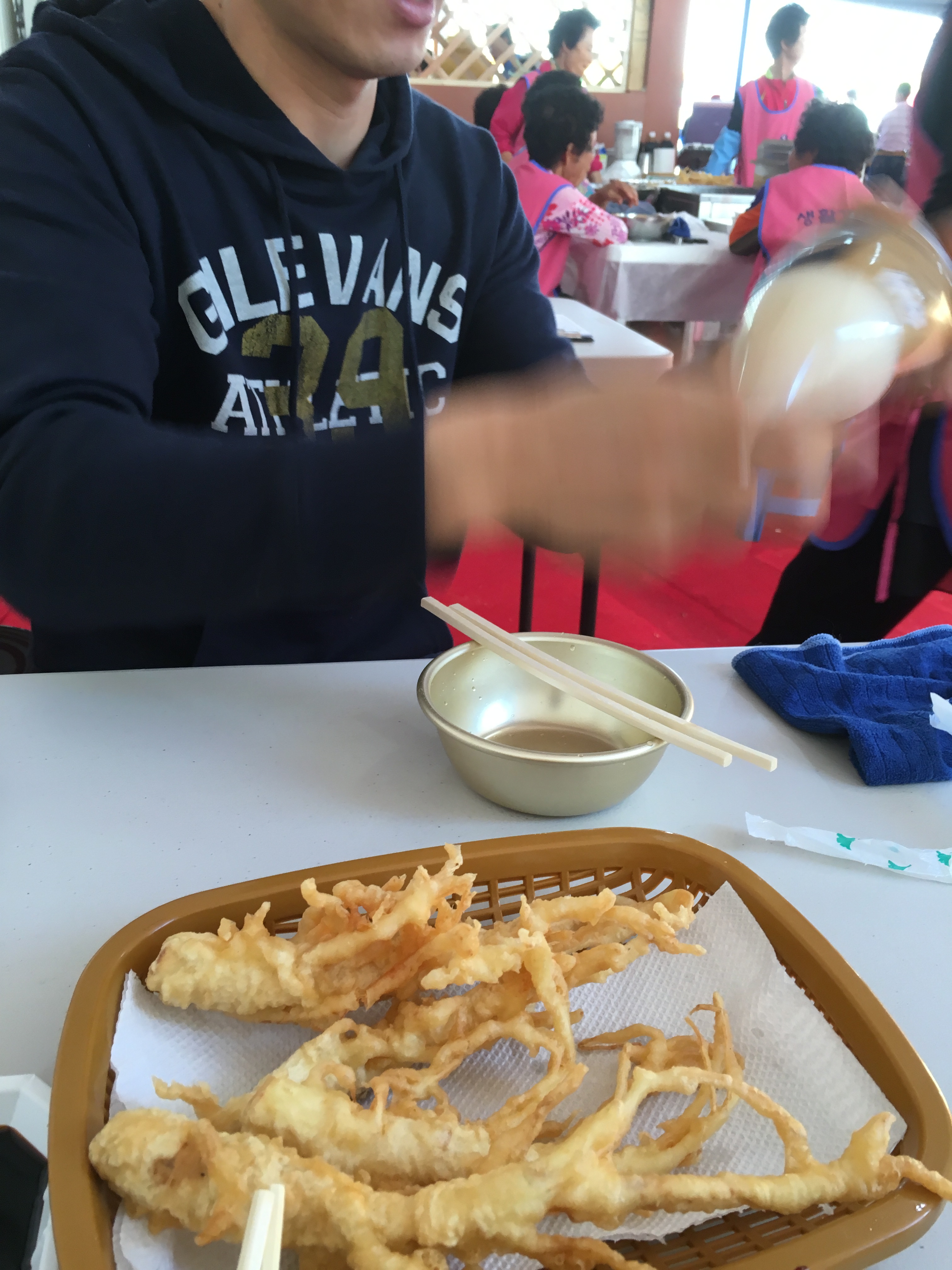
Goes well with makgeolli (Korean rice wine).

The actual live report from the show continues in Part 2.

Want Personalized Feedback on Your Playing?

This is exactly the kind of thing that’s hard to fix alone — and where having a teacher makes all the difference.

At Line on Bass, I offer an online lesson service where you send me a video of your playing, and I give you specific, detailed feedback — every single day if you want.

Students from around the world are using this to fix exactly these kinds of issues and steadily improve their jazz bass skills.
Check Out the Lesson Service →

Posted on Leave a comment

I Joined a Jazz Session in Taipei — Jazz Spot “SWING”

I found a jazz spot in Taipei where you can actually sit in on a jam session.

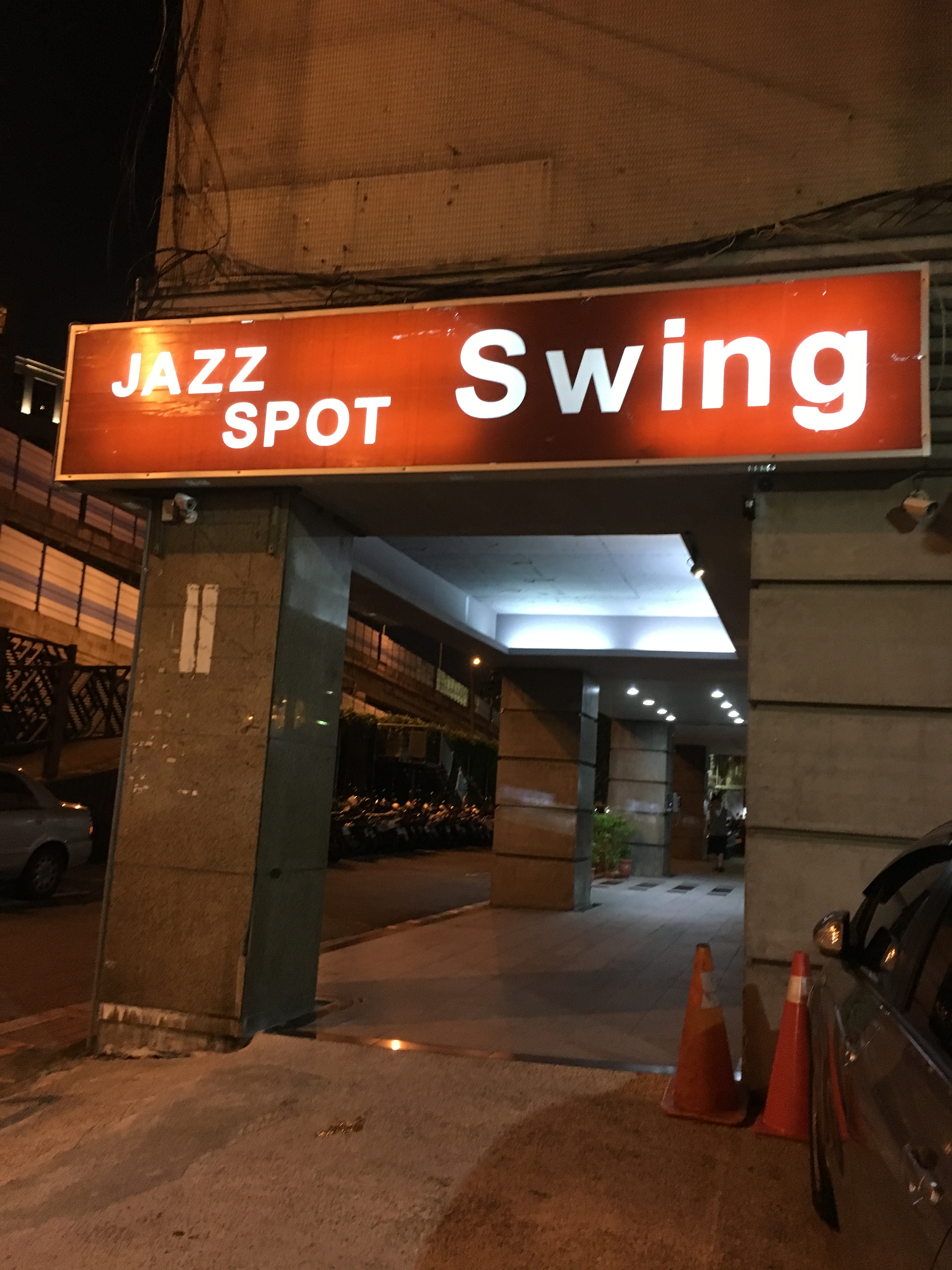
Jazz Spot “SWING”

About a 15-minute walk from Zhongshan MRT Station.

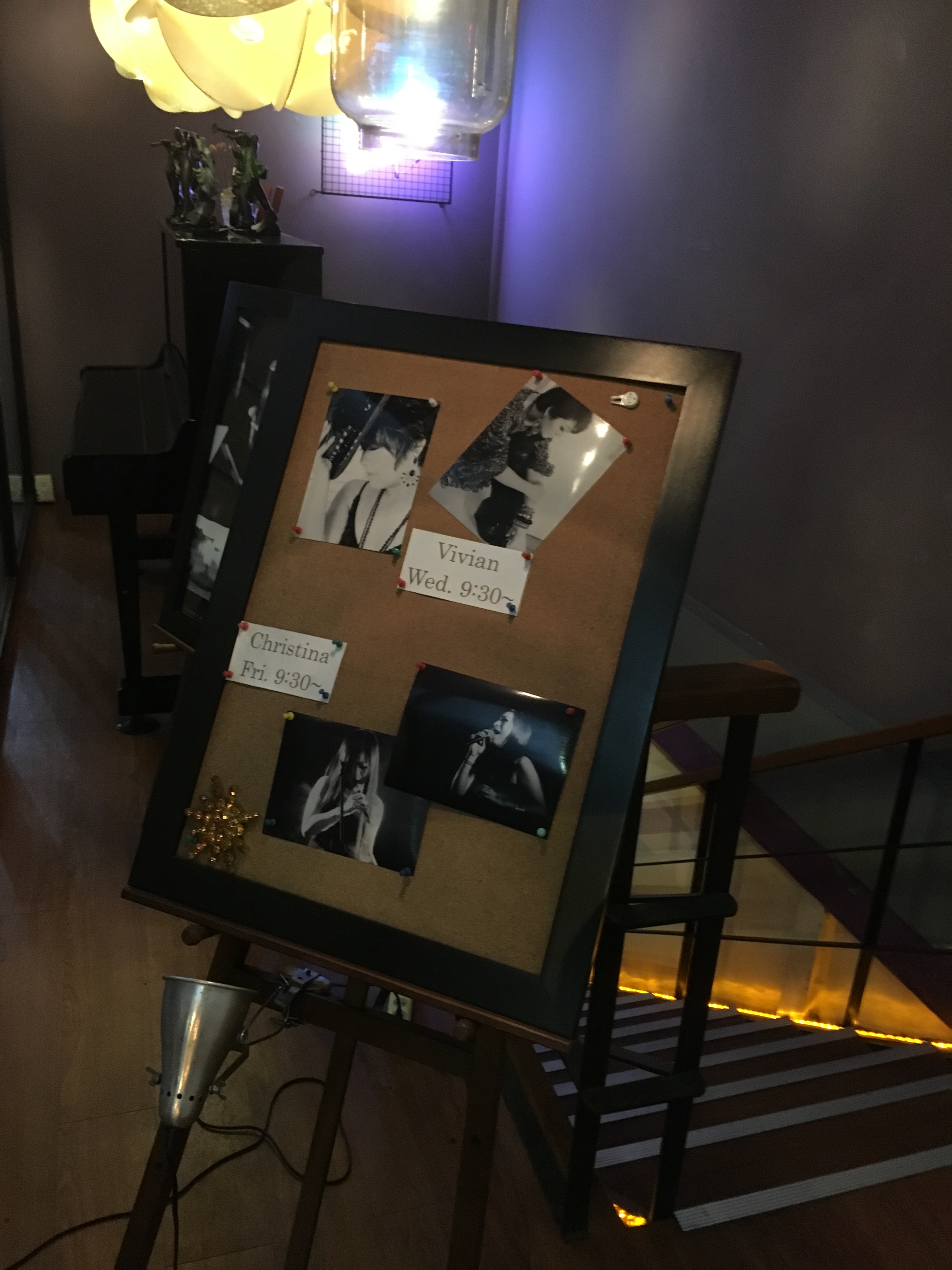
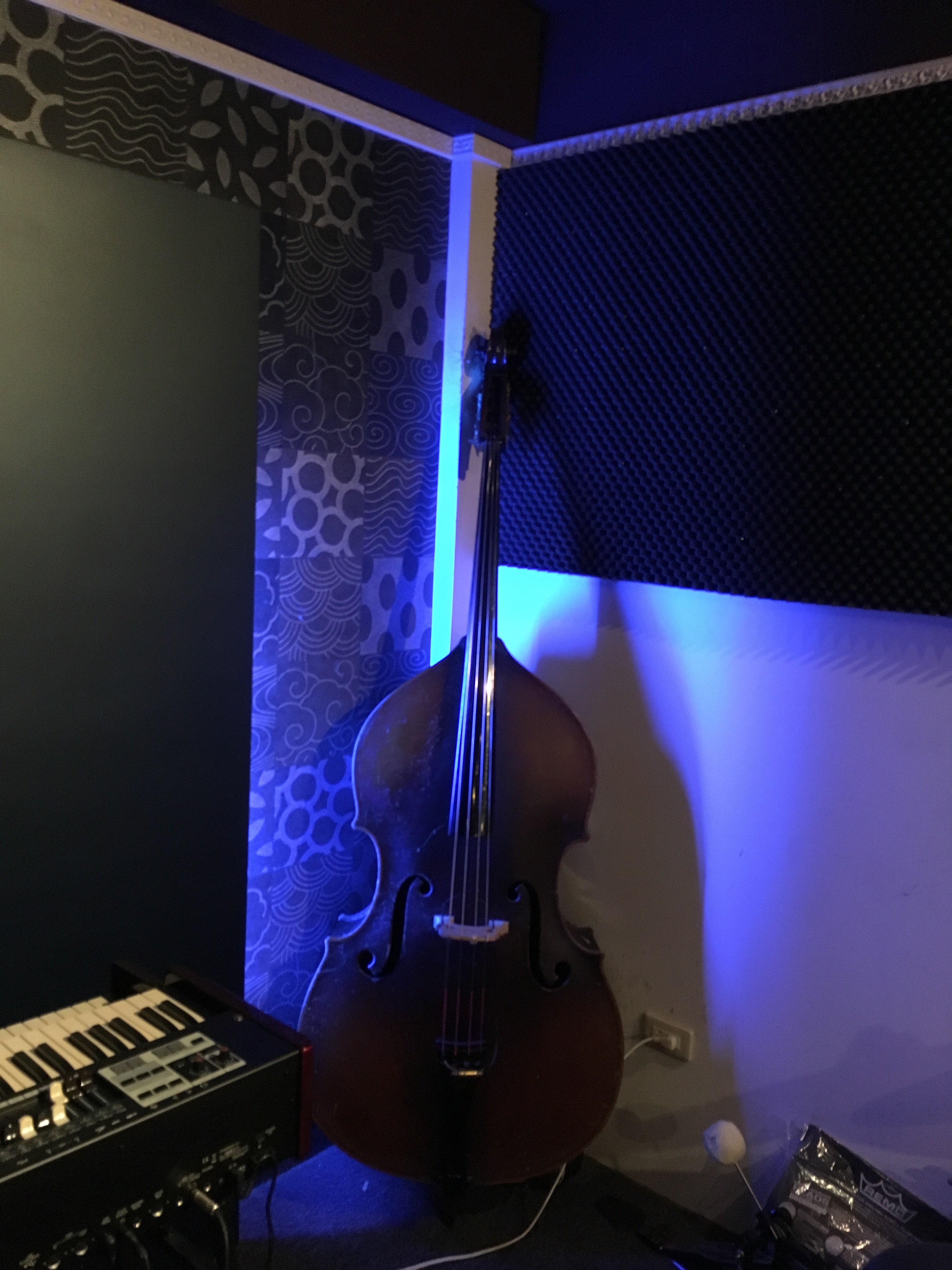
Inside the venue.

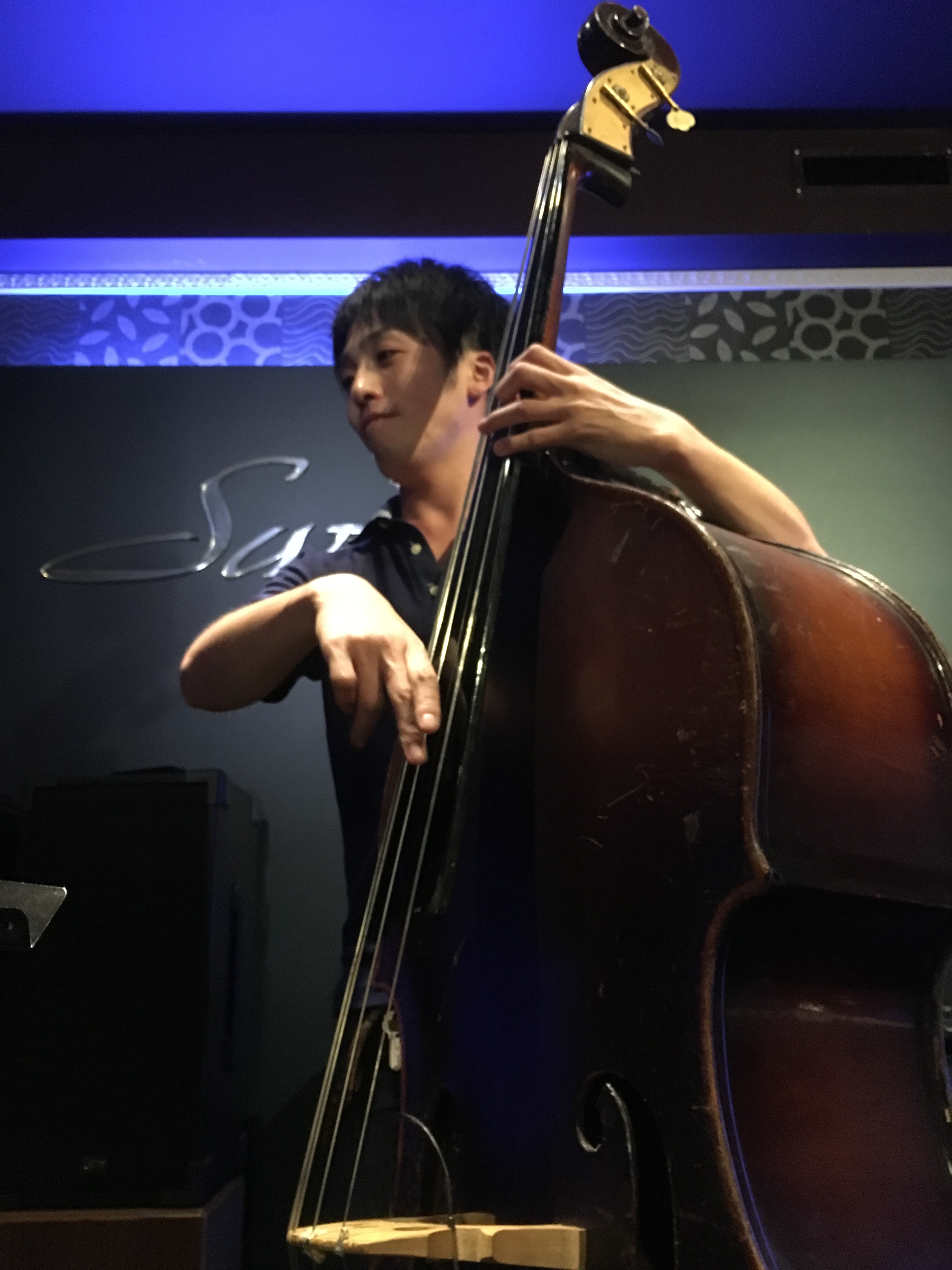
Upright bass in the corner. House instrument.

The owner spotted me and switched to Japanese:

“Are you a musician?”

“I play bass!”

And that was all it took.

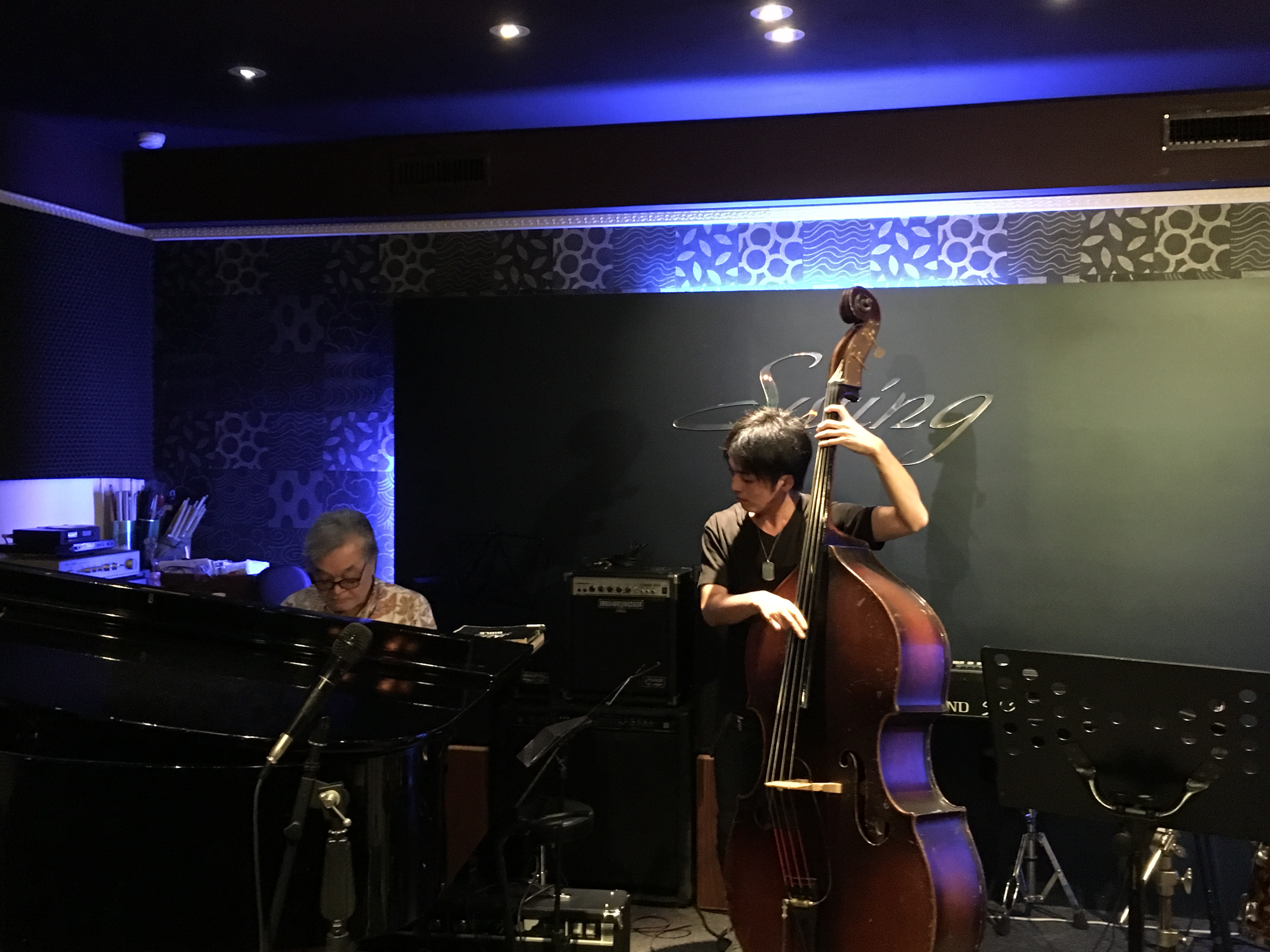
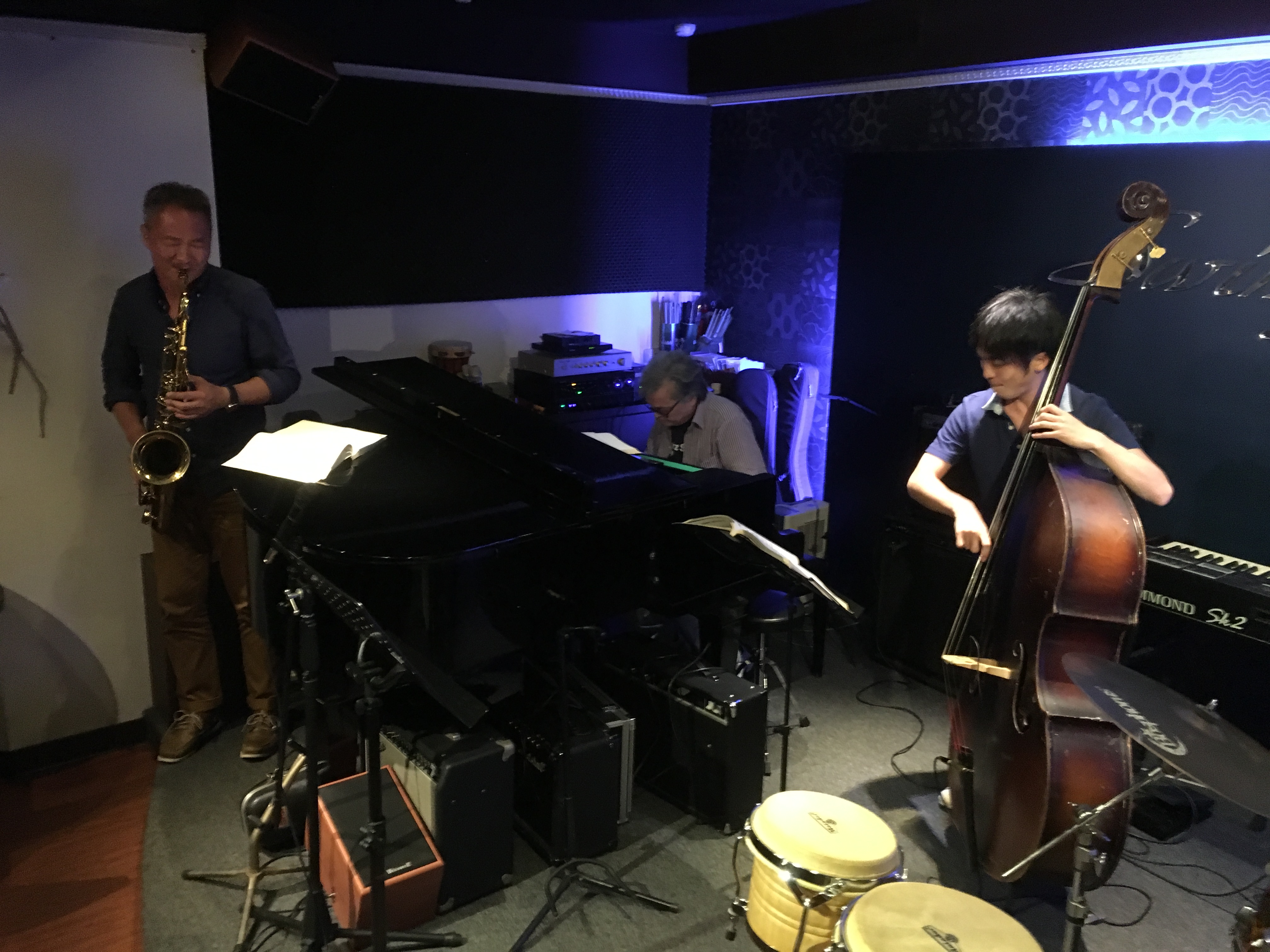
Jam session — in Taiwan.

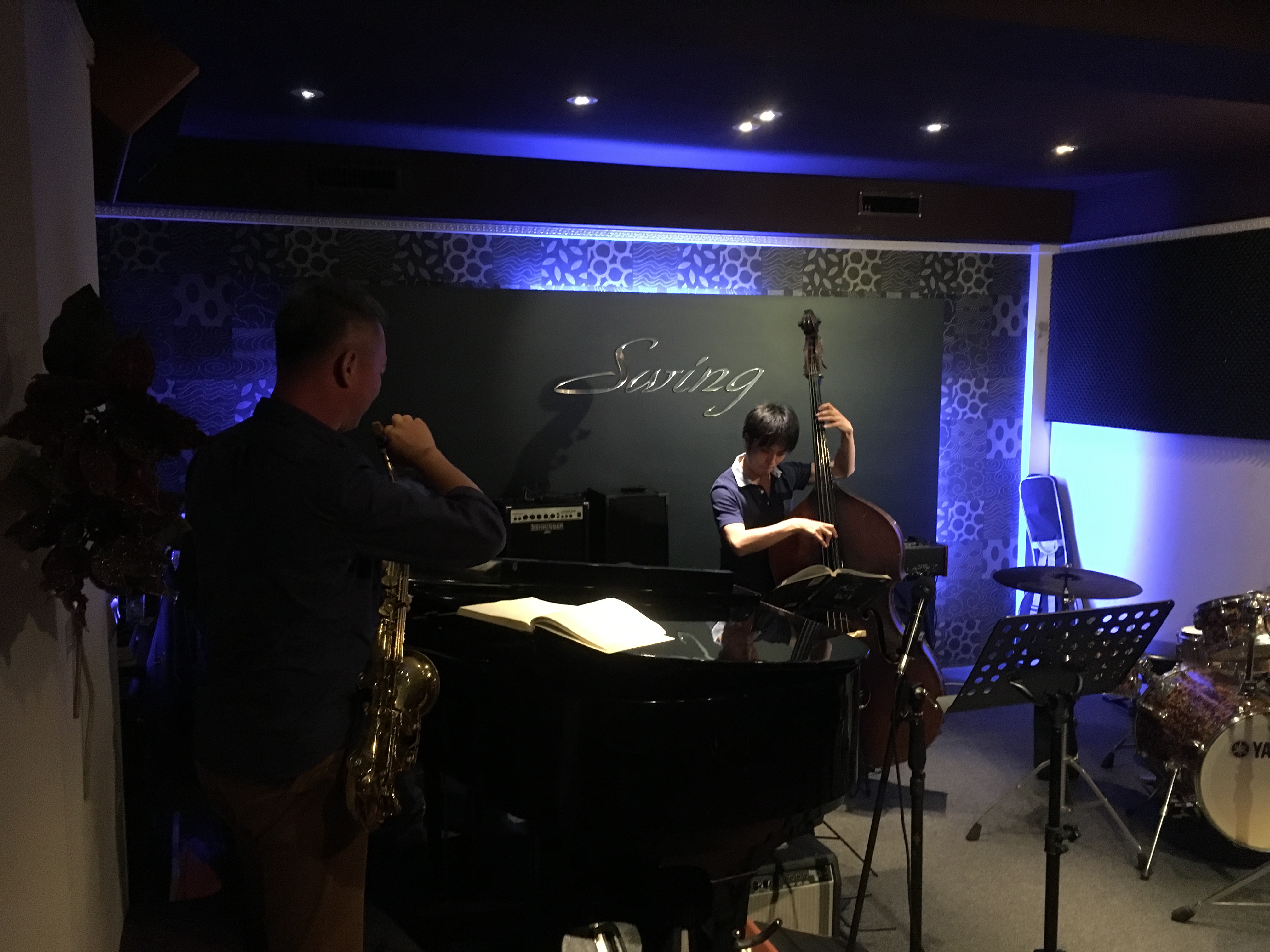
A sax player jumped in too.

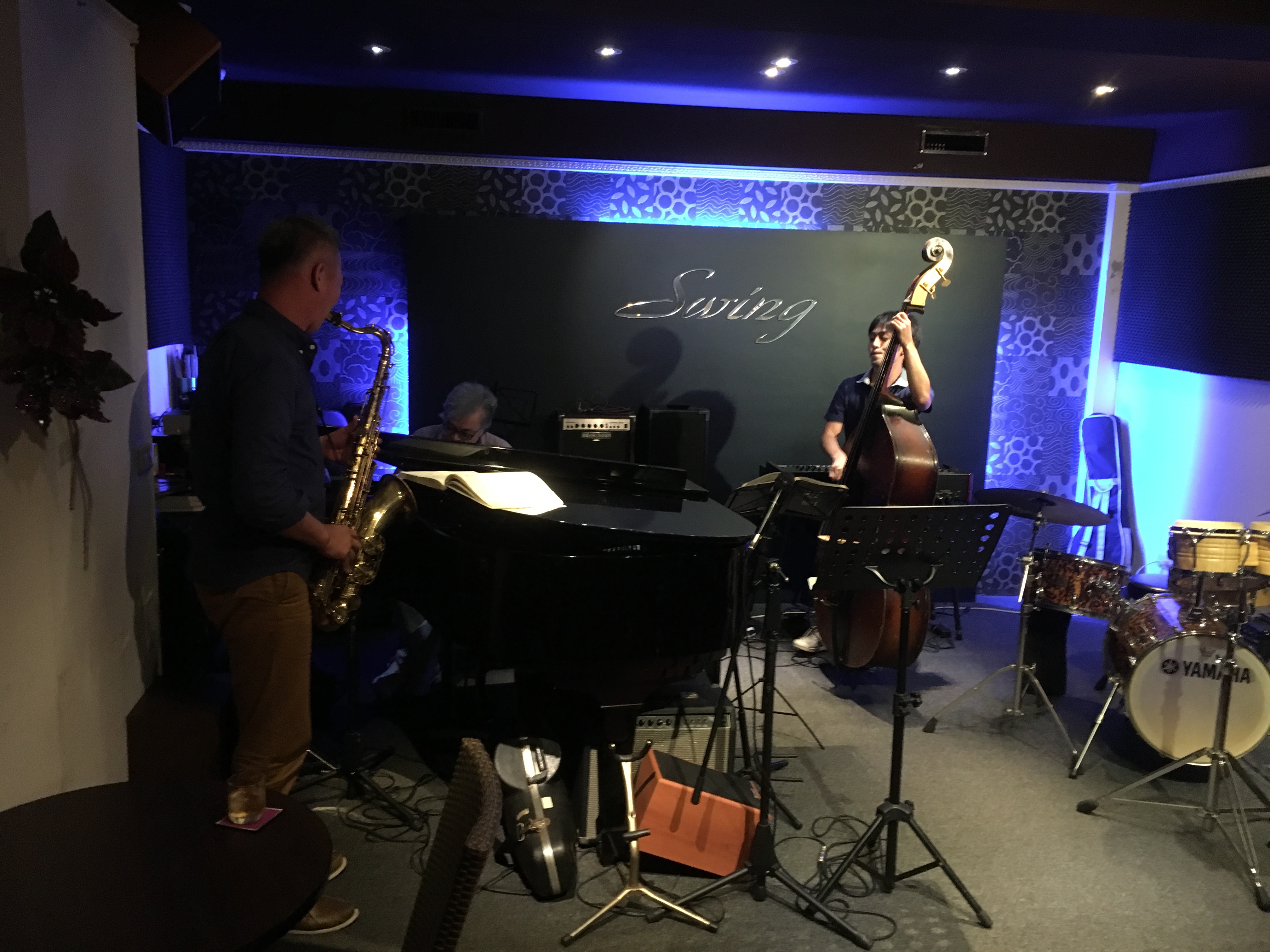
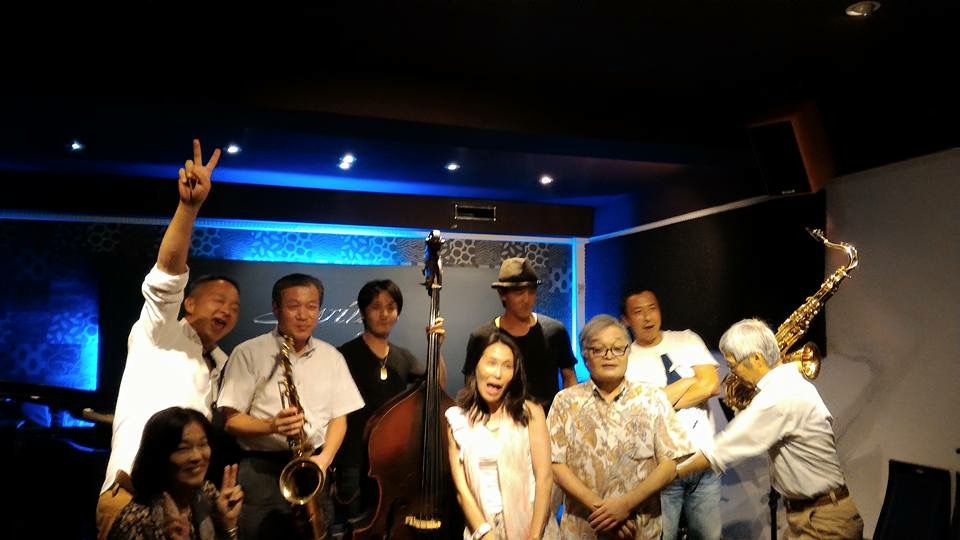
Before I knew it, there were this many of us.

That evening we played around 10 tunes:

  • F Blues
  • You’d Be So Nice to Come Home To
  • Take the A Train
  • St. Thomas
  • Softly as in a Morning Sunrise
  • In a Sentimental Mood
  • It Could Happen to You
  • If I Were a Bell
  • A Night in Tunisia
  • The Girl from Ipanema
  • Autumn Leaves

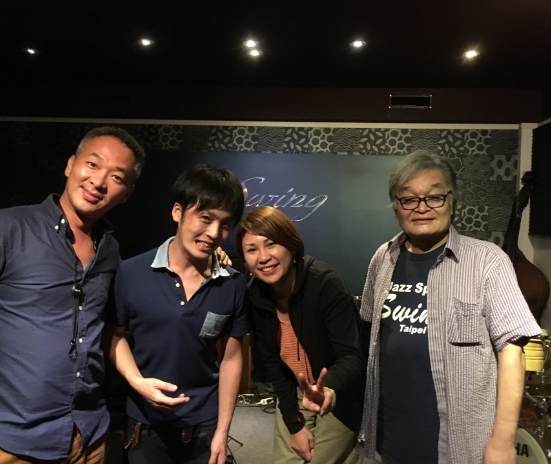
The owner, Mr. Kuwabara, is a pianist. He had transposition charts ready, and there was a Real Book on hand. Vocalists are welcome to sit in too.

Jazz Session Spot in Taipei

Jazz Spot SWING shows up near the top of search results when you search for “Taipei jazz.” I’d read a lot of reviews before going, but none of them mentioned that sessions were possible — so actually walking in and getting to play was a real surprise. I hadn’t touched a bass in days at that point, and I played like a fish back in water.

There are other jazz spots in Taipei — places like Brown Sugar and Blue Note — but Mr. Kuwabara and some of the expats at the bar told me SWING is probably the only one doing open sessions.

There’s something about playing the same tunes you always play — Blues, Autumn Leaves — but in a foreign country that makes it feel completely different. The energy was high. And everyone was warm and funny.

The owner Mr. Kuwabara is on the right. Plenty of listeners in the house, too. If you’re ever in Taipei and want to play jazz, Jazz Spot SWING is the place.

Venue Info (as of 2015)

Jazz Spot SWING

B1F, No. 108, Section 1, Xinsheng North Road, Zhongshan District, Taipei

Hours: 8:00 PM – 1:00 AM (Fri/Sat until 2:00 AM) | Closed Sundays

Credit cards: accepted | Japanese-speaking staff available

Equipment: grand piano, drum set, upright bass

From Zhongshan MRT Station (Exit 3): walk straight, turn right when you reach the elevated Xinsheng North Road overpass, then continue south. Approx. 15 min walk.

Note: This info is from 2015 — please verify before visiting.

Want Personalized Feedback on Your Playing?

This is exactly the kind of thing that’s hard to fix alone — and where having a teacher makes all the difference.

At Line on Bass, I offer an online lesson service where you send me a video of your playing, and I give you specific, detailed feedback — every single day if you want.

Students from around the world are using this to fix exactly these kinds of issues and steadily improve their jazz bass skills.
Check Out the Lesson Service →

Posted on Leave a comment

Jazz Live Report: Niigata & Toyama, Part 2 — Playing Through a Blizzard

This is Part 2 of the Niigata-Toyama Tour Report. After a car accident on an icy road, the first show had still gone well. Now it was time to head to Toyama.

January 18 — A Day in Niigata

The morning after the accident, I went to a neurosurgeon to rule out whiplash. The MRI came back clear, which was a huge relief.

Okay — I survived, the show went fine, and tomorrow I’ll do it again. Let’s go.

Then I turned on the TV and caught the news: a major snowstorm had hit Tokyo, and severe weather was sweeping across Japan. Snow warnings in Niigata and Toyama, and a strong wind and wave warning around Kashiwazaki — the coastal city I was in.

Even worse: the train line between Kashiwazaki and Joetsu-Myoko, the route I needed to reach Toyama, had already announced it would be suspended the next day.

Seriously? There’s more? I can’t get to Toyama?

Not much I could do about it, so I spent the day practicing instead.

The windows started rattling with the sound of the wind.

I sat with theory books, bow etudes, score analysis, and some lesson prep materials for about four hours.

January 19 — The Toyama Show

I woke up to the howl of a raging wind, right on cue with the forecast.

And sure enough — no trains between Kashiwazaki and Joetsu-Myoko. But I had a show to play. So I got in the car and drove into the blizzard anyway, inching along the coast in near-zero visibility. It took twice as long as normal, but I made it to Joetsu-Myoko Station.

That was genuinely terrifying.

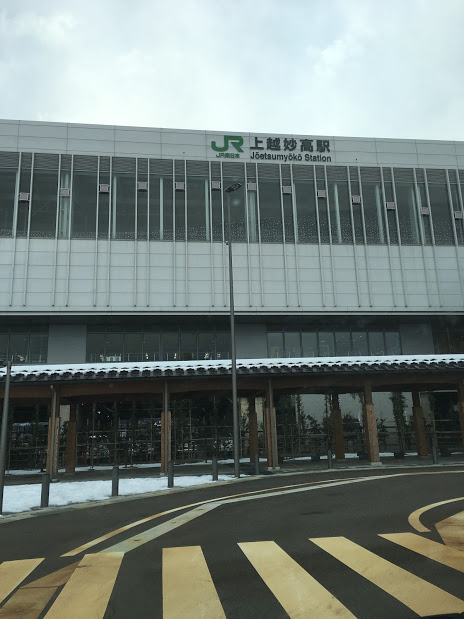
Joetsu-Myoko Station was built on the site of my grandfather’s old barbershop. The neighborhood got redeveloped, and a lot of familiar places disappeared with it — the tofu shop next door, the little grocery where I used to beg for gum. But the station itself is beautiful.

I had a bit of time before the Shinkansen, so I stopped by my grandfather’s new house nearby, said a quiet hello to the photo of my late grandmother on the shelf, and then headed for Toyama.

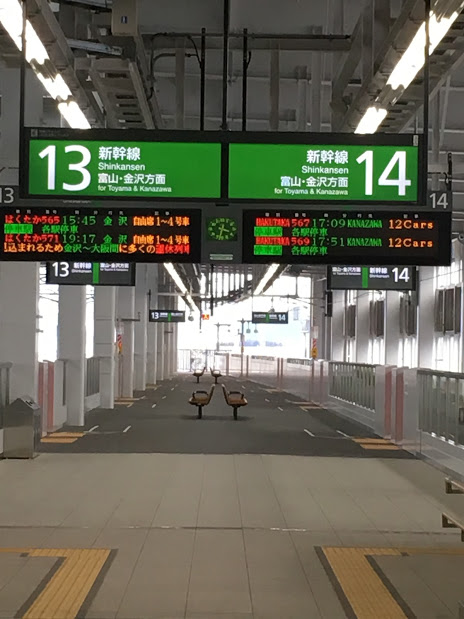
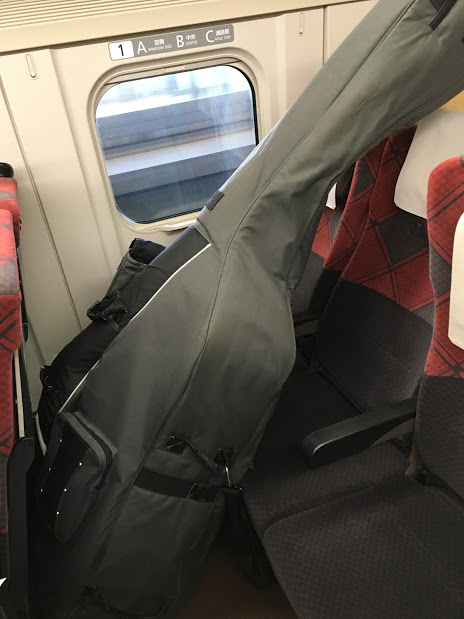
I hadn’t played in Toyama since the summer of 2014. And this was my first time on the Hokuriku Shinkansen. The train itself was stunning — but what really amazed me was this:

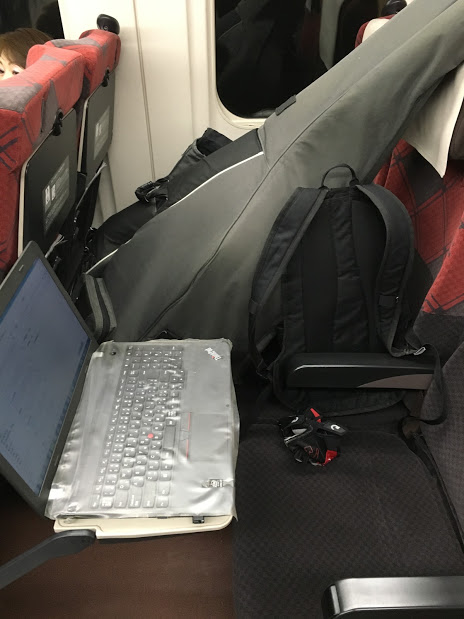
My contrabass fit in the seat next to me.

On the Joetsu Shinkansen, there’s never room for a bass in the car — you’re stuck in the vestibule no matter what. But here, there was enough space right at the seat. I was overjoyed.

Mobile office: up and running. Freelancers can work anywhere on earth.

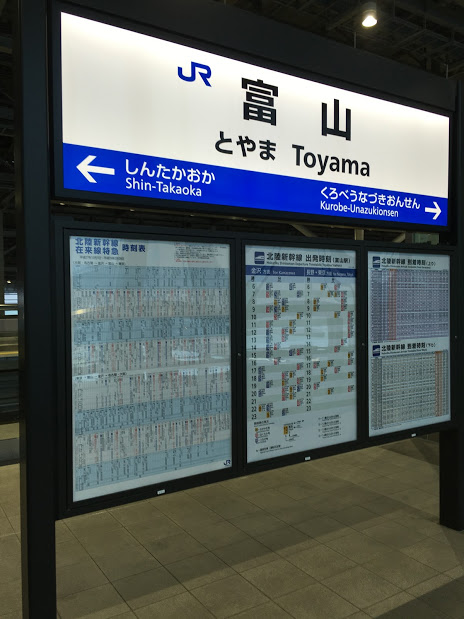
Arriving in Toyama

Joetsu-Myoko to Toyama: just 40 minutes. What used to take two hours by limited express felt like a miracle.

That evening’s show was a private event at a venue in Toyama City. My collaborator was Yui Iino, one of Toyama’s premier jazz pianists. We’d first met in New York in 2012 — she was part of a small jazz study group I was involved in, where a group of Japanese players who’d met at sessions would gather late at night each week at a studio in Astoria, Queens. Yui was one of the founding members. We’d last performed together back in 2014.

That New York circle eventually produced this:

“The World Tribe” — my first album as a leader. Yui’s musical sensibility is woven into it somewhere.

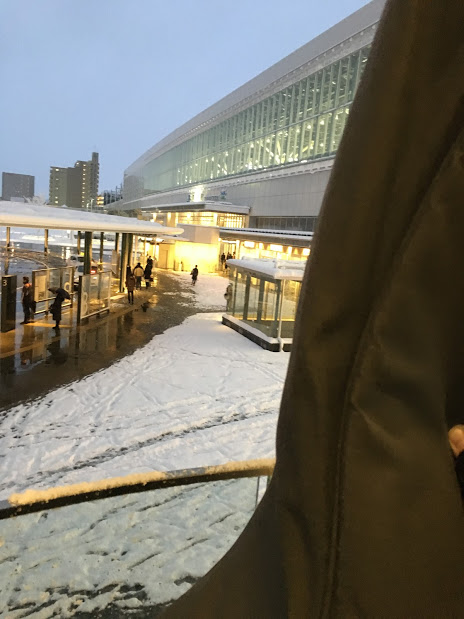
Toyama was under serious snow.

We’d arranged to meet at Inaricho Station, but when Yui arrived, we quickly discovered her car couldn’t fit the contrabass.

“Should we get a taxi?”

“Taxis are sedans — folding the back seat won’t work either.”

So we made an emergency call to a friend with a bigger vehicle. Thirty minutes waiting at a nearby department store, and our ride finally arrived.

Usually I have wheels attached to the bottom of my bass case and can roll it around. But there was too much snow to move on foot. One more thing I needed help with.

I kept getting saved by people on this whole trip. Traveling with an upright bass is genuinely a team effort.

We made it to the venue through the blizzard.

I wanted a beer — badly — but we had no setlist yet, so straight into rehearsal.

The Show — and “Beyond the Night Sky”

We built a setlist of jazz standards and also decided to throw in something from the pop world. We landed on a SMAP song, one of Japan’s most beloved pop groups.

The setlist (approximate order), decided in an hour of rehearsal between the two of us:

  • Take the A Train
  • St. Thomas
  • Fly Me to the Moon
  • Spain
  • Anthropology
  • Yozora no Mukō (SMAP)

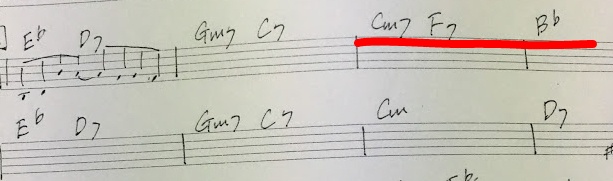
Transposing “Yozora no Mukō” to B♭ made the harmony surprisingly idiomatic for jazz. The verse has a clear ii-V-I, which is one of the most jazz-friendly progressions there is.

Here’s how the show looked:

Playing with someone you know well at that level — it’s its own kind of joy. The audience seemed to feel it too.

After the show, one of the guests came up and asked:

“What are you thinking about during a performance?”

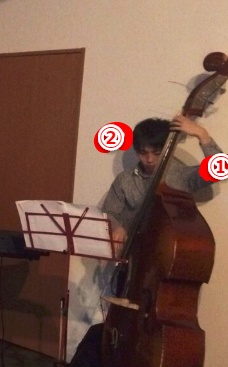
I answered by drawing this:

“There are two places where I’m present at once — here (①) I’m listening to the audience’s energy, and here (②) I’m listening to the pianist. My job is to stay tuned in to both, so I can respond instantly to whatever the room needs.”

That night we stayed at a friend’s sharehouse in the city. We ended up talking with the locals until around 3 in the morning.

I cracked the window open before sleep. Cold winter air came in. The night felt very quiet after everything that had happened.

That’s the end of the tour report.

Postscript: This trip reminded me again that music isn’t something you make alone. So many people helped us through. I’m grateful every day that I get to play and teach — and I want to keep at it.


Editorial Note

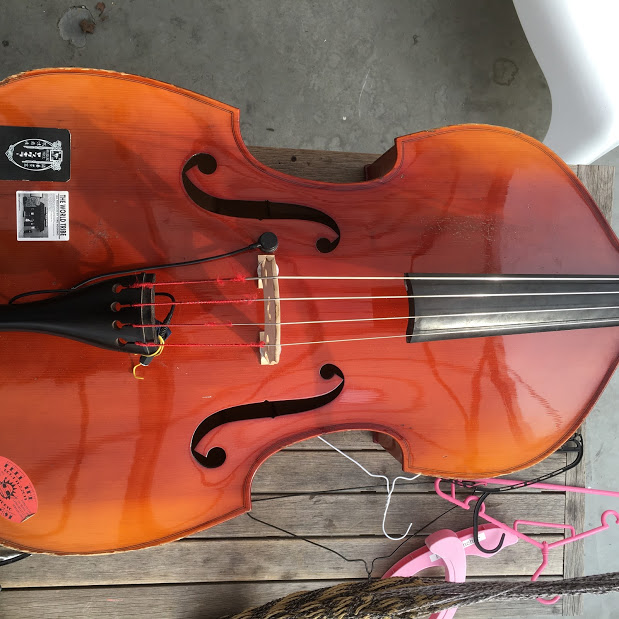
The bridge on my bass had shifted slightly, so I straightened it. Cold weather takes a toll on the instrument too.

Want Personalized Feedback on Your Playing?

This is exactly the kind of thing that’s hard to fix alone — and where having a teacher makes all the difference.

At Line on Bass, I offer an online lesson service where you send me a video of your playing, and I give you specific, detailed feedback — every single day if you want.

Students from around the world are using this to fix exactly these kinds of issues and steadily improve their jazz bass skills.
Check Out the Lesson Service →

Posted on Leave a comment

1st Walking Bass Showcase: Student Performance Report

On Sunday, November 27, 2016, we held the very first Walking Bass Showcase.

The 1st Walking Bass Showcase

The Walking Bass Showcase is a student recital event open to everyone taking lessons with me.

I had been planning it since summer, and the day had finally come.

Here’s how the whole day went.

10:00 AM — Setup and Departure

At 10 in the morning, my student M came over to help haul gear.

It was a rare, perfectly clear day. So naturally:

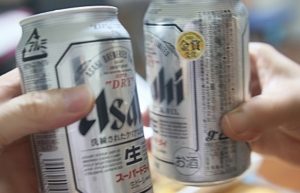
Cheers. Asahi and Jagarico in front of the FamilyMart at 10 in the morning.

We used to do this kind of thing all the time back in the day.

11:00 AM — Venue Setup

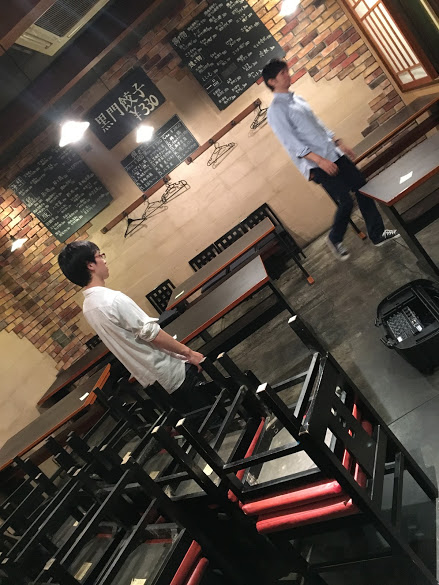
For this event, we rented out a small izakaya bar called Kuromon Ichiba in Ueno exclusively for the day.

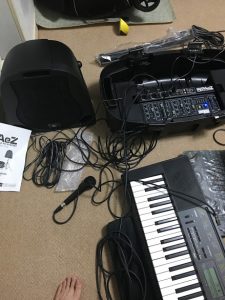
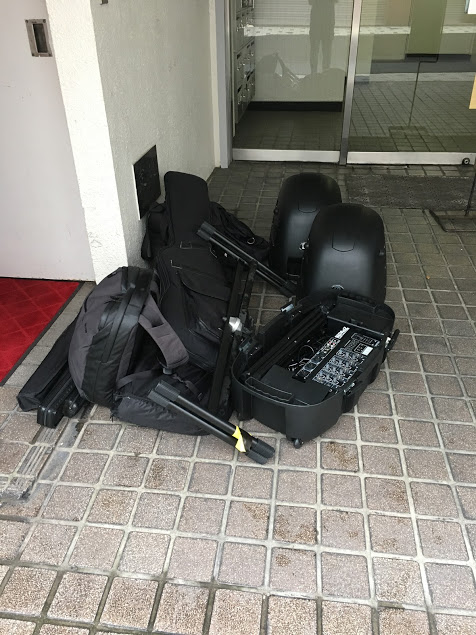
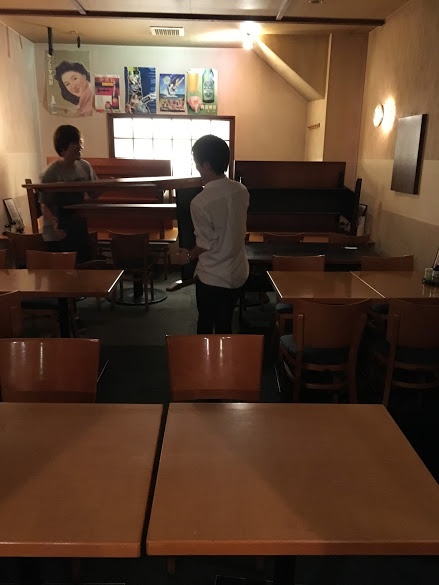
It had no music setup whatsoever, so we brought in a portable PA system, moved tables out of the way, lined up chairs, and spent a while figuring out how everything should go.

Where should the keyboard go?

How about here?

How does the volume sound?

Too quiet?

We kept going back and forth like that, trying things out as we went.

I’d always been on the player side of things, so getting a little taste of what it’s like backstage was eye-opening.

12:30 PM — Musicians Arrive

The musicians who joined us as the house rhythm section were:

Guitar — Shintaro Masuda
Drums — Yu Yamamoto

Both of them are musicians I’ve worked with for years — absolutely solid and reliable.

1:00 PM — Rehearsal Begins

Sound check started at 1:00.

We ran electric bass, guitar, and piano through a portable PA system (CLASSIC PRO PAeZ) I’d purchased from Sound House. For upright bass, we tried running a monitor feed, but the acoustic sound was so much better that we just played it without amplification.

After sound check, people went out to grab lunch and had some free time before the show.

Since all my students do individual lessons, most of them were meeting each other for the first time. I was a little worried it might feel awkward and quiet — but:

Everyone started fueling up. Far from awkward — the room was already buzzing with conversation, practically feeling like an after-party before the show even started.

I was thinking, we haven’t even played yet — but went ahead and had another drink myself.

That’s jazz for you.

2:30 PM — Showtime

I hosted and MCed the event.

We had 9 bassists plus one full band — 10 bass players in total.

The songs performed were:

  • Isn’t She Lovely
  • Blues Work
  • Fly Me to the Moon
  • I’ll Close My Eyes
  • Softly as in a Morning Sunrise
  • Milestones
  • Autumn Leaves
  • Satin Doll
  • You’d Be So Nice to Come Home To
  • Fly Me to the Moon
  • The Days of Wine and Roses

Isn’t She Lovely

Made famous by Stevie Wonder, this one was performed as a bass duo.

M, the youngest performer at 19 years old, looked a little nervous up there.

Blues Work

Best known from Lou Donaldson’s recording, this one also went down as a bass duo.

A bluesy tune works surprisingly well as a bass duo!

Fly Me to the Moon

A jam session staple.

This performer tackled the bass melody head.

I’ll Close My Eyes

Another jam session classic.

The melody is so catchy and memorable — it’s one I used to listen to a lot when I was just starting out.

Softly as in a Morning Sunrise

A tune where that dramatic shift to the B section really stands out.

This one also featured the bass melody head!

Milestones

A modal jazz standard with the slightly tricky AABBA form.

The tempo was fast, but they pushed through to the end.

Everyone locked in.

(Though in the back, people were already drinking pretty steadily.)

Autumn Leaves

A true autumn classic.

This player had only started walking bass that summer — and made it all the way through a solo.

Satin Doll

The only woman in this group of active jazz students.

Satin Doll is catchy enough that beginners often tackle it early — but there’s a lot of depth to it once you dig in.

You’d Be So Nice to Come Home To

The Captain takes the stage. Helen Merrill’s recording is the famous one.

I have to say — the Captain was putting away drinks at an impressive rate. (laughs)

Fly Me to the Moon / The Days of Wine and Roses

The life-of-the-party crew shows up — and brings a full band.

This group also handled photography for the event. Thank you!

They’re a hardworking group — but they also drink like pros. The five of them knocked back roughly 60 drinks between them. (Estimated.)

Finale

To wrap up, the house musicians played a couple of tunes.

We played “A Child Is Born” and “Ornithology.”

After Party

We talked gear, technique, music — the kind of shop talk that gets more fun when there are a bunch of bassists all in the same room, which is a rare thing. It was a blast.

Thanks, Everyone

I went into it with a lot of nerves, but everything went smoothly without a single problem. I’m genuinely grateful.

Thanks to everyone who came out and performed!

We’ll definitely do a 2nd Showcase — so keep practicing until then. I will too.

Want Personalized Feedback on Your Playing?

This is exactly the kind of thing that’s hard to fix alone — and where having a teacher makes all the difference.

At Line on Bass, I offer an online lesson service where you send me a video of your playing, and I give you specific, detailed feedback — every single day if you want.

Students from around the world are using this to fix exactly these kinds of issues and steadily improve their jazz bass skills.
Check Out the Lesson Service →

Posted on Leave a comment

Live Report: A Jazz Night With Old Friends (Yoyogi Bar W, May 2017)

A live show report. May 21, 2017 — a jazz gig at Bar W in Yoyogi, Tokyo.

The Lineup

I was reunited on stage with two musicians I’ve known since I first got into jazz: guitarist Tsutomu Onogi and vocalist Akiko Konno. That was about seven years prior to this show.

Tsutomu was the first person who ever hired me for a jazz gig. Akiko came to visit when I was studying in New York. Playing with both of them again after so long — I was genuinely fired up going in.

Reviewing scores before the show

Our schedules rarely line up, so we ended up doing everything — rehearsal, run-through, final tweaks — the same day. Rehearsal started at 4:30 PM and ran practically up to showtime. It was hot. We were tired before we even started.

Getting ready backstage

Rehearsal

I don’t usually do much rehearsal before gigs these days, so the process of working things out together as a group — deciding on intros, endings, specific hits — was actually fun. We figured things out through group messaging and then settled it in the room.

The Show

First set: five tunes including “Stella by Starlight,” “Bye Bye Blackbird,” and some originals by Tsutomu. We started as a guitar-bass duo, then Akiko joined for the second half.

First set — guitar and bass duo

Vocal joins the set

I was nervous at first. We hadn’t played together in years. But once we started, it came back quickly — muscle memory, the familiar way of playing together, the little cues that old collaborators pick up without talking about them.

Second set: four tunes including “I Hear a Rhapsody” and “Street Life.” A session segment was included. By this point the room was warm and I felt like I could play more freely.

Second set performance

Full group

After the Show

Post-show

Seven years ago, I wasn’t thinking about what the music would look like seven years later. And honestly, I can’t picture what it’ll look like seven years from now — or even next year. But seeing the same people still at it, still serious about it, and being able to share a stage with them — there’s something in that I don’t have words for.

I’ve been playing live since high school. That means more than half my life has been spent doing this. I still doubt myself. I still have nights where I think I played terribly. I still get too loose after a good set.

But I want to keep caring about the people I play with and the notes I put down. That’s what I’m trying to hold onto.

Want Personalized Feedback on Your Playing?

This is exactly the kind of thing that’s hard to fix alone — and where having a teacher makes all the difference.

At Line on Bass, I offer an online lesson service where you send me a video of your playing, and I give you specific, detailed feedback — every single day if you want.

Students from around the world are using this to fix exactly these kinds of issues and steadily improve their jazz bass skills.
Check Out the Lesson Service →

Posted on Leave a comment

2nd Walking Bass Showcase: Student Performance Report

On June 25, 2017, we held the 2nd Walking Bass Showcase — a student performance event where the people taking lessons with me get up and play what they’ve been working on.

2nd Walking Bass Showcase

Setup Begins at 10 AM

June 25th — and it was raining.

One of my students came over to help me move equipment in the morning. We hauled the upright bass by train (a standard sedan taxi can’t fit one) and I took a cab with the keyboard, electric bass, and PA rig.

Loading in gear for the showcase

Setting Up from Scratch

The venue doesn’t have its own sound setup, so we built everything from the ground up.

Setting up the venue

Gear being assembled

Soundcheck

Pre-show chat

Having done this once before made setup faster. Rehearsal at 1 PM, doors open at 2:15.

Showtime

1. “Fly Me to the Moon”

Student performing Fly Me to the Moon

Performance shot

Student and teacher

This student takes lessons via video call, so the showcase was actually the first time we met in person. We started working together when walking bass was completely new to them, and here they were delivering “Fly Me to the Moon” cleanly from start to finish.

2. “My Romance”

Student performing My Romance

Performance

Performance

The youngest performer in the lineup, and their second time at the showcase. They performed “My Romance” including a Ray Brown-influenced bass solo. Sounded great.

3. “Moon River” + “Bye Bye Blackbird” + “Don’t Know Why”

Performance shot

Vocalist joining

Performance with vocalist

Performance

Full group performance

A vocalist joined for this set. Three tunes: “Bye Bye Blackbird,” “Don’t Know Why,” and “Moon River.” This student has started performing at live venues regularly — it’s all coming together.

4. “The Girl from Ipanema”

Student performing Girl from Ipanema

Performance

The classic Antônio Carlos Jobim tune performed in an upright bass + electric bass + drums configuration.

Full trio performance

The harmonics in the electric bass part were beautiful — clean and crystalline.

5. “Autumn Leaves” + “Bye Bye Blackbird”

Performance

“Autumn Leaves” in a piano trio, then “Bye Bye Blackbird” in a guitar trio.

Piano trio performance

Guitar trio performance

6. “But Not for Me” + “All the Things You Are”

Performance

Performance

Performance

A jazz club regular with a solid foundation in theory and ensemble playing. Both tunes were delivered with confidence — “But Not for Me” and “All the Things You Are.”

7. “Here’s That Rainy Day” + “Summertime” (Host Performance)

Host trio closing the showcase

Closed the evening with two tunes. Guitar: Shintaro Masuda. Drums: Yu Yamamoto.

Guitarist

Drummer

Bassist (Toru)

Wrap-Up and After-Party

Everything wrapped up by 5 PM. Everyone who performed did their best — first-timers came in confident, and those performing for the second time were noticeably sharper than before.

After-party

When a room full of bassists gets together for drinks after a show, you’d expect the conversation to be all about bass. Instead, somehow we ended up debating regional ramen styles from different parts of Japan.

A great day. Looking forward to the next one.

Want Personalized Feedback on Your Playing?

This is exactly the kind of thing that’s hard to fix alone — and where having a teacher makes all the difference.

At Line on Bass, I offer an online lesson service where you send me a video of your playing, and I give you specific, detailed feedback — every single day if you want.

Students from around the world are using this to fix exactly these kinds of issues and steadily improve their jazz bass skills.
Check Out the Lesson Service →

Posted on Leave a comment

The Night a Former Punk Rocker Played with a Grammy-Voting Pianist from New York

A New York pianist I’d been hearing about for years was coming to Tokyo for a tour, and somehow I ended up as the bassist for one of her Japan dates.

Playing with someone at that level isn’t something that happens every day — so let me tell you a bit about who she is.

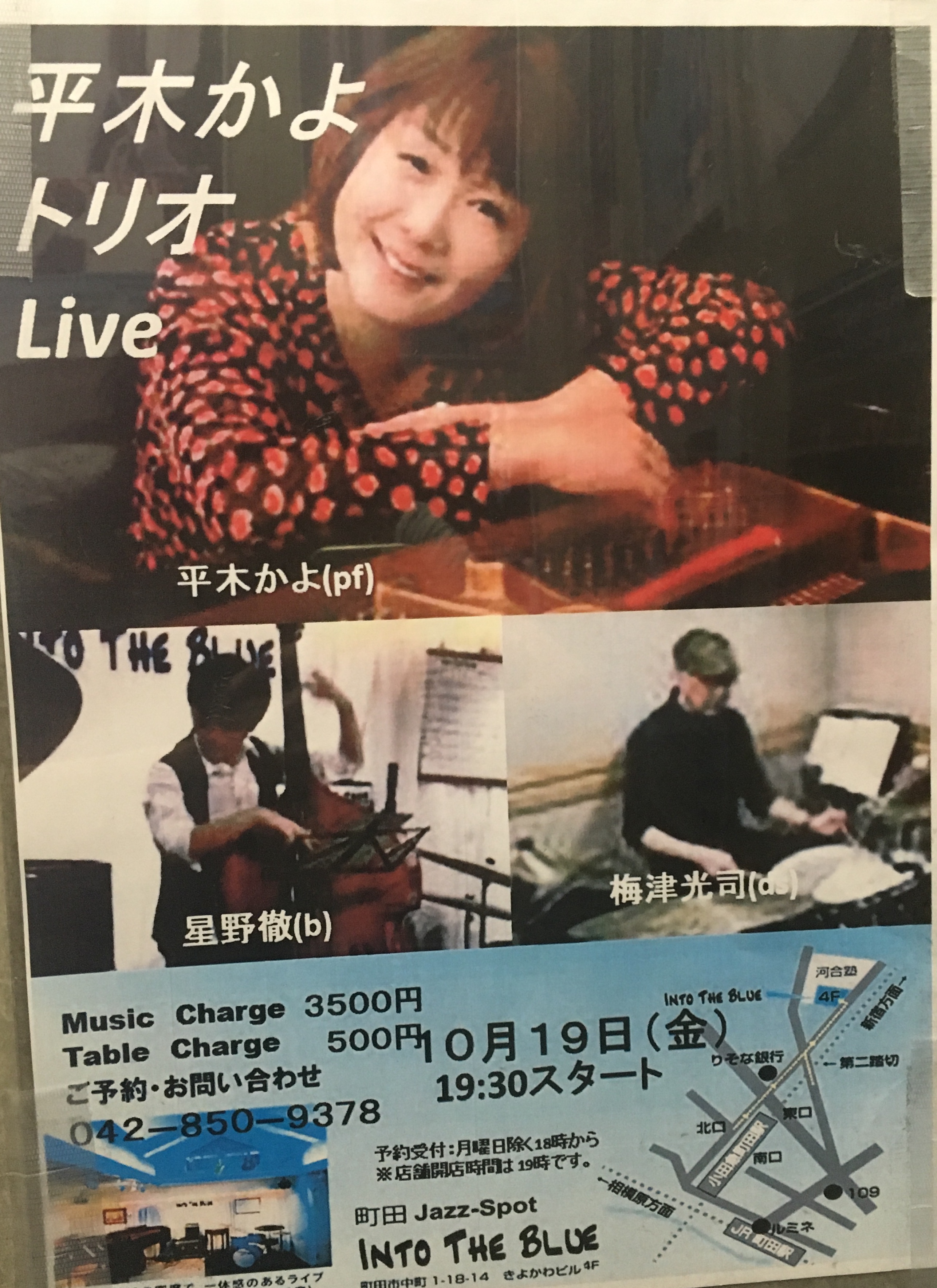
Live show flyer

About Kayo Hiraki

From her official profile:

Steinway Artist. Grammy Award voting member. Has been captivated by the New York jazz scene since 1988. House pianist at the legendary Greenwich Village club Arturo’s for over 24 years. Has led her own band at Blue Note New York and other prominent venues. Recently released her 6th album, Manhattan Sunset.

Blue Note New York. Grammy voting member. 24 years as a house pianist in Greenwich Village. That’s not a bio — that’s a career.

Meanwhile, my own credentials could be summarized in three words: former punk rocker.

That contrast was a little funny to sit with before the show. But regardless of where each of us came from, a performance like this — playing alongside someone with that kind of musical history — doesn’t come along often. I wanted to give it everything.

Collaborating with musicians who are operating at a high level has a way of raising your own game. The expectation level is different, the listening is sharper, and the communication happens faster. You find yourself playing things you didn’t know you could.

If you ever get the chance to perform alongside someone more experienced than you — take it.

Want Personalized Feedback on Your Playing?

This is exactly the kind of thing that’s hard to fix alone — and where having a teacher makes all the difference.

At Line on Bass, I offer an online lesson service where you send me a video of your playing, and I give you specific, detailed feedback — every single day if you want.

Students from around the world are using this to fix exactly these kinds of issues and steadily improve their jazz bass skills.
Check Out the Lesson Service →

Posted on Leave a comment

10 Songs You Absolutely Need to Know Before Going to a Jazz Session

This article is written by Toru Hoshino, a jazz bassist and instructor based in Japan who teaches online lessons to students worldwide.

Today’s topic is: 10 songs you absolutely need to know before you go to a jazz session.

Many of you are probably familiar with the famous Japanese fake-book “JAZZ STANDARD BIBLE,” which collects over 200 songs commonly played at jam sessions.

Not every one of those 200 songs gets played at every session, though. Within that book, there’s a smaller core set of tunes that come up again and again.

This time, based purely on my own experience, here are 10 songs I personally find come up the most often at sessions, each with a quick comment.

They’re all great tunes, so I’d encourage you to look them up and give them a listen.

10 Songs You Absolutely Need to Know Before Going to a Jazz Session

・All The Things You Are

A tune with frequent key changes. Between the signature intro and its unusually long form, it took me a while to get comfortable with it when I was starting out.

・But Not For Me

Known for its catchy, memorable melody.

・The Days Of Wine And Roses

A jam-session staple that comes up constantly.

・I’ll Close My Eyes

A slightly wistful melody. Someone always seems to call this one early in a session.

・It Could Happen To You

Known for its chromatic chord movement right from the start.

・Just Friends

Notable for shifting from B♭ major to B♭ minor early in the form.

・On Green Dolphin Street

Distinctive for its rhythmic shift — the A section has a Latin feel, while the B section swings.

・Softly As In A Morning Sunrise

The tune where someone always says, “Hey, can you start the intro on bass?”

・Stella By Starlight

A beautifully emotional melody, but the chord changes made absolutely no sense to me when I first encountered them.

・There Will Never Be Another You

Another one that almost always gets called early in a session. The melody is easy to pick up.

None of these are tunes that non-musicians would generally recognize.

Honestly, I didn’t know a single one of these songs before I started going to jam sessions myself. But this year, especially from autumn onward, I went to a lot of sessions around Sapporo, and these same songs came up at pretty much every single venue.

I’d guess these are pretty much universal standards across jam sessions everywhere.

If you’re thinking about going to your first session, definitely check these out.

A Video Worth Watching Alongside This

I put together a video playing through 10 classic jazz standards, complete with sheet music.

Many of the songs are different from the ones listed above, but if you want to start working on your walking bass, it’s worth checking out too.

Watch the video here

Want Personalized Feedback on Your Playing?

This is exactly the kind of thing that’s hard to fix alone — and where having a teacher makes all the difference.

At Line on Bass, I offer an online lesson service where you send me a video of your playing, and I give you specific, detailed feedback — every single day if you want.

Students from around the world are using this to fix exactly these kinds of issues and steadily improve their jazz bass skills.
Check Out the Lesson Service →

Posted on Leave a comment

Jazz Ballads That Come Up Most Often at Jam Sessions

Today I played through some jazz ballads that come up often at jam sessions.

Jazz Ballads That Come Up Often at Jam Sessions, Pulled From a Standard Fake Book

My criteria for “comes up often” is simple: over roughly the last year of jam sessions, did I either play it myself, or hear another player call it?

· Body and Soul

· A Child Is Born

· Everything Happens to Me

· I Fall in Love Too Easily

· Left Alone
· Misty

· My One and Only Love

· Polka Dots and Moonbeams

· When I Fall in Love
· When You Wish Upon a Star

Those were the ones that came up the most.

I Played a Jazz Ballad Bassline

Here’s the bassline for “When You Wish Upon a Star.”

Walking Bass on Jazz Ballads

The main thing to keep in mind when playing a ballad is:

stick mostly to solid root playing, with the image of really letting each note ring out and sustain.

Ballads tend to be slow, and it’s tempting to add a lot of movement, but try not to disturb the mood of the tune — let the melody stay front and center.

Other Things to Keep in Mind for Ballads

Always Use the Same Chart as the Other Players

If you’re reading off a chart, make sure you’re using the same edition as the other players.

Different publishers can have different chords here and there, even within the same tune. It’s not unusual for a Real Book and an app like iReal Pro to disagree on the changes in a few spots.

Ballads are, by nature, slow.

Because you’re often holding down the root for a full bar at a time, any clash caused by a chord discrepancy is going to stick out a lot more than it would at a faster tempo.

Knowing When Not to Play Is Also a Skill

When a ballad opens with just piano comping under a sax quartet or similar, the bass doesn’t necessarily need to come in right away.

For example, on an A-A-B-A tune, you might leave the first two A sections to piano and the front line only, and have the bass enter at the B section instead. That kind of restraint can add real dynamics to the performance.

And if you happen to miss your entrance on the first A, don’t panic and don’t make a face about it — just hold steady and wait calmly for the next A or B section. (Speaking from experience. More than once.)

Hopefully this gives you something useful for your daily practice.

Want Personalized Feedback on Your Playing?

This is exactly the kind of thing that’s hard to fix alone — and where having a teacher makes all the difference.

At Line on Bass, I offer an online lesson service where you send me a video of your playing, and I give you specific, detailed feedback — every single day if you want.

Students from around the world are using this to fix exactly these kinds of issues and steadily improve their jazz bass skills.
Check Out the Lesson Service →

Posted on Leave a comment

What Is a Jazz Jam Session? A Beginner’s Guide to Joining One

This article is written by Toru Hoshino, a jazz bassist and instructor based in Japan who teaches online lessons to students worldwide. In this article, he shares why jazz jam sessions are the single best way to stay motivated and keep improving your walking bass playing.

Sessions are, in my opinion, the best way to stay motivated while working on your walking bass. Once you feel like you’ve gotten reasonably comfortable, go find a session and join in.

What Is a “Session”?

A jazz trio performing at a session

When a band books studio time, it’s almost always for a rehearsal — everyone shows up having already practiced a set list of songs.

A jam session is different. There are no rules set in advance — musicians simply show up and play together, improvising from scratch.

Bass, drums, guitar, piano, horns — pretty much any instrumentalist can join in. Every night, in cities all over the world, sessions like this are happening somewhere.

Why Sessions Are Great

You Make Musical Friends

Musicians hanging out after a session

There’s only so much motivation you can sustain practicing walking bass alone. Unless you’re in a band or have a gig or recital to prepare for, practicing every day with no clear goal in sight is genuinely hard.

That’s where sessions come in — they’re the fastest way to build a network of musical friends. Showing up once won’t instantly make you friends with everyone, but if you keep going back to the same session regularly, you’ll start recognizing faces, and before long you’ll have a real circle of people you know.

I still keep in touch with people I met at a session bar I used to frequent back when I was a complete beginner — six or seven years later.

Everyone Secretly Thinks They’re “Not Good Enough”

Some people avoid sessions because they think, “I’m still not good enough to play with real musicians.”

But the people who do show up to sessions aren’t flawless either — plenty of them are thinking the exact same thing about themselves.

You might look at someone and think, “Wow, that person is incredible, they’d never want to talk to someone like me.” But if you work up the nerve to actually talk to them, you’ll often hear something like, “Oh, I’m still pretty rough around the edges too — what kind of practice routine do you do?” The players who are seriously working to improve tend to be the most humble.

You Can’t Quit Even When You Want To

Could you sit at home alone, set a metronome going, and play walking bass lines nonstop for 15 minutes straight without stopping? Maybe if you’re feeling energized, but it’s genuinely tough.

At a session, though, you can’t just stop — the other players keep going, so you have to keep up. Sometimes you’ll end up playing a single blues tune for 20 minutes or more. Being in an environment where “your hands have to keep moving no matter what” is exactly what makes you better.

You Can Record Yourself and Actually Listen Back

A session lets you hear how your sound fits into an ensemble with other musicians — something you simply can’t check on your own.

As long as it’s not an ear-blastingly loud rock show, the default voice recorder on your phone is more than good enough to capture a usable recording. You might think your playing was a disaster in the moment, only to listen back and realize it wasn’t half bad. Listening to your own playing objectively is one of the fastest ways to improve.

Sometimes Opportunities Find You

Bassists are a rare commodity in the jazz and blues session scene. In a major city it’s not so bad, but head out to a smaller town and you might find there’s no bass player around at all. Show up at sessions regularly, and you may well get approached with, “Hey, I’ve got a gig coming up — would you be up for playing bass for it?”

How to Find a Session

Search for “[your city] + jam session” and see what comes up. Even a single city can have close to a hundred regular sessions. Most don’t require a reservation — you can just show up with your instrument at the address listed on the venue’s website, and beginners are welcome to join in.

Some venues even keep a house bass — upright or electric — on hand, so you can stop by straight from work even without your own instrument. (Always check directly with the venue to confirm whether a house instrument is available.)

How a Typical Session Works

Most sessions charge a cover fee of around $7–15 USD just to walk in the door (sometimes that includes a drink, sometimes it doesn’t — it varies by venue).

You’ll usually write your name and instrument on a sign-up sheet, and then the staff or the “host” — typically a professional player handling the rhythm section — will call you up: “Okay, [your name], you’re up next.”

At a lot of venues, it’s entirely normal for every player on stage to be meeting each other for the very first time.

Advice for Beginners Joining a Jam Session

If you’re a beginner, don’t try to hide it.

Just say it plainly before the tune starts: “This is actually my first session,” or “I only know how to play this one tune.”

Every host and experienced player went through that exact same stage themselves at some point, so they understand exactly how nerve-wracking it feels to be a beginner walking in.

Often they’ll adjust the tempo or pick something easier to accommodate you. What doesn’t go well, on the other hand, is hiding the fact that you don’t know a tune and then having the whole thing fall apart once it actually starts. (Trust me — I’ve lived through that scenario more times than I’d like to admit.)

A closing thought

The first time I ever went to a session, I was 26 years old.

A musician friend took me to a session bar in Tokyo. At the time I was a pink-haired punk rocker who had never once played from a chord chart in my life. I’d lugged my bass all the way there, but once I got a look at what was happening, I had no idea what was going on — I never even opened the case.

I still remember a drunk older guy needling me: “You call yourself a musician and you can’t even play a blues?”

It stung, and facing that kind of moment head-on isn’t easy. But I still believe, even now, that there’s something real waiting for you on the other side of pushing through it.

Want Personalized Feedback on Your Playing?

Sessions will push you to keep your hands moving and your ears open, but knowing exactly what to fix in your own playing is a different challenge entirely — and that’s where outside feedback becomes invaluable.

This is exactly the kind of thing that’s hard to fix alone — and where having a teacher makes all the difference.

At Line on Bass, I offer an online lesson service where you send me a video of your playing, and I give you specific, detailed feedback — every single day if you want.

Students from around the world are using this to fix exactly these kinds of issues and steadily improve their jazz bass skills.
Check Out the Lesson Service →