This article is written by Toru Hoshino, a jazz bassist and instructor based in Japan who teaches online lessons to students worldwide. In this article, he explains how to use chromatic approach notes the right way in a walking bass line.
Contents
What Is a Chromatic Approach Note?
A chromatic approach note is a note that approaches the root of the next bar’s chord from a half step below or above, like this:
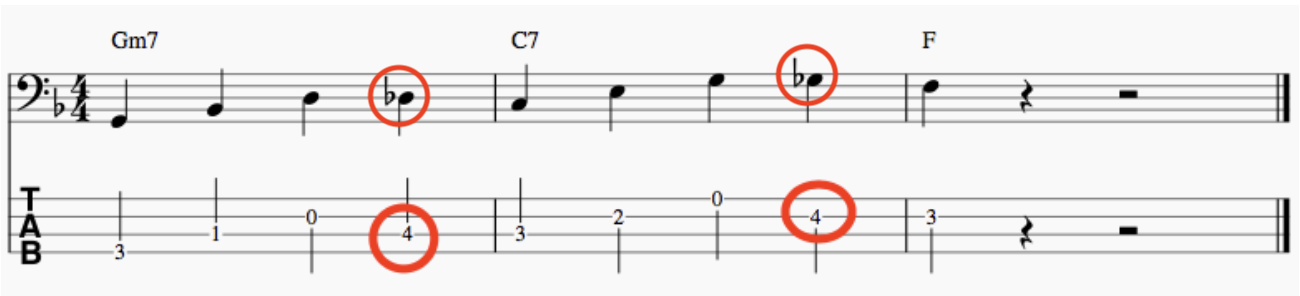
Used well, it gives your bass line a smooth, flowing sound. The “forward motion” and distinctly jazz-like quality that’s unique to walking bass changes a lot depending on how you handle this one device.
A Common Mistake
A common mistake is using a chromatic approach note even when the same chord continues for two bars in a row. For example, if a C chord lasts two bars, some players will play a “B” (a half step below) at the end of the first bar anyway.
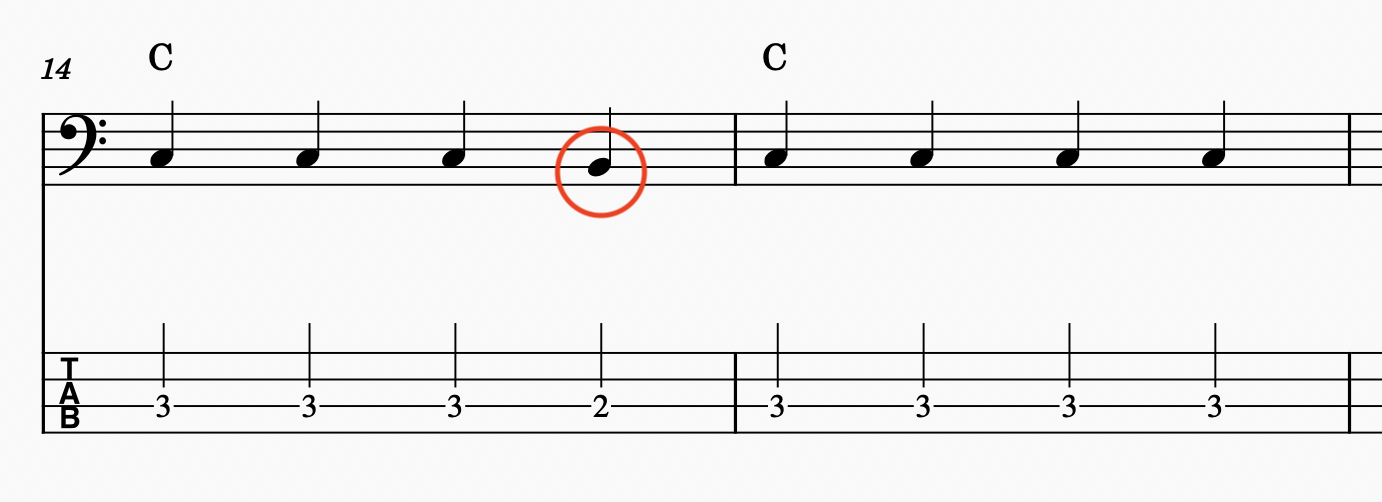
At a glance this might look like “approaching the next bar by a half step,” but since the next chord is still the same C, there’s no real harmonic destination to approach. It just ends up sounding like a stray note a step down, and the line loses its sense of forward motion.
How to Use It Effectively
A chromatic approach note really shines specifically where the chord is actually changing. For example, with a progression like C → B♭, playing “C → B → B♭” creates a line that flows naturally into the next chord.
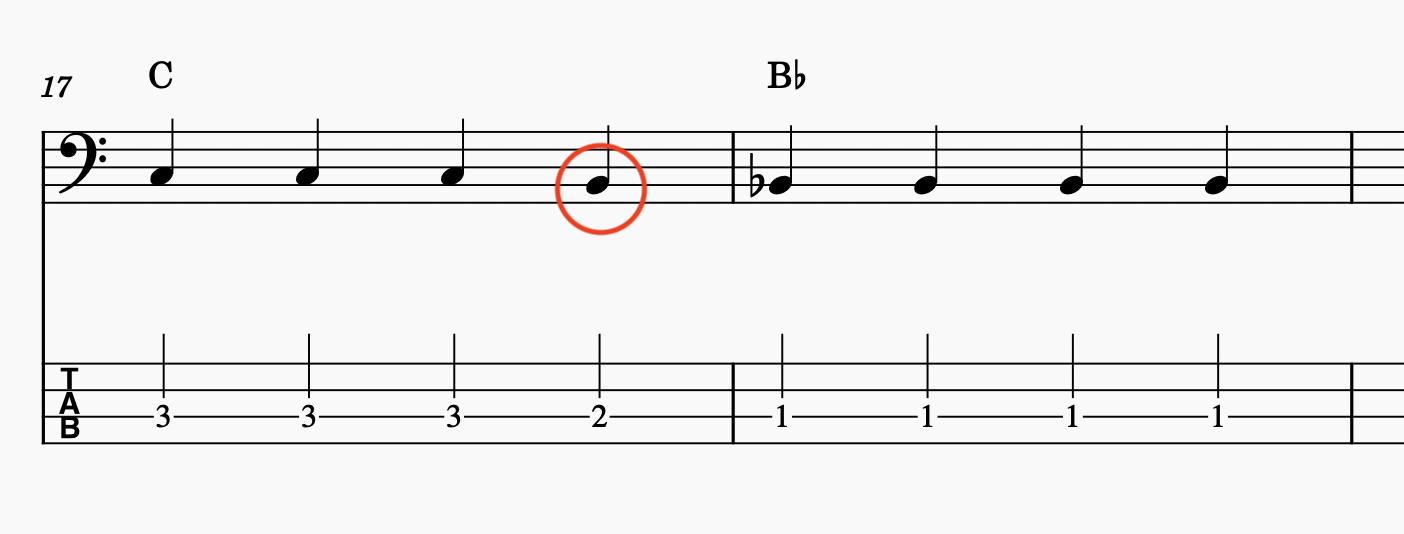
Using it with a clear sense of where you’re heading next makes the whole line smoother and more convincing.
Summary
Chromatic approach notes can completely change your sound, just by being conscious of where and why you’re using them. Don’t just drop one in out of habit — think about which chord you’re actually moving toward. If you want your walking bass to sound more natural and more distinctly like jazz, this is well worth paying attention to.
Hearing the difference between a meaningful approach note and an aimless one takes a trained ear — and that’s exactly the kind of detail a teacher can flag immediately.
Want Personalized Feedback on Your Playing?
This is exactly the kind of thing that’s hard to fix alone — and where having a teacher makes all the difference.
At Line on Bass, I offer an online lesson service where you send me a video of your playing, and I give you specific, detailed feedback — every single day if you want.
Students from around the world are using this to fix exactly these kinds of issues and steadily improve their jazz bass skills.