This is Part 2 of the Niigata-Toyama Tour Report. After a car accident on an icy road, the first show had still gone well. Now it was time to head to Toyama.
Contents
January 18 — A Day in Niigata
The morning after the accident, I went to a neurosurgeon to rule out whiplash. The MRI came back clear, which was a huge relief.
Okay — I survived, the show went fine, and tomorrow I’ll do it again. Let’s go.
Then I turned on the TV and caught the news: a major snowstorm had hit Tokyo, and severe weather was sweeping across Japan. Snow warnings in Niigata and Toyama, and a strong wind and wave warning around Kashiwazaki — the coastal city I was in.
Even worse: the train line between Kashiwazaki and Joetsu-Myoko, the route I needed to reach Toyama, had already announced it would be suspended the next day.
Seriously? There’s more? I can’t get to Toyama?
Not much I could do about it, so I spent the day practicing instead.
The windows started rattling with the sound of the wind.
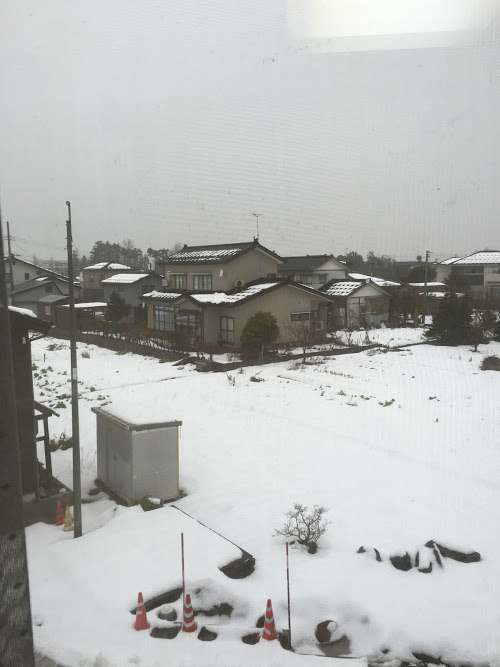
I sat with theory books, bow etudes, score analysis, and some lesson prep materials for about four hours.
January 19 — The Toyama Show
I woke up to the howl of a raging wind, right on cue with the forecast.
And sure enough — no trains between Kashiwazaki and Joetsu-Myoko. But I had a show to play. So I got in the car and drove into the blizzard anyway, inching along the coast in near-zero visibility. It took twice as long as normal, but I made it to Joetsu-Myoko Station.
That was genuinely terrifying.
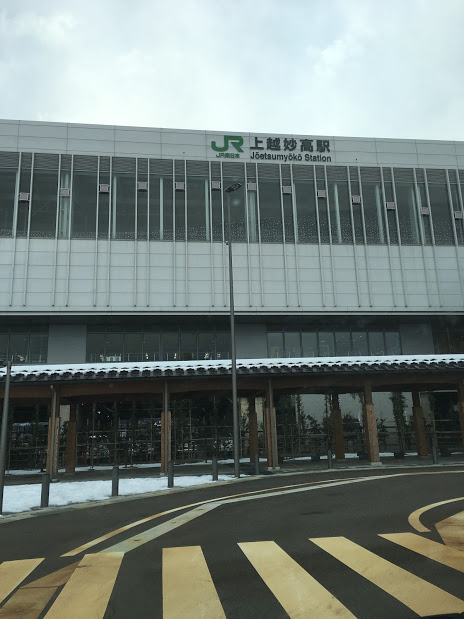
Joetsu-Myoko Station was built on the site of my grandfather’s old barbershop. The neighborhood got redeveloped, and a lot of familiar places disappeared with it — the tofu shop next door, the little grocery where I used to beg for gum. But the station itself is beautiful.
I had a bit of time before the Shinkansen, so I stopped by my grandfather’s new house nearby, said a quiet hello to the photo of my late grandmother on the shelf, and then headed for Toyama.
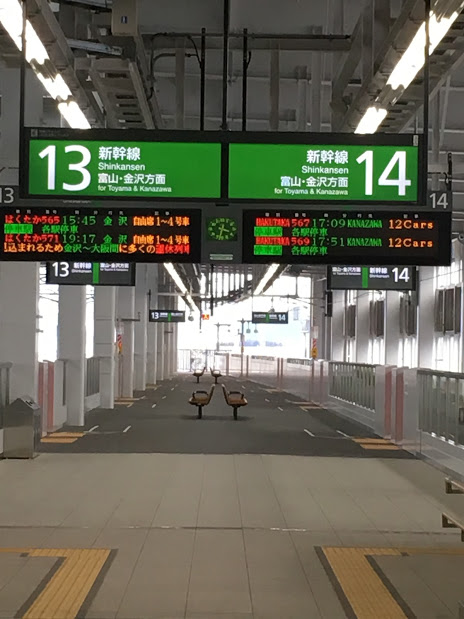
I hadn’t played in Toyama since the summer of 2014. And this was my first time on the Hokuriku Shinkansen. The train itself was stunning — but what really amazed me was this:
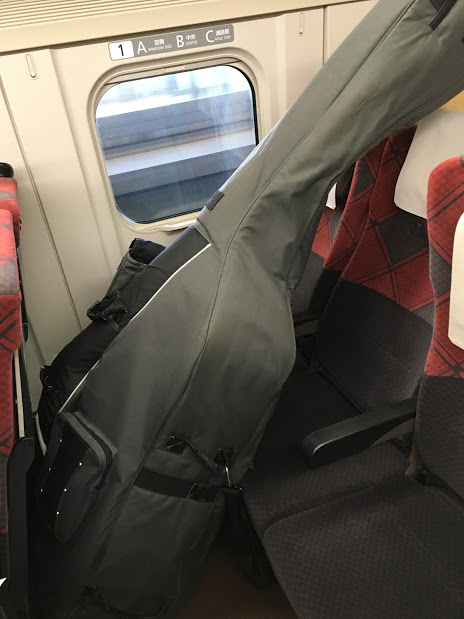
My contrabass fit in the seat next to me.
On the Joetsu Shinkansen, there’s never room for a bass in the car — you’re stuck in the vestibule no matter what. But here, there was enough space right at the seat. I was overjoyed.
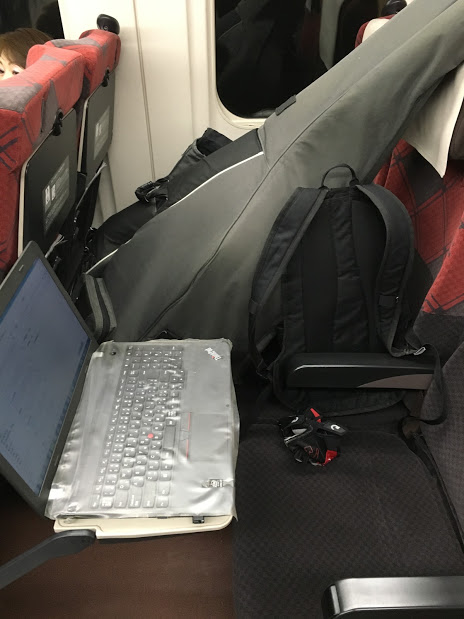
Mobile office: up and running. Freelancers can work anywhere on earth.
Arriving in Toyama
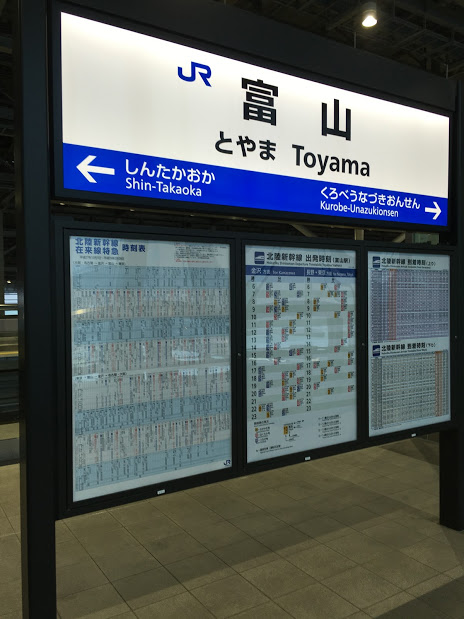
Joetsu-Myoko to Toyama: just 40 minutes. What used to take two hours by limited express felt like a miracle.
That evening’s show was a private event at a venue in Toyama City. My collaborator was Yui Iino, one of Toyama’s premier jazz pianists. We’d first met in New York in 2012 — she was part of a small jazz study group I was involved in, where a group of Japanese players who’d met at sessions would gather late at night each week at a studio in Astoria, Queens. Yui was one of the founding members. We’d last performed together back in 2014.
That New York circle eventually produced this:

“The World Tribe” — my first album as a leader. Yui’s musical sensibility is woven into it somewhere.
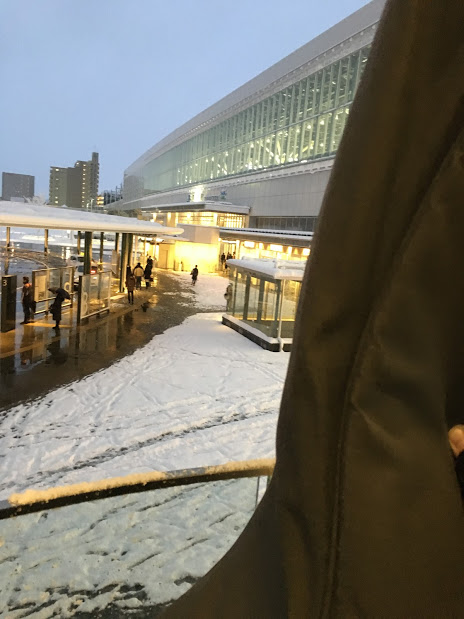
Toyama was under serious snow.
We’d arranged to meet at Inaricho Station, but when Yui arrived, we quickly discovered her car couldn’t fit the contrabass.
“Should we get a taxi?”
“Taxis are sedans — folding the back seat won’t work either.”
So we made an emergency call to a friend with a bigger vehicle. Thirty minutes waiting at a nearby department store, and our ride finally arrived.
Usually I have wheels attached to the bottom of my bass case and can roll it around. But there was too much snow to move on foot. One more thing I needed help with.
I kept getting saved by people on this whole trip. Traveling with an upright bass is genuinely a team effort.
We made it to the venue through the blizzard.
I wanted a beer — badly — but we had no setlist yet, so straight into rehearsal.
The Show — and “Beyond the Night Sky”
We built a setlist of jazz standards and also decided to throw in something from the pop world. We landed on a SMAP song, one of Japan’s most beloved pop groups.
The setlist (approximate order), decided in an hour of rehearsal between the two of us:
- Take the A Train
- St. Thomas
- Fly Me to the Moon
- Spain
- Anthropology
- Yozora no Mukō (SMAP)
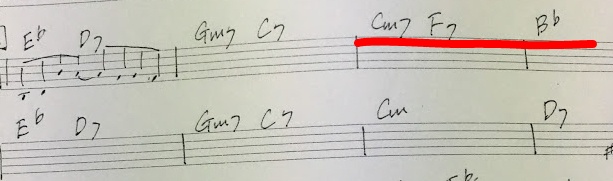
Transposing “Yozora no Mukō” to B♭ made the harmony surprisingly idiomatic for jazz. The verse has a clear ii-V-I, which is one of the most jazz-friendly progressions there is.
Here’s how the show looked:


Playing with someone you know well at that level — it’s its own kind of joy. The audience seemed to feel it too.
After the show, one of the guests came up and asked:
“What are you thinking about during a performance?”
I answered by drawing this:
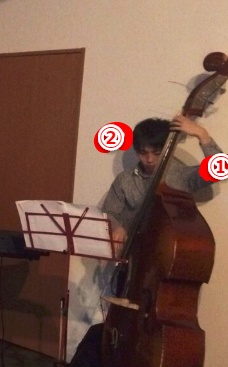
“There are two places where I’m present at once — here (①) I’m listening to the audience’s energy, and here (②) I’m listening to the pianist. My job is to stay tuned in to both, so I can respond instantly to whatever the room needs.”
That night we stayed at a friend’s sharehouse in the city. We ended up talking with the locals until around 3 in the morning.
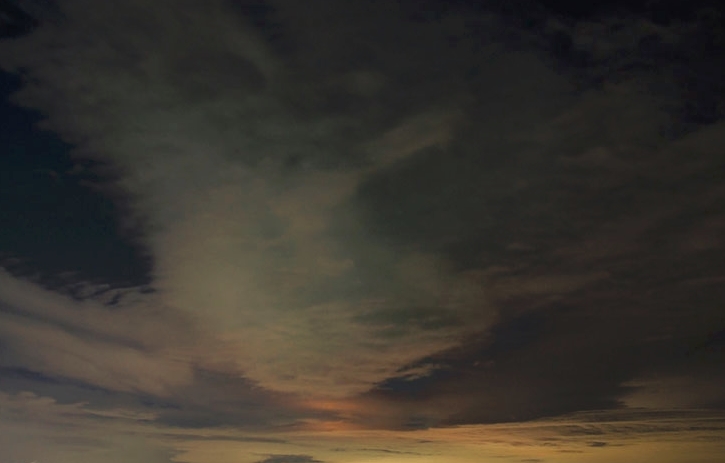
I cracked the window open before sleep. Cold winter air came in. The night felt very quiet after everything that had happened.
That’s the end of the tour report.
Postscript: This trip reminded me again that music isn’t something you make alone. So many people helped us through. I’m grateful every day that I get to play and teach — and I want to keep at it.
Editorial Note
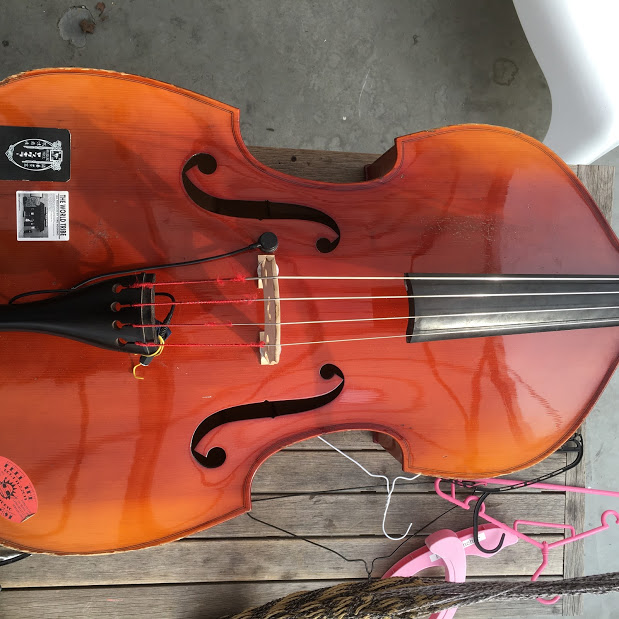
The bridge on my bass had shifted slightly, so I straightened it. Cold weather takes a toll on the instrument too.
Want Personalized Feedback on Your Playing?
This is exactly the kind of thing that’s hard to fix alone — and where having a teacher makes all the difference.
At Line on Bass, I offer an online lesson service where you send me a video of your playing, and I give you specific, detailed feedback — every single day if you want.
Students from around the world are using this to fix exactly these kinds of issues and steadily improve their jazz bass skills.