Welcome to Lesson 1 of the Introduction to Electric Bass series.
This first session covers what a bass is, what gear you need to get started, the names of its parts, and how sound is actually produced — everything a complete beginner needs before picking up the instrument for the first time.
Contents
What Does a Bass Sound Like?
Before anything else, have a listen. A bass works best through headphones or speakers — the low frequencies don’t come through well on a phone speaker alone.
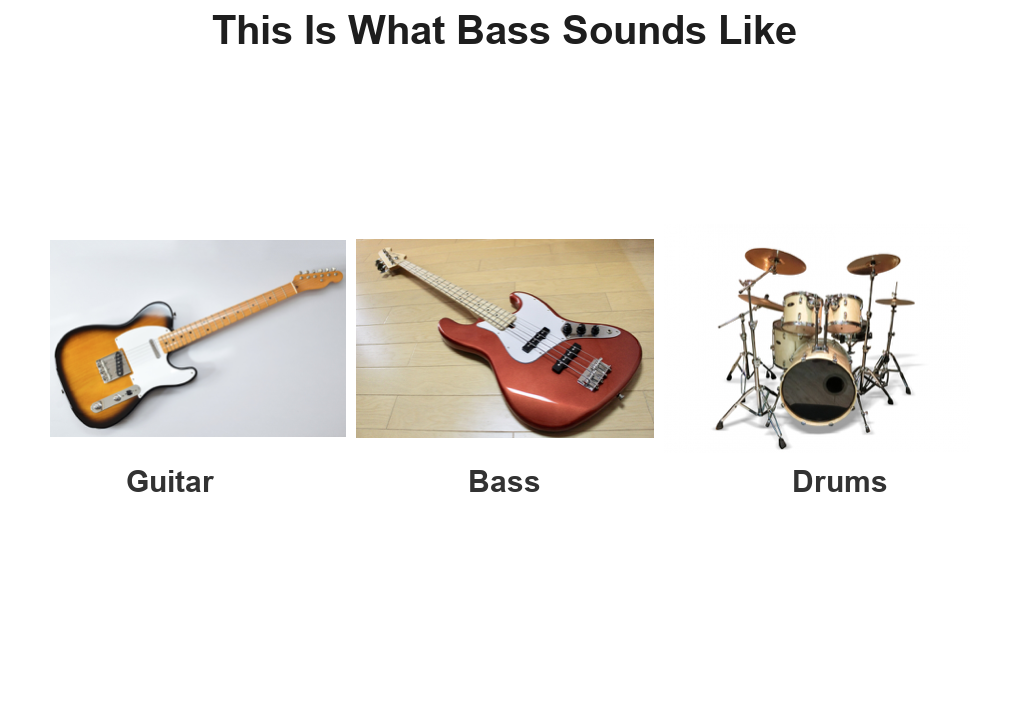
Guitar, Bass, and Drums together:
Guitar and Drums only — no bass:
The second version sounds thin, right? Bass is easy to overlook — it doesn’t carry the melody or headline the song — but it holds the entire ensemble together. Take it away and everything feels hollow.
What You Need to Get Started
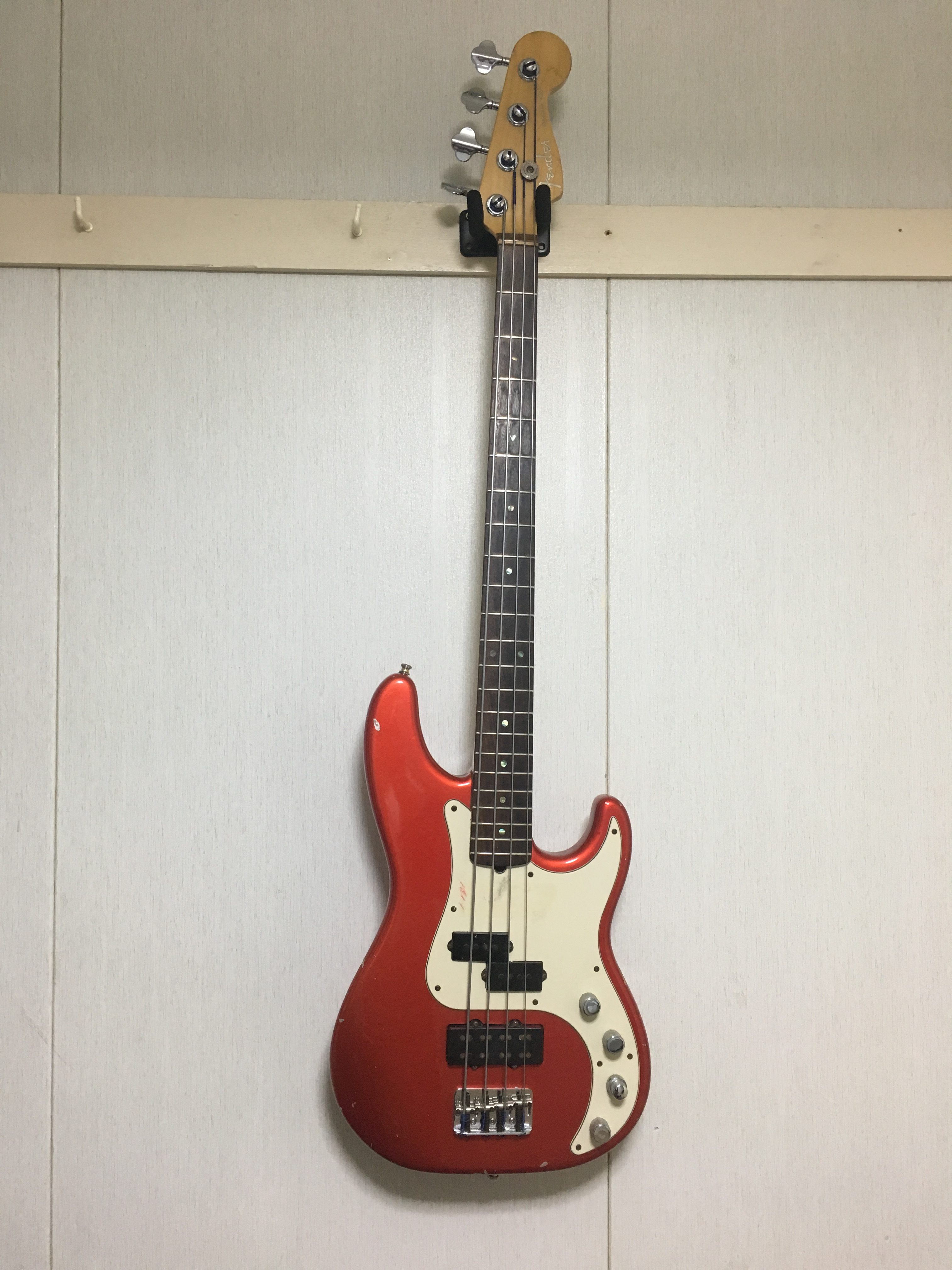
Bass Guitar
The main instrument itself. Everything starts here.
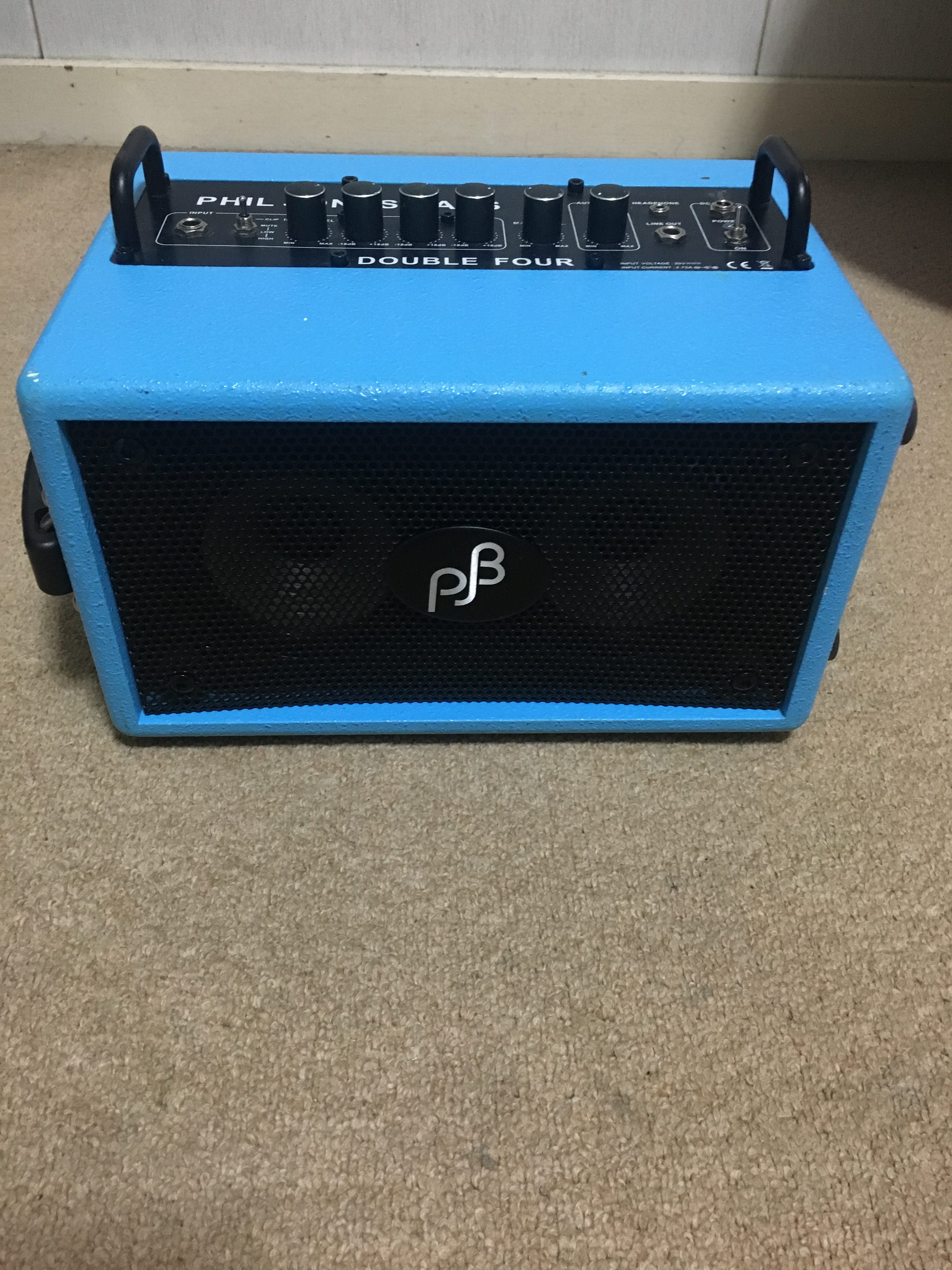
Amplifier
The amp outputs the sound from your bass. Without one, you won’t hear much at practice volume.
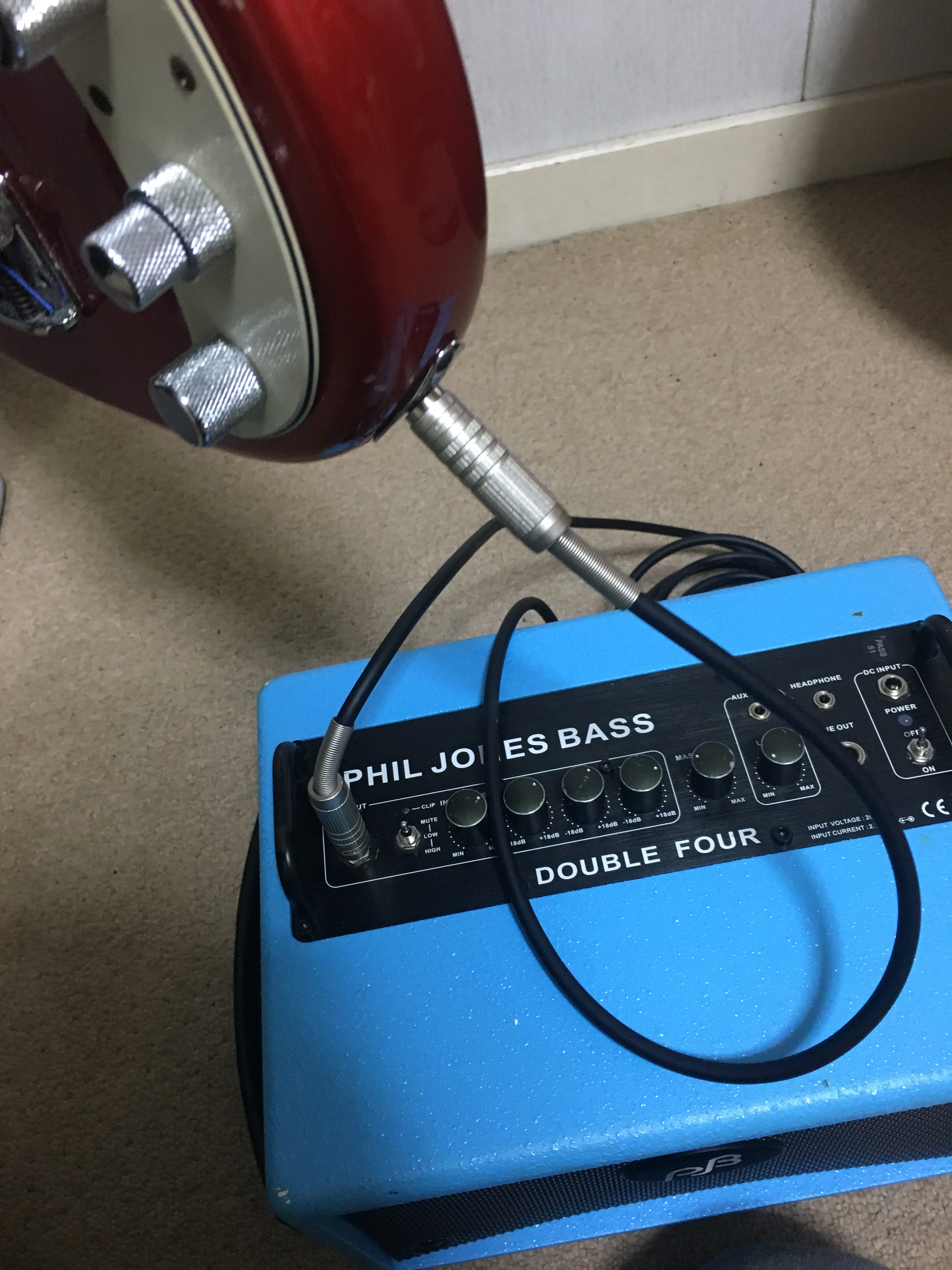
Instrument Cable (TS Cable)
The cable that connects your bass to the amp. Without it, no signal gets through.
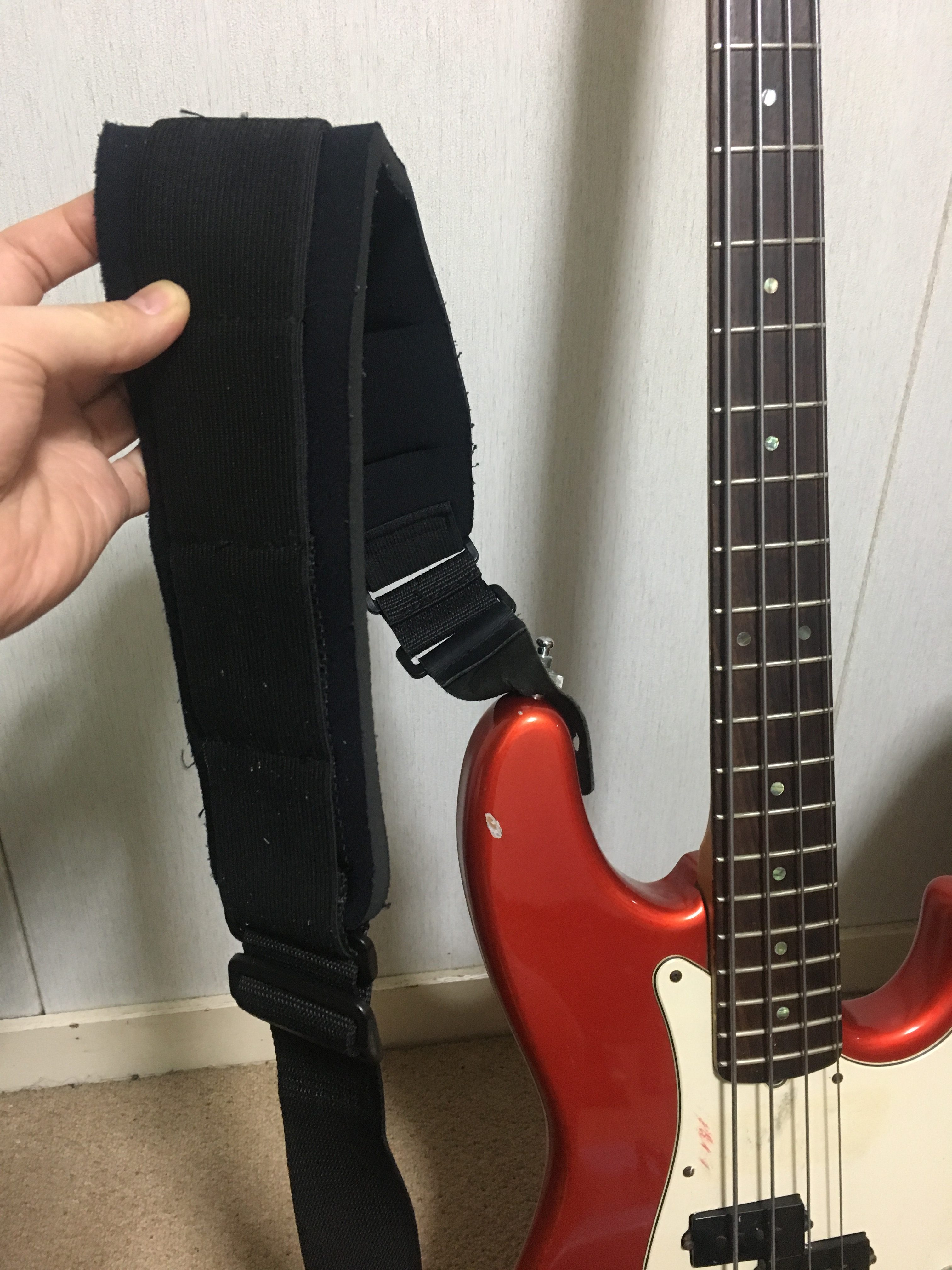
Strap
Lets you hang the bass from your shoulder and play standing up.

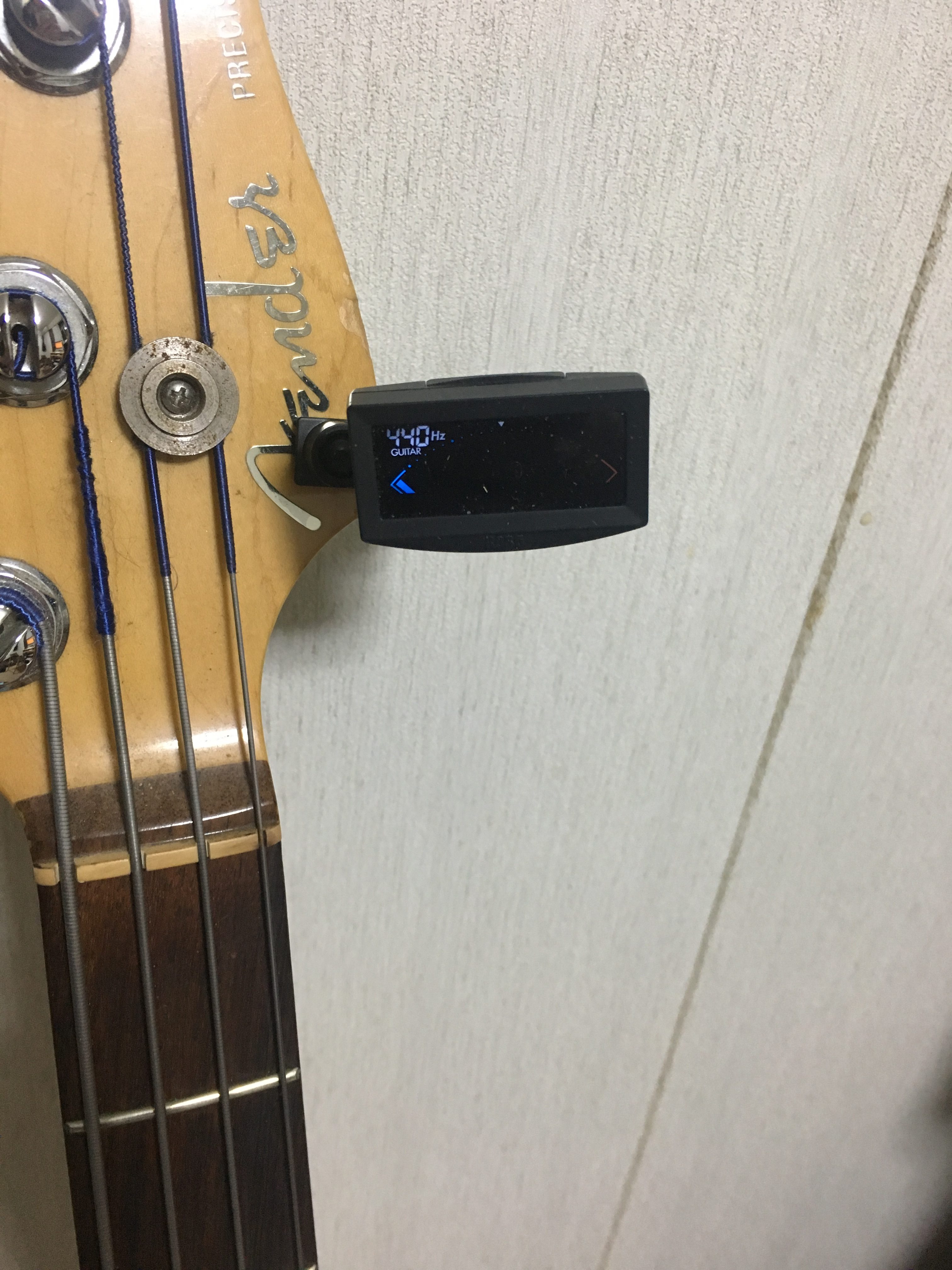
Tuner
For tuning the strings. Most beginners use a clip-on tuner that attaches to the headstock.
The strings themselves usually come pre-installed when you buy the bass. With these five items, you can make sound. Starter packs that bundle all of them together are a convenient option if you’re buying everything at once.
Parts of the Bass
You don’t need to memorize all of these right away, but they’ll come up as you progress:
- Headstock — the wide section at the top end of the neck
- Tuning pegs — the knobs on the headstock used to tune each string
- Nut — the small notched piece between the headstock and neck that holds the strings in place
- Neck — the long piece you grip with your left hand
- Frets — the metal strips across the neck; pressing a string behind one changes its pitch
- Strings — typically 4, tuned E–A–D–G (low to high)
- Body — the large, curved wooden section you rest against your body
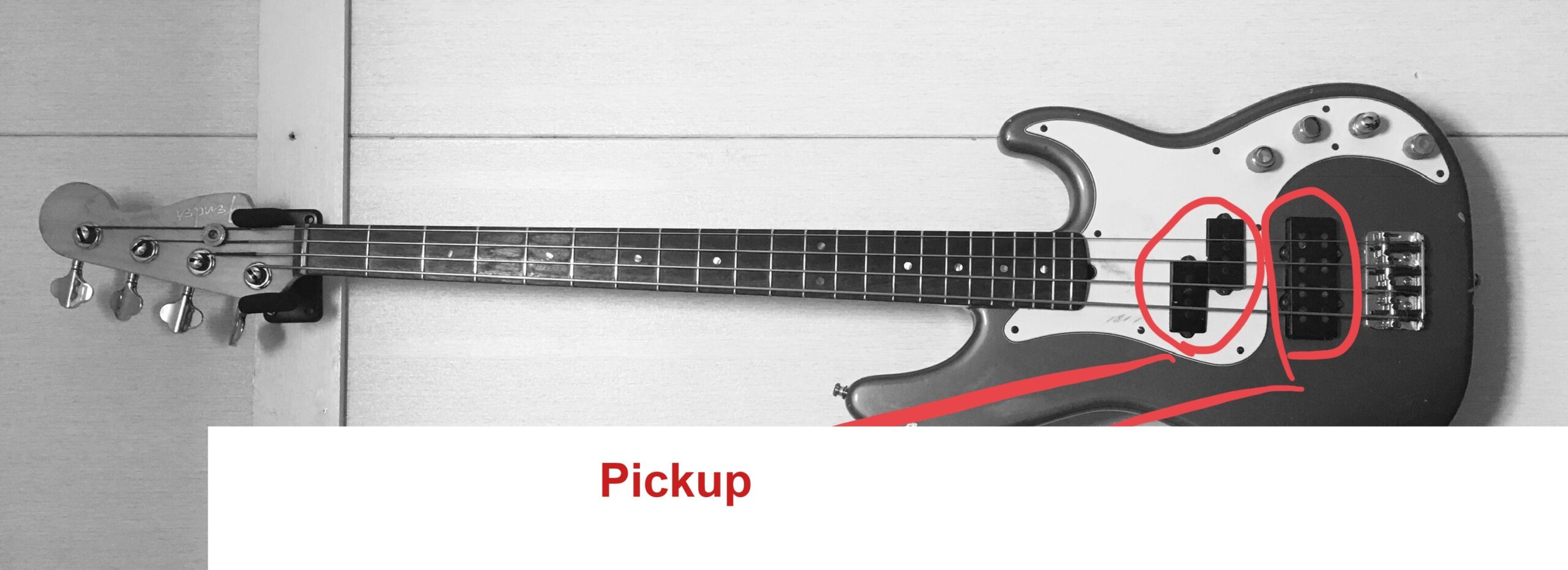
- Pickup — the magnetic sensor(s) on the body that detect string vibrations and convert them to an electrical signal
- Controls — knobs for adjusting volume and tone
- Bridge — anchors the strings at the body end
- Strap button — the pin where you attach your strap
How Bass Produces Sound
Plucking a string causes it to vibrate. The pickup — essentially a microphone built into the body — detects that vibration and converts it into an electrical signal. That signal travels through your instrument cable to the amplifier, which boosts it and sends it out as sound.
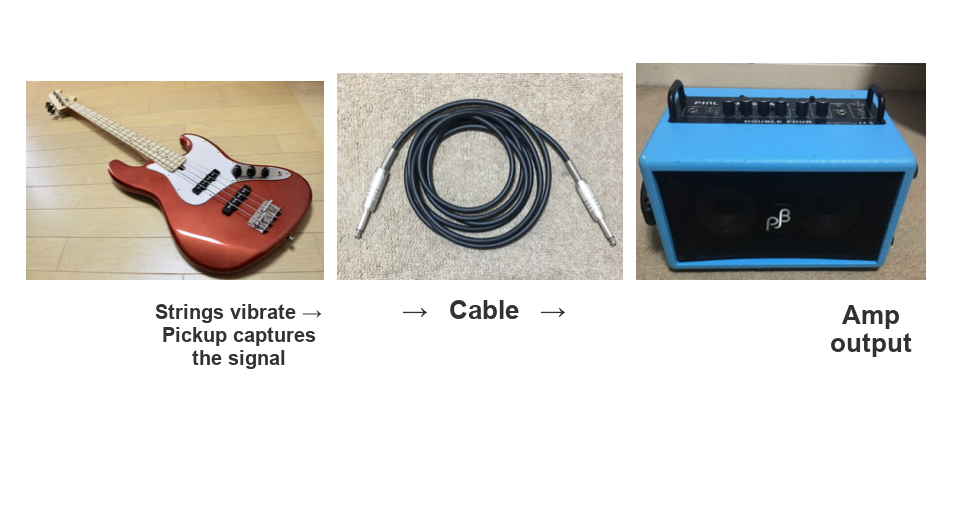
In order:
- String vibrates
- Pickup captures the signal
- Signal travels through the instrument cable
- Amplifier outputs the sound
Here’s a close-up of the pickup — the dark rectangular component circled in red:
Try Plucking an Open String
Before worrying about notes or chords, just pluck a string with nothing fretted on your left hand. It should sound something like this:
How you pluck the strings and how to use your left hand for fretting will be covered in the next lessons.
Want Personalized Feedback on Your Playing?
This is exactly the kind of thing that’s hard to fix alone — and where having a teacher makes all the difference.
At Line on Bass, I offer an online lesson service where you send me a video of your playing, and I give you specific, detailed feedback — every single day if you want.
Students from around the world are using this to fix exactly these kinds of issues and steadily improve their jazz bass skills.