Welcome to Session 3 of the Introduction to Electric Bass series.
This lesson covers left-hand form and chromatic exercises — one of the first things I have new students work on.
Contents
The Chromatic Exercise
The goal is simple: place each finger on consecutive frets, one at a time, and move across all four strings. It looks easy, but it’s a surprisingly effective drill for several reasons.
Why This Exercise Works
1. It gets you comfortable with the fretboard.
When you’re just starting out, even moving your fingers around the neck feels unfamiliar. The chromatic exercise forces you to walk your fingers across the frets repeatedly, and that repetition builds familiarity faster than almost anything else.

2. It stretches your hand.
In the beginning, your hand probably won’t spread easily across four frets — especially the gap between your ring finger and pinky, which gets very little use in daily life. This exercise targets exactly that.

3. It trains you to fret close to the fret wire.
Where you place your finger matters. Too far back, and the note buzzes. Right behind the fret wire is where you want to be.
Not here:
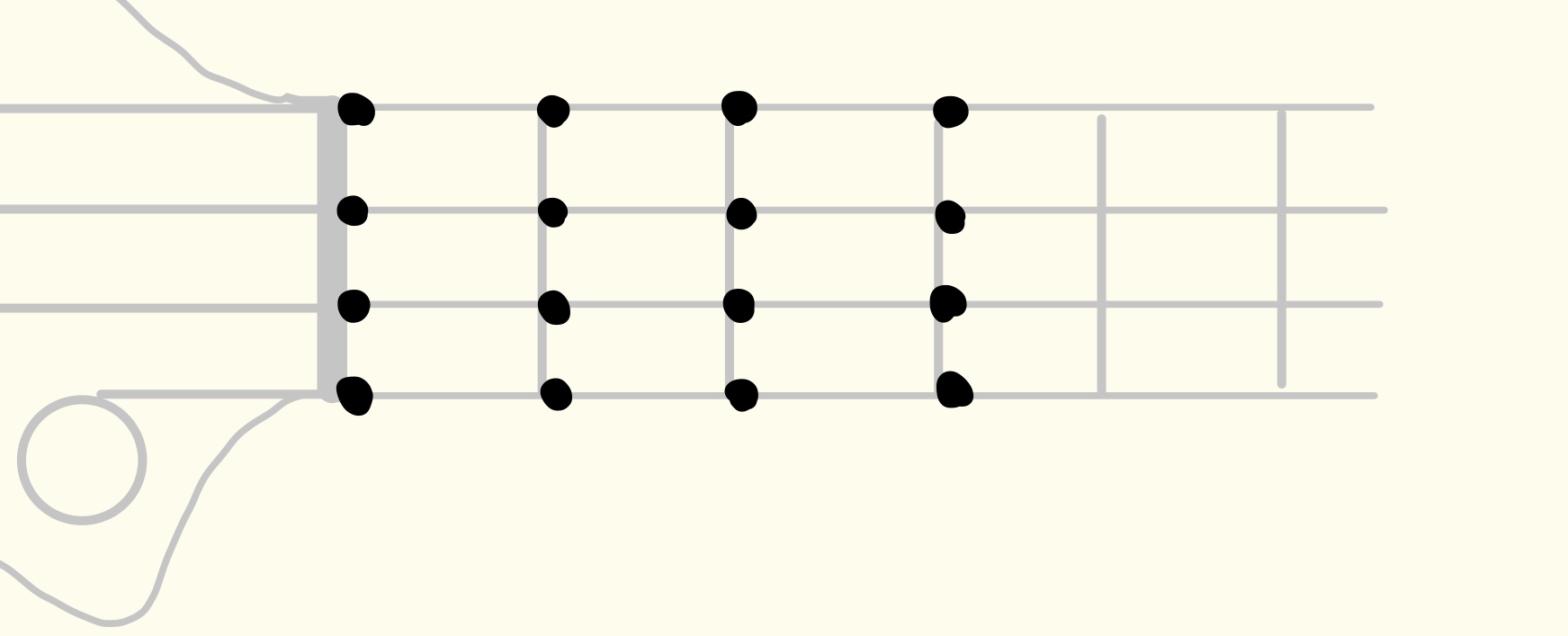
Not here either:
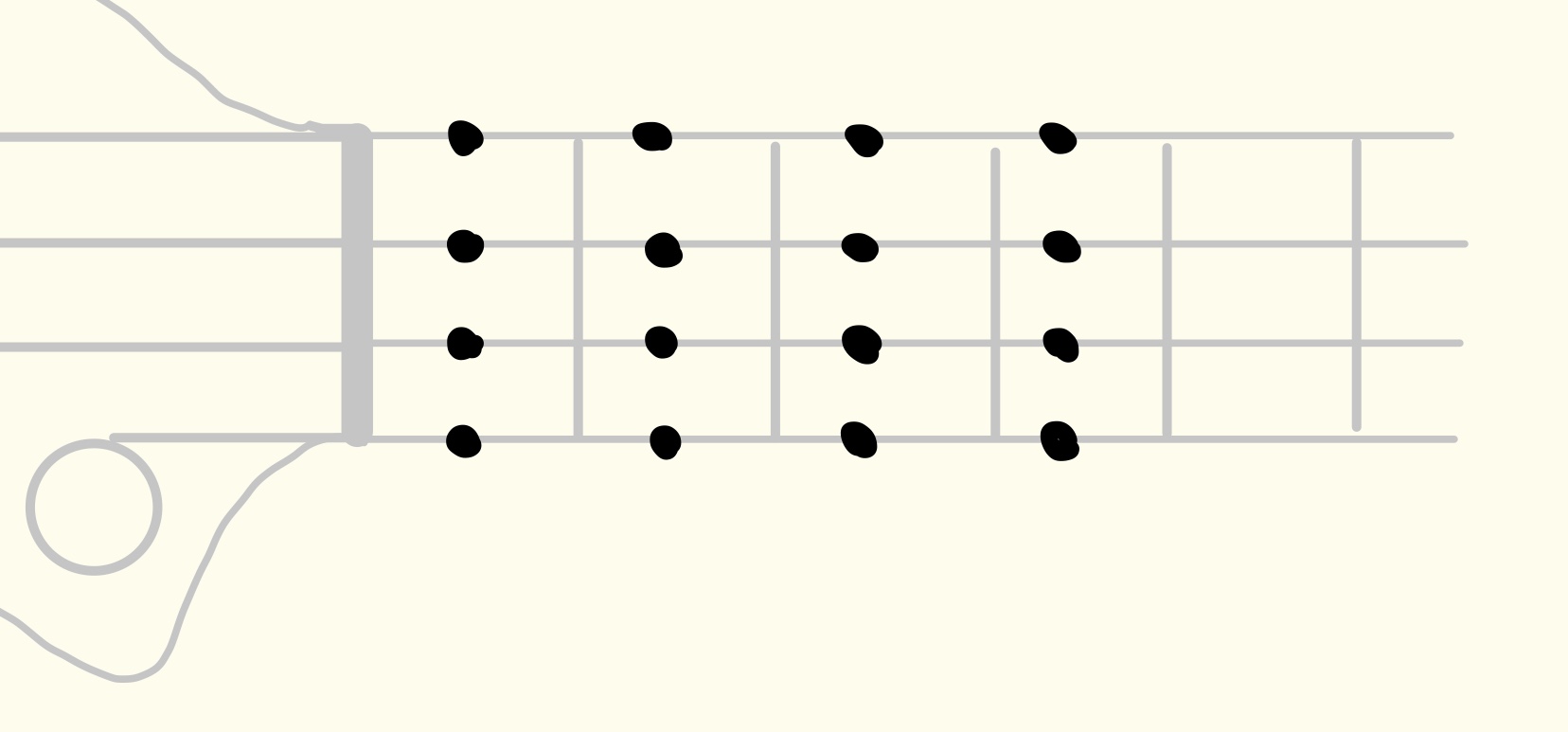
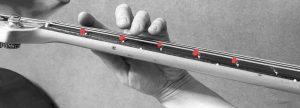
Here — just behind the fret wire — is where you get a clean note with minimal pressure:

From your playing perspective, it looks like this:
4. It trains your rhythm.
Once you can do the exercise cleanly, use a metronome. Even slow tempo with a click builds the internal pulse that everything else in your playing depends on.
5. It works as a warm-up.
Just like an athlete stretches before a game, your hands need to warm up before you play. A few minutes of chromatics at the start of any practice session gets your fingers ready.
It’s Harder Than It Looks
I want to be upfront: this exercise looks simple in videos, but beginners often can’t get clean notes right away. That’s completely normal. Here’s how to approach it:
Start Without a Metronome
Don’t try to match a tempo from day one. Go as slowly as you need to — just focus on getting each note to ring clearly. Watch your hand, check your finger placement, and move deliberately.
When You’re Ready, Try One Note Per Two Clicks
Once you can move through the exercise cleanly at a slow pace, turn on a metronome and play one note per two beats. This gives you plenty of time between notes to set your finger properly.
Don’t Try to Cover All Four Frets With One Hand Position
This is the most common mistake, especially for people with smaller hands. You don’t need to stretch your entire hand across four frets all at once.
Instead: play your index and middle fingers, then shift your thumb slightly toward the ring and pinky side before placing those fingers.

Then shift your thumb toward the pinky side:
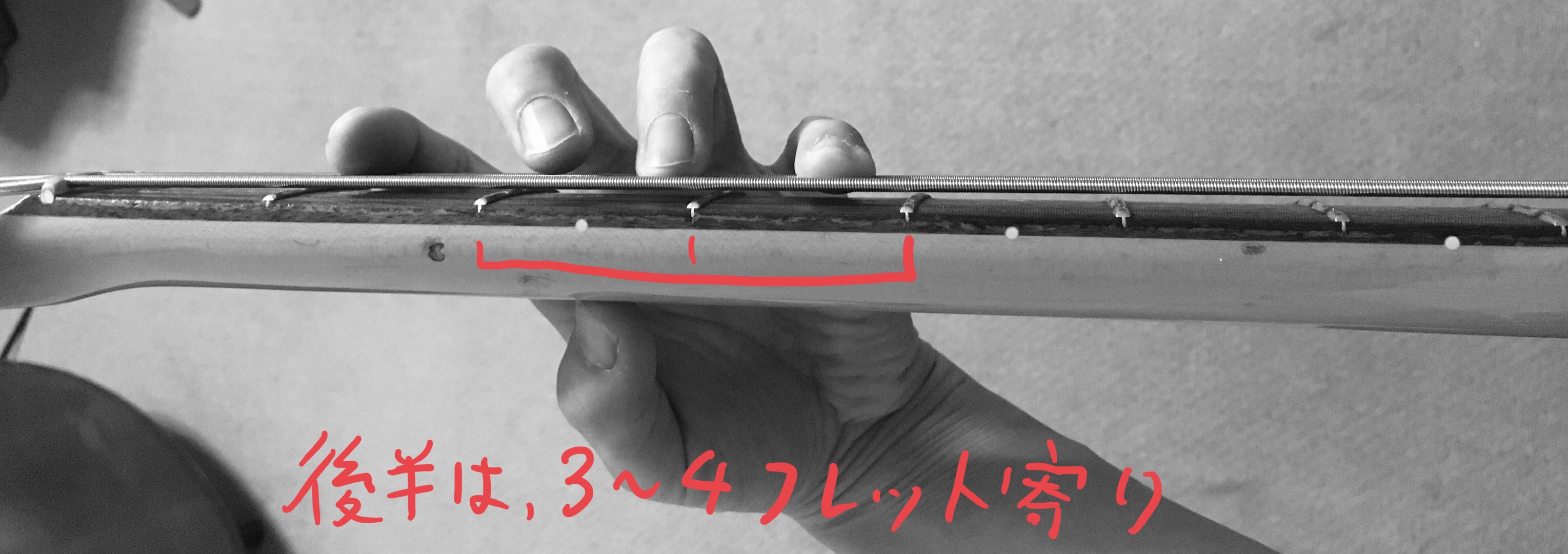
Think of it as a small thumb slide — not a full hand stretch. This makes the exercise much more manageable and keeps your technique sustainable as you build strength.
How Much Should You Practice?
It depends on your schedule, and it changes as you progress. But if you’re a complete beginner — working a regular job, weekends off, never practiced bass before — the most important thing isn’t how long you practice. It’s whether you practice at all.
Start with 10 minutes a day. That’s it. Build the habit first, then the duration.
Consistent short sessions beat occasional long ones. Once practice becomes a natural part of your day, you can extend it naturally.
Want Personalized Feedback on Your Playing?
This is exactly the kind of thing that’s hard to fix alone — and where having a teacher makes all the difference.
At Line on Bass, I offer an online lesson service where you send me a video of your playing, and I give you specific, detailed feedback — every single day if you want.
Students from around the world are using this to fix exactly these kinds of issues and steadily improve their jazz bass skills.