Hi, I’m Toru Hoshino (@jazzbassisttoru), a bass instructor.
Today’s lesson is for beginners who want to build better bass lines.
“I don’t really understand the theory, but I want a bass line that at least sounds like it’s moving.”
If that’s you, there’s one note you can add that will get you there immediately. It’s the 5th.
Just add the 5th to the root note of the chord, and your bass line will instantly feel like it’s moving. Let’s look at how to use it.
Contents
A Root-Only Bass Line vs. a Bass Line With the 5th
Example 1: Adding the 5th
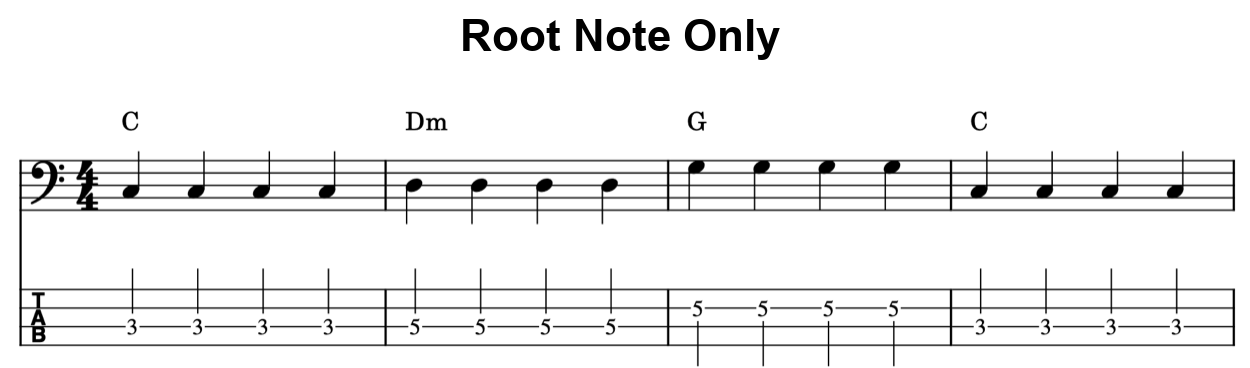
First, here’s a bass line played using only the root of each chord.
And here’s the same progression, but with the 5th added to the root.
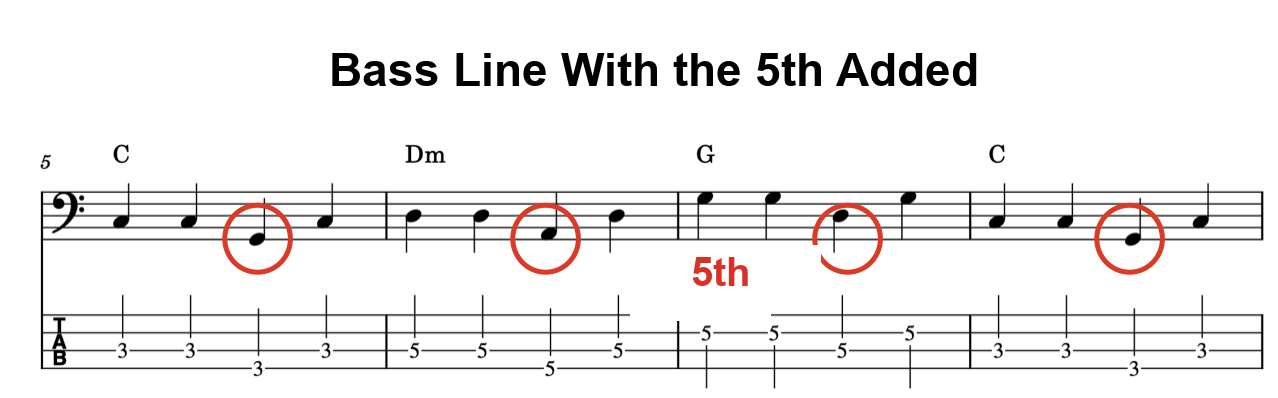
Each measure uses the 5th on beat 3 — but doesn’t it feel like the bass line suddenly has some “movement” to it?
Let’s look at one more example with a different chord progression.
Example 2: Adding the 5th
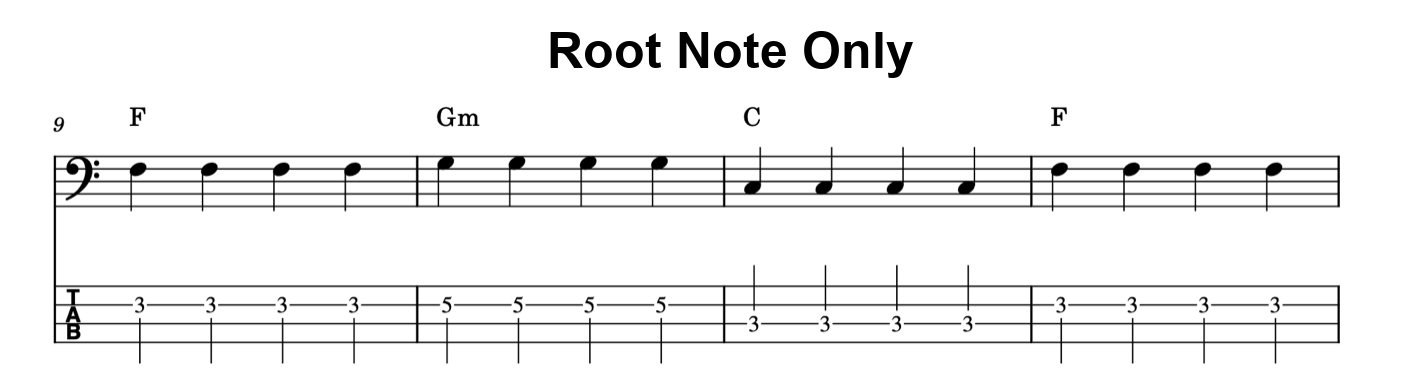
Here’s a bass line played using only the root.
And here’s the same progression with the 5th added to the root.
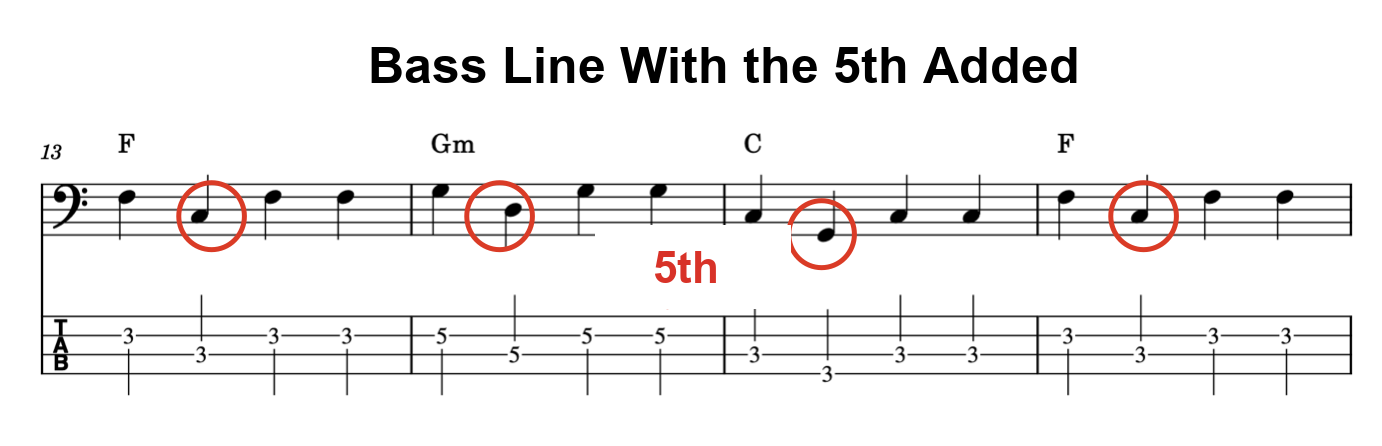
Even with a different chord progression, doesn’t the bass line feel like it has more “movement” once again? This time the 5th lands on beat 2 of each measure.
The 5th is a convenient note that works in pop, rock, and jazz alike. Whenever you want a bass line that “moves” without having to think too hard about theory, just mix the 5th in with the root and you’ll get a great result.
If you’ve ever played in a band doing original material, you’ve probably done this instinctively without even realizing it. I know I did, before I ever learned the theory behind it.
And the 5th has another advantage: it’s easy to remember by its position on the fretboard.
Where the 5th Sits Relative to the Root
Here’s where the 5th sits relative to the root on the fretboard.
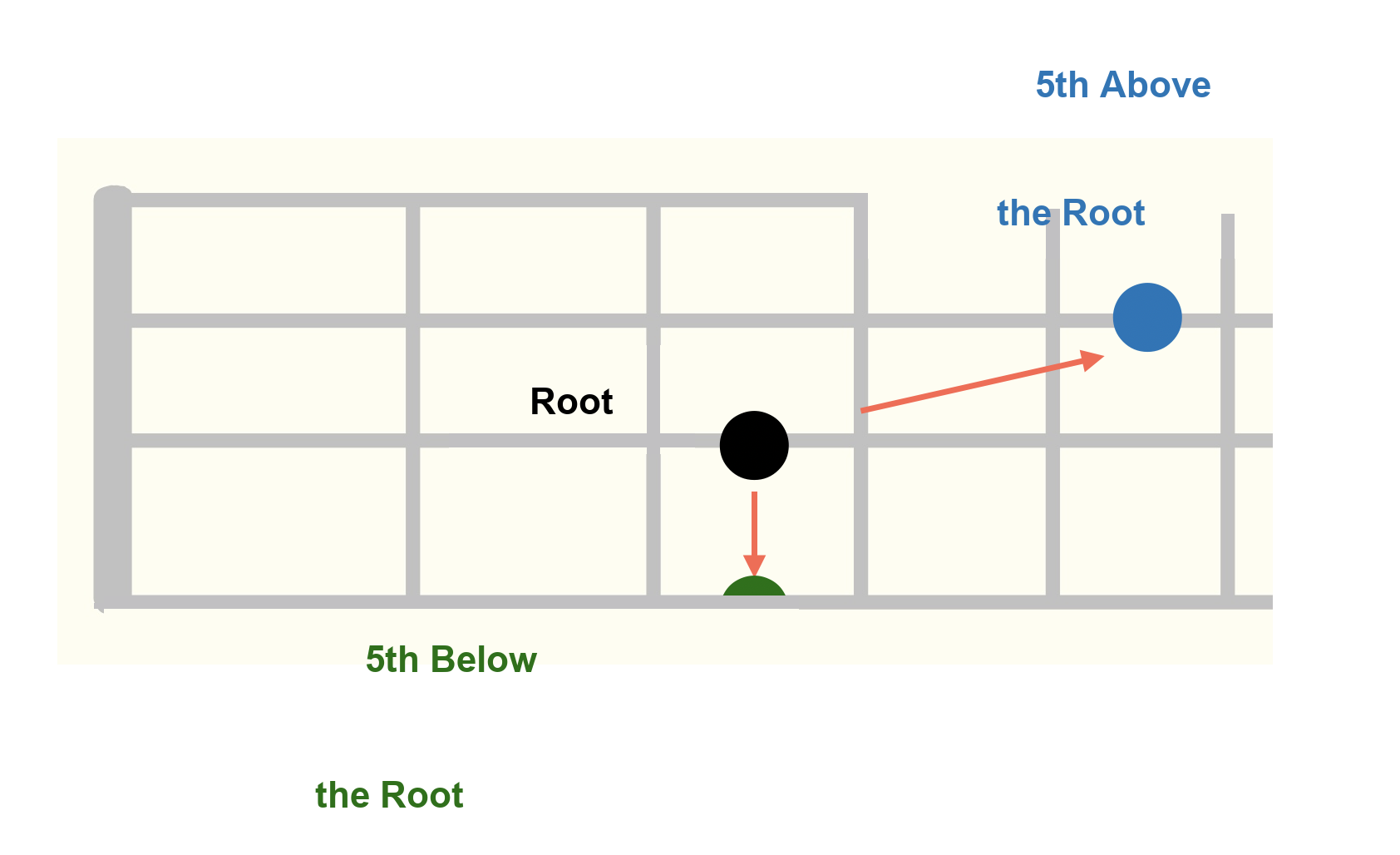
For a C note (3rd string), the relationship looks like this:
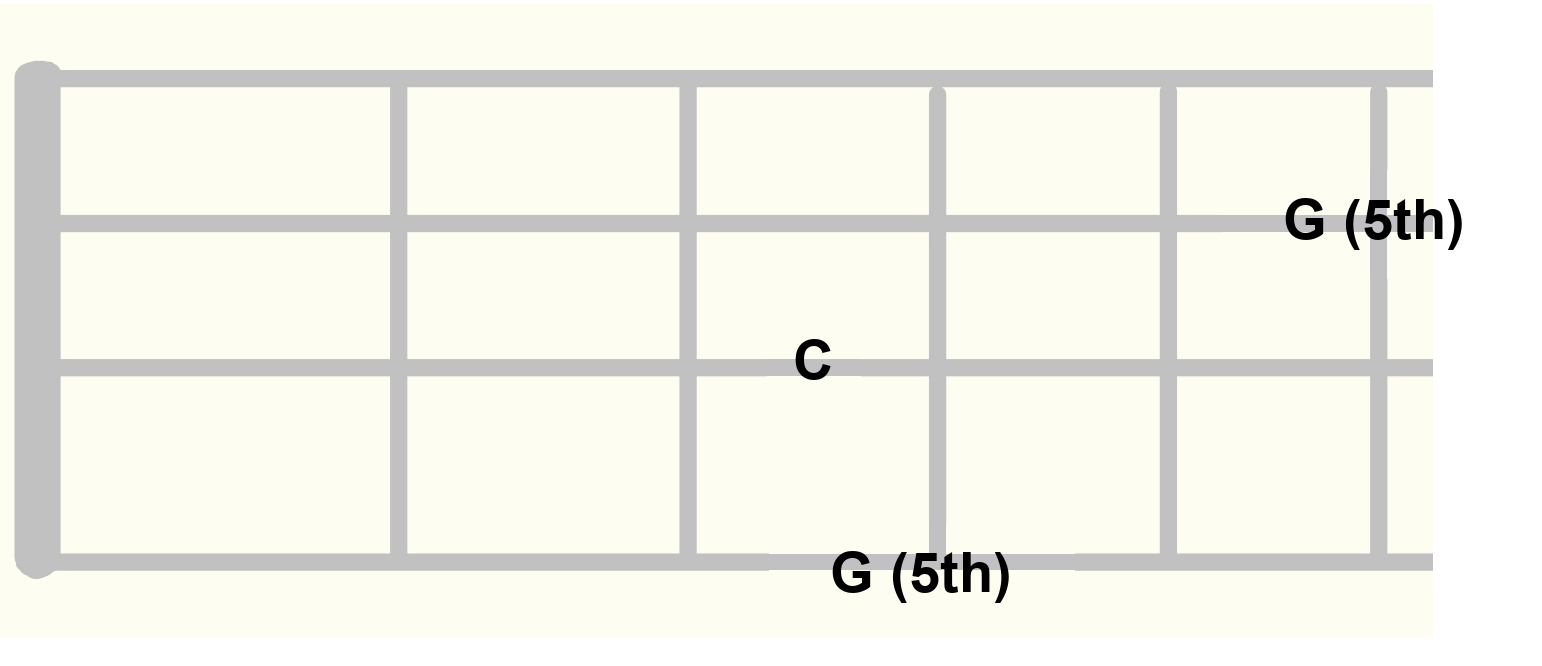
For a D note (3rd string), the relationship looks like this:
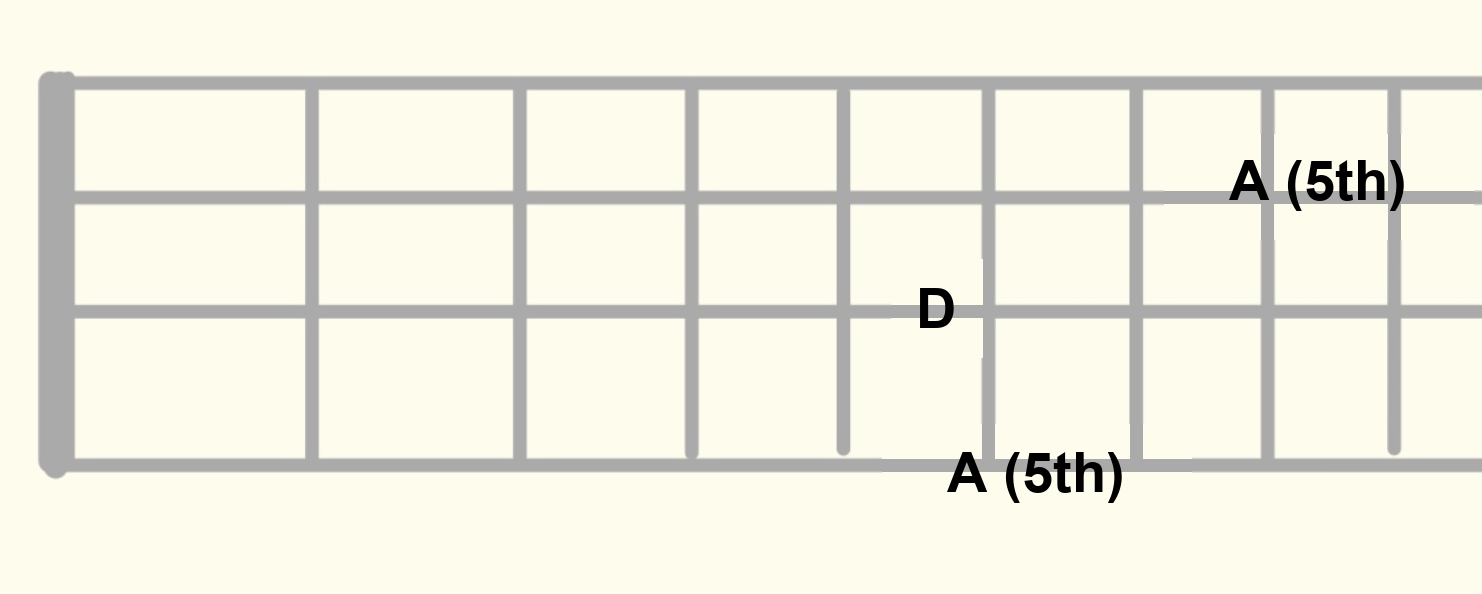
And for an F note (2nd string), the relationship looks like this:
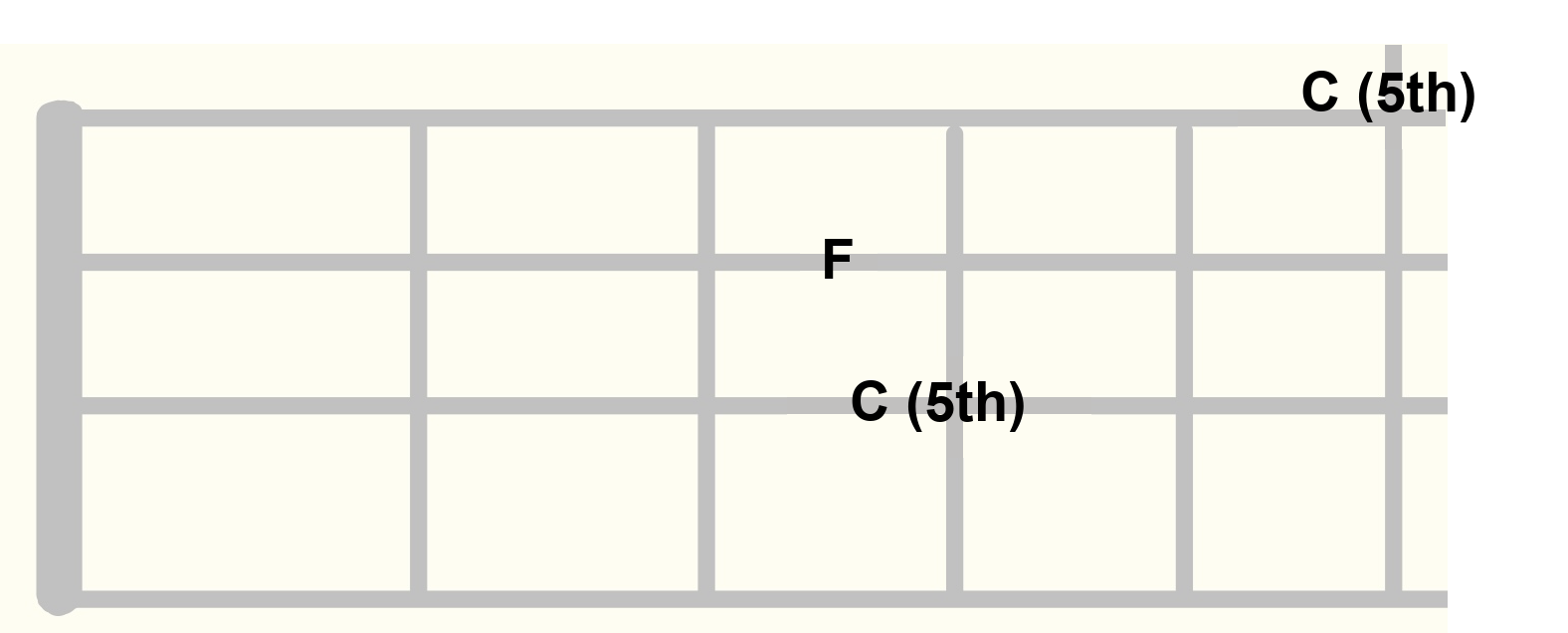
That’s the shape, no matter which root you start from.
This kind of visual, position-based recognition is one more reason the 5th is so easy to work with.
A Little Music Theory: Understanding the 5th
While we’re at it, let’s take a quick look at the music theory behind this.
Starting from C at the 3rd fret of the 3rd string, let’s play C D E F G A B (do re mi fa sol la ti do).
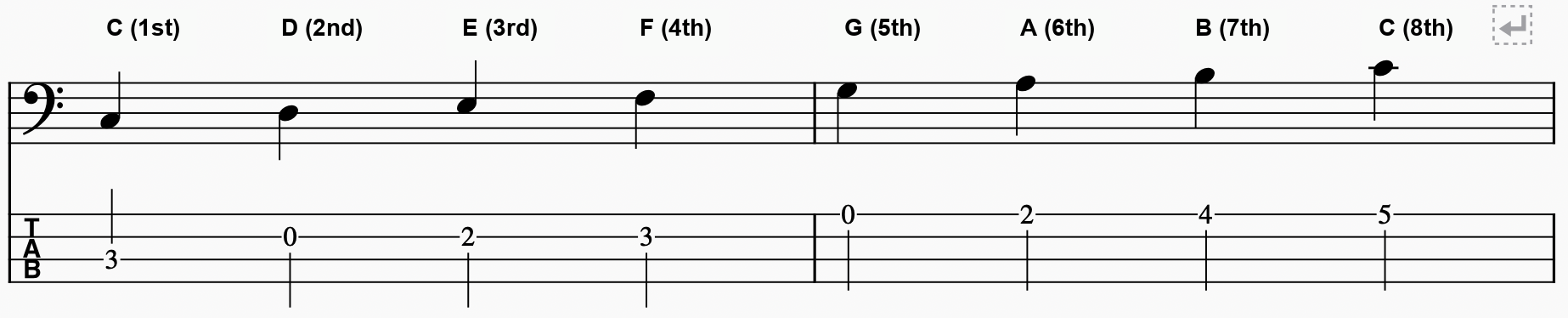
This is what’s known as the “C major scale.”
Here, we call the first note, C, the “1st.”
From there, relative to that 1st (the note C), the other notes are labeled like this:
D is the 2nd
E is the 3rd
F is the 4th
G is the 5th
A is the 6th
B is the 7th
This way of describing notes by number is called thinking in “scale degrees.”
When you start working on chords, note choices, composing, or more complex bass lines and solos, knowing scale degrees makes it much easier to understand what’s going on.
Want Personalized Feedback on Your Playing?
This is exactly the kind of thing that’s hard to fix alone — and where having a teacher makes all the difference.
At Line on Bass, I offer an online lesson service where you send me a video of your playing, and I give you specific, detailed feedback — every single day if you want.
Students from around the world are using this to fix exactly these kinds of issues and steadily improve their jazz bass skills.