This article is written by Toru Hoshino, a jazz bassist and instructor based in Japan who teaches online lessons to students worldwide. In this article, he shares one important thing to watch for when using position markers (fingerboard tape) on upright bass.
Upright bass has no frets like an electric bass does, so the boundaries between pitches are hard to feel, and intonation is genuinely difficult to nail down when you’re just starting out.
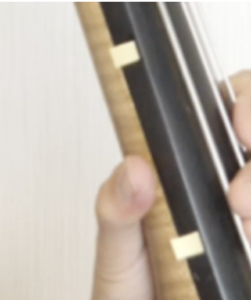
Because of that, I often get asked: “Is it okay to put stickers or tape on the fingerboard as position markers?”
Opinions vary on this, but personally, I think it’s fine. In fact, I used position markers myself for my first few years.
That said, here’s the thing to watch out for: don’t stare directly at the markers.
If you get into the habit of staring straight at the position marker, you end up having to turn your head every single time you play —
Look left at the position marker
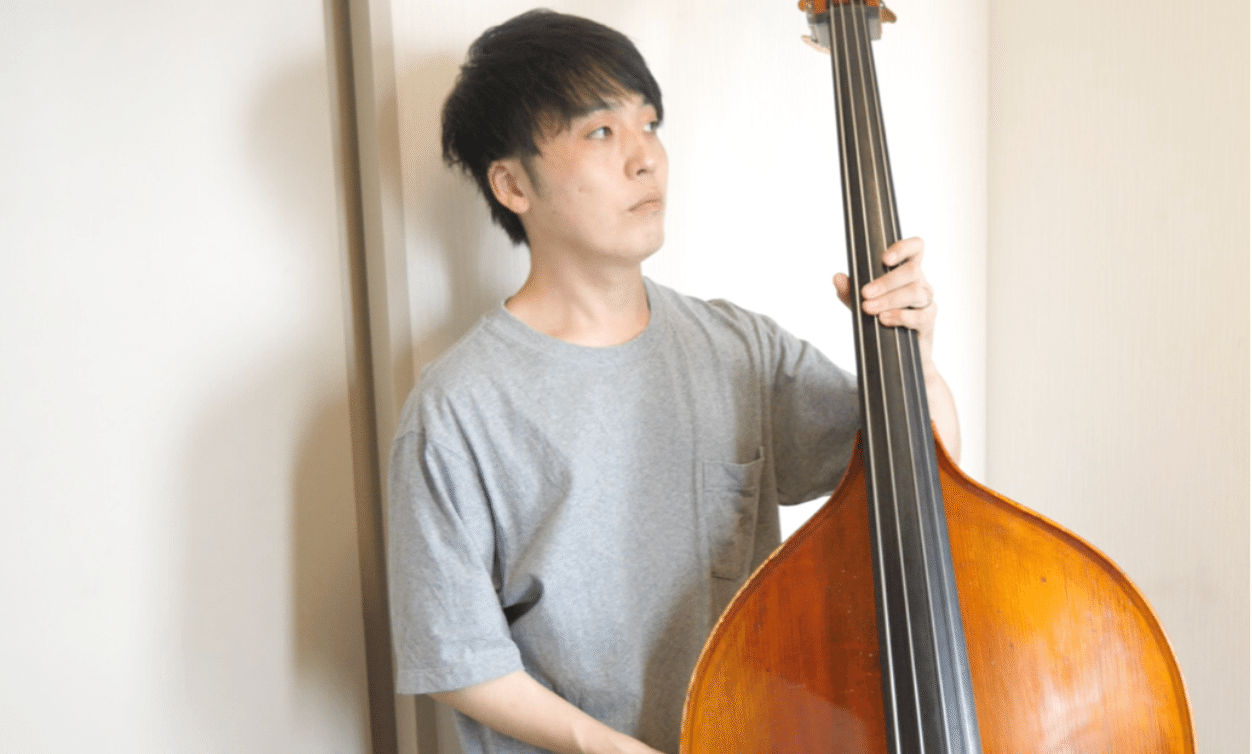
Look forward at the sheet music
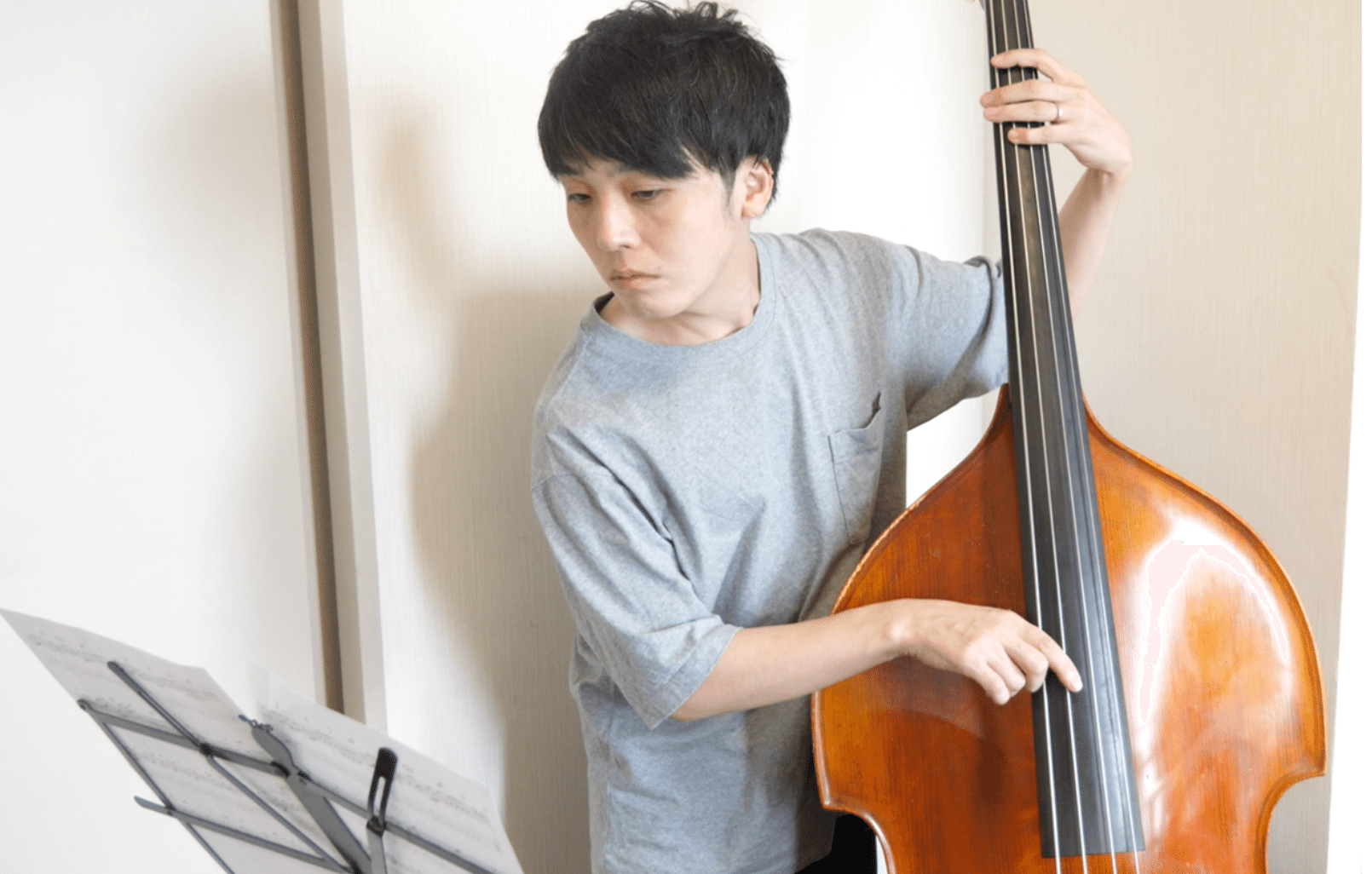
Look left at the position marker, look forward at the sheet music, look left at the position marker, look forward at the sheet music…
…which means turning your head left, forward, left, forward, over and over throughout a performance — and I think that’s wasted motion.
So instead, try to catch the position marker at the edge of your vision as much as possible.
Keeping your head as still as possible, with both the position marker and the sheet music sitting in your field of view at the same time, will make performing noticeably easier.
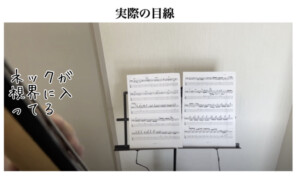
The neck stays at the edge of your field of view while the sheet music stays in front.
Hopefully this gives you a useful tip if you’re using position markers.
Training your eyes to catch the fingerboard at the edge of your vision instead of staring at it is a subtle habit — a teacher watching you play can usually spot whether you’re doing it within seconds.
Want Personalized Feedback on Your Playing?
This is exactly the kind of thing that’s hard to fix alone — and where having a teacher makes all the difference.
At Line on Bass, I offer an online lesson service where you send me a video of your playing, and I give you specific, detailed feedback — every single day if you want.
Students from around the world are using this to fix exactly these kinds of issues and steadily improve their jazz bass skills.